
HVAC Repair or Replacement? A Homeowner Decision Guide
A practical U.S. homeowner worksheet for deciding what to do when a heating or cooling system becomes unreliable.
Key takeaways
- Do not make a repair-or-replace decision until the fault and its cause are documented.
- Age matters, but repair history, safety, comfort, efficiency, and remaining component risk matter too.
- Replacement quotes should include a load calculation, matched-equipment information, and a complete scope of installation work.
- Compare the total proposal rather than relying on a single efficiency rating or monthly-payment figure.
- A second diagnosis is especially useful when the first recommendation is immediate replacement without supporting measurements.
When an air conditioner or heating system fails during extreme weather, the pressure to approve the first available solution is real. Yet repair versus replacement is not an age-only decision. The better question is whether a specific repair can return the system to safe, dependable operation at a reasonable total cost, or whether the failure is one part of a larger pattern that makes replacement the more defensible choice. This guide supplies a repeatable way to reach that decision without turning a service call into a guessing contest.
Leave the home and contact the appropriate emergency service or utility if you suspect a gas leak or carbon-monoxide problem. Shut equipment down and seek qualified help for persistent burning odors, smoke, sparking, or repeatedly tripping electrical protection. A repair-versus-replacement worksheet is never a substitute for immediate safety action.
Step 1: Get a diagnosis you can compare
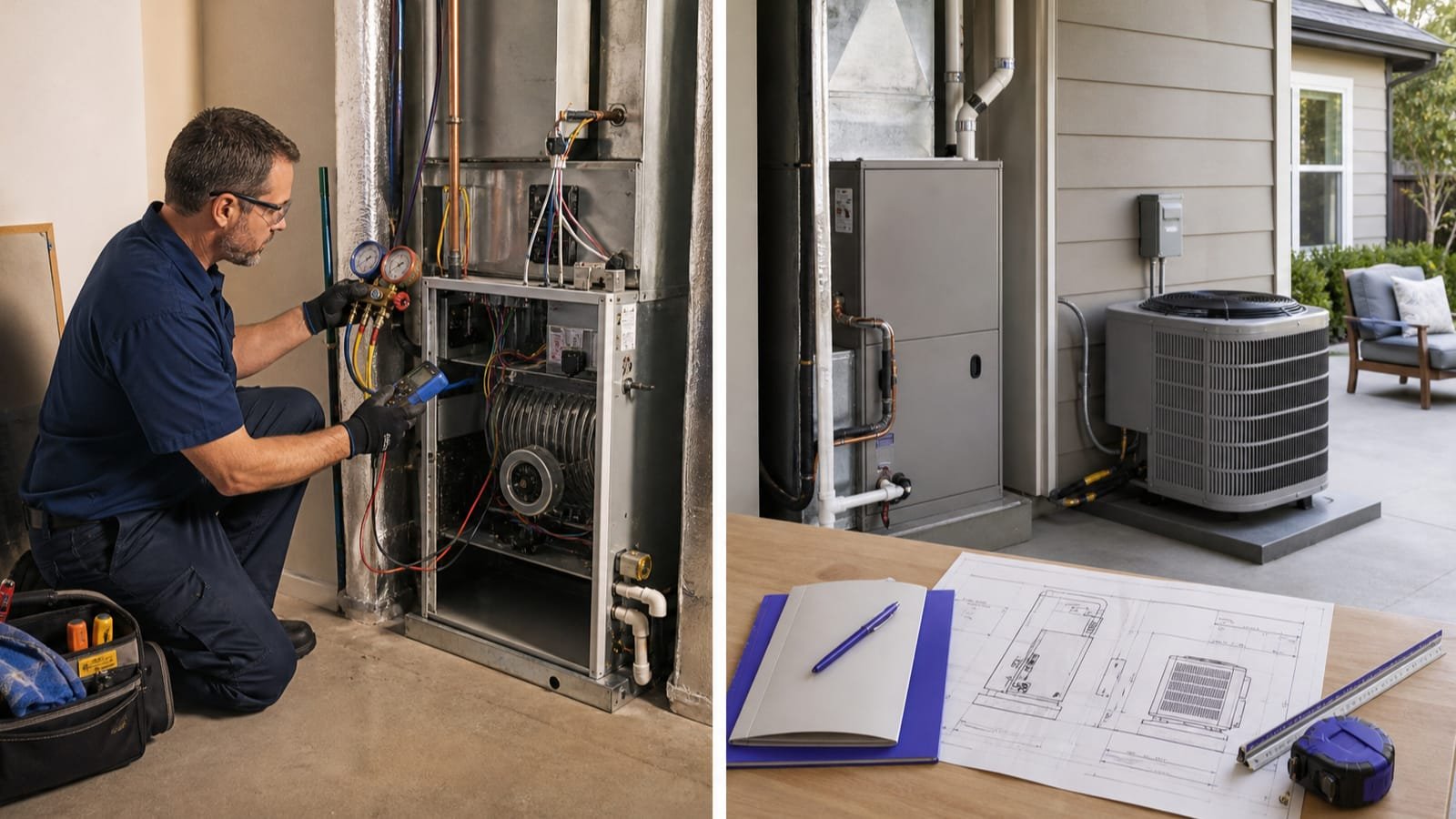
A symptom is not a diagnosis. Weak airflow, warm supply air, short cycling, unusual noise, and rising energy use can each have several causes. Ask the technician to identify the failed component, explain what caused it to fail, describe any measurements taken, and state whether the proposed work corrects the cause or only the immediate symptom. Request the diagnosis and repair scope in writing. If the proposal jumps directly from a symptom to full replacement, ask what testing ruled out a repairable control, airflow, refrigerant, electrical, or distribution problem.
Facts to collect before deciding
- Equipment type, model numbers, installation date, and warranty status
- The written diagnosis and the measurement or observation supporting it
- Repair price, parts included, labor warranty, and expected availability
- Service history, including repeat failures and refrigerant or airflow problems
- Recent utility use and whether comfort or humidity has deteriorated
- Condition of ducts, electrical service, drain system, thermostat, and indoor air handler
- Any safety defect or code issue that changes what can legally remain in service
Step 2: Run the decision through five gates

Repair and replacement decision matrix
| Decision gate | Repair becomes stronger when | Replacement becomes stronger when |
|---|---|---|
| Safety and compliance | The fault is isolated and the equipment can be returned to safe operation | A heat exchanger, venting, electrical, refrigerant, or code problem makes continued operation unsafe or impractical |
| Reliability | This is an uncommon failure and the rest of the system tests well | Breakdowns repeat, major components are deteriorating, or parts are difficult to obtain |
| Comfort | The home was comfortable before the current fault | Persistent hot and cold rooms, humidity problems, noise, or inadequate capacity remain after ordinary maintenance |
| Economics | The repair is limited and likely to provide useful service without near-term companion work | The current repair plus foreseeable work approaches the value of a correctly designed new system |
| Efficiency and plans | Energy use is stable and the homeowner may move before long-term savings accrue | Energy use is rising, the system no longer meets household needs, and the owner expects to stay long enough to benefit |
No row decides the case by itself. An older system with a simple, well-supported repair may still be worth repairing. A newer system with a serious installation defect may need redesign rather than another component swap. Use the matrix to expose assumptions: what will the repair solve, what risk remains, and what exactly will replacement improve? Ask each contractor to explain where the system lands on all five gates.
Step 3: Compare the real cost of each path
Compare more than today's invoice. For the repair path, total the proposed repair, other work the technician expects soon, and the consequences of another outage during peak season. For the replacement path, total equipment, labor, permits, electrical or gas work, duct corrections, controls, commissioning, maintenance requirements, and financing cost. Treat rebates or tax treatment as conditional until eligibility is confirmed from a current official source; programs, dates, equipment rules, and household qualifications can change.
Energy savings also deserve a transparent calculation. Ask for the old system's known or estimated performance, the proposed equipment's certified matched-system rating, the assumptions used for annual operating cost, and the local utility rate. A percentage claim without run-time, climate, fuel-price, duct, and installation assumptions is not a forecast. The AHRI certificate can verify that the proposed indoor and outdoor components are a certified match, but actual results still depend on design and installation.
Step 4: Make replacement quotes prove their design
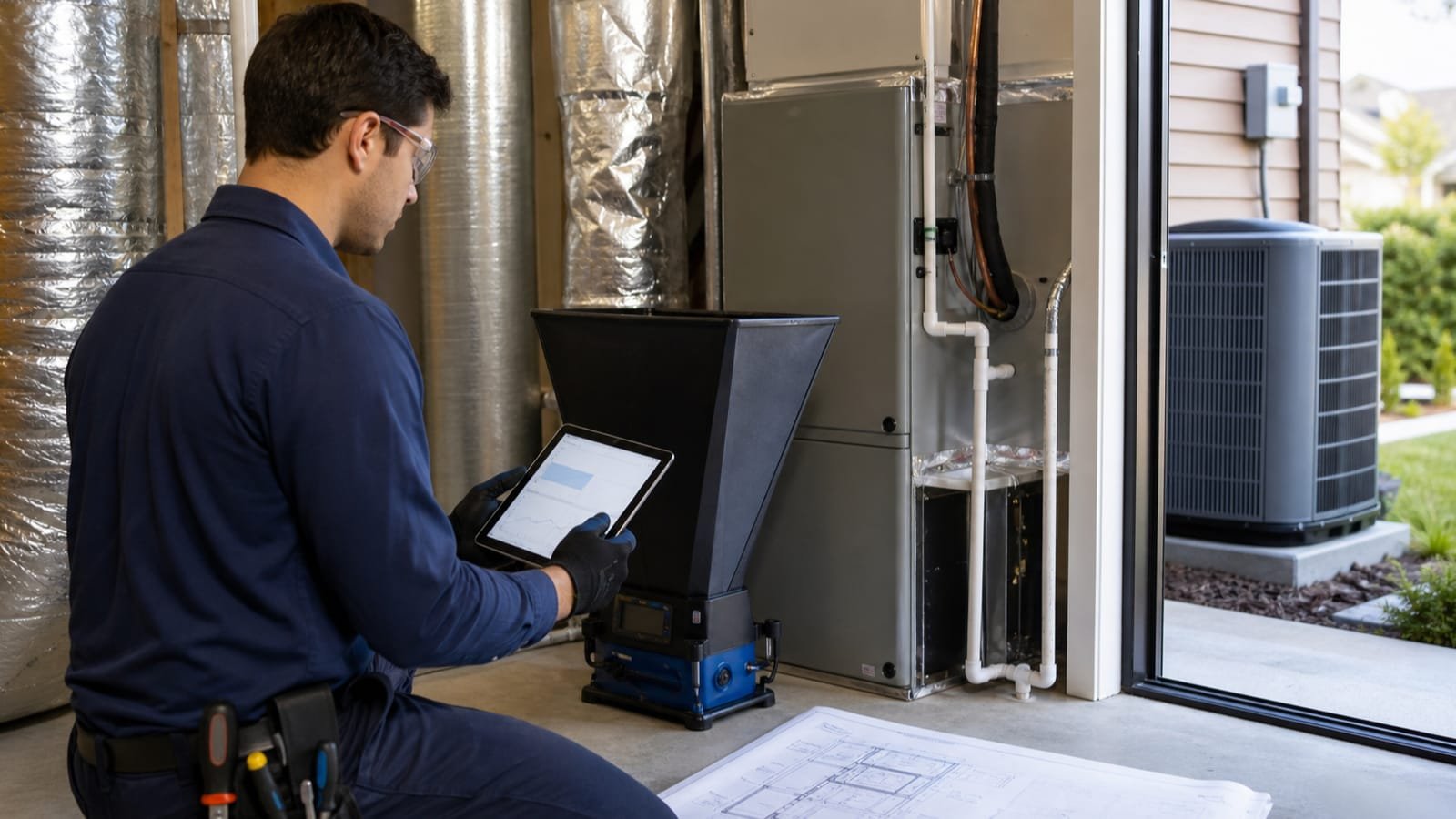
A replacement should not automatically copy the capacity of the old nameplate. Homes change: insulation is added, windows are replaced, additions are built, ducts leak, and old equipment may have been incorrectly sized from the beginning. ACCA identifies a residential load calculation as a fundamental step in quality installation. Ask for the calculation, the selected design temperatures, and an explanation of how the proposed capacity follows from the result. Oversizing can create short cycles, noise, temperature swings, and weak moisture removal rather than extra comfort.
What a replacement proposal should identify
- Indoor and outdoor model numbers and the AHRI reference or certificate
- Heating and cooling load calculation and selected equipment capacity
- Efficiency ratings that apply to the complete matched system
- Duct inspection, leakage or airflow corrections, and balancing work
- Electrical, fuel, venting, condensate, thermostat, filter, and permit work
- Startup tests, refrigerant charge or combustion checks, and commissioning records
- Equipment, parts, labor, and installation warranties with exclusions
- Removal, disposal, payment schedule, project timing, and change-order process
Step 5: Compare contractors without being rushed
Comparable bids require comparable scopes. One quote may include permits, duct sealing, electrical upgrades, a new equipment pad, drain protection, and commissioning while another lists only equipment and labor. Put the proposals side by side and mark every inclusion, exclusion, allowance, warranty, and assumption. Confirm licensing with the relevant state or local authority and request proof of insurance. The Federal Trade Commission recommends multiple written estimates and warns against pressure for an immediate decision, full payment upfront, or financing that has not been independently compared.
Pros
- A documented repair can be the least disruptive and most economical response to an isolated failure.
- A properly designed replacement can address reliability, comfort, efficiency, and changing household needs together.
- A second opinion can reveal a repairable root cause or confirm that replacement is justified.
Considerations
- Repeated low-cost repairs can hide a worsening system-level problem.
- A high-efficiency label cannot compensate for poor sizing, mismatched components, or weak installation.
- A low monthly payment can conceal a longer term, higher finance cost, or incomplete scope.
A one-page decision worksheet
Record the evidence before approving work
| Question | Repair answer | Replacement answer |
|---|---|---|
| What specific problem is solved? | Failed part and root cause | Reliability, comfort, safety, or efficiency problem |
| What remains unresolved? | Other aging components or design issues | Duct, envelope, fuel, electrical, or comfort limits |
| What supports the recommendation? | Diagnostic readings and service history | Load calculation, equipment match, and complete scope |
| What is guaranteed? | Parts and labor warranty | Equipment, labor, installation, and performance commitments |
| What is the total obligation? | Repair and foreseeable companion work | Installed cost, financing, maintenance, and exclusions |


Frequently asked questions
Is there a universal formula for deciding whether to repair or replace HVAC equipment?
No. Simple rules based only on age or multiplying age by repair price ignore safety, failure type, service history, comfort, installation quality, local energy costs, warranties, and the condition of the rest of the system. Use documented evidence across those factors.
Should I replace both indoor and outdoor HVAC units together?
For split systems, the components must work as a matched system to deliver the certified capacity and efficiency. Ask the contractor for the AHRI reference covering the exact proposed combination and for an explanation of any component they propose retaining.
Does a higher efficiency rating always produce the best value?
Not automatically. Climate, utility rates, operating hours, system design, duct condition, installation quality, purchase price, and how long you expect to own the home all affect value. Compare modeled annual costs using disclosed assumptions.
When is a second HVAC opinion most useful?
Seek one when replacement is recommended without a written diagnosis, the quoted repair is major, recommendations conflict, the system has repeat failures, or the proposal lacks a load calculation and matched-equipment details.
What should I do while waiting during extreme heat or cold?
Follow local public-safety guidance, protect vulnerable household members, and use a safe alternate location when indoor conditions become dangerous. Do not use combustion appliances or improvised heating and cooling methods in ways the manufacturer does not permit.
Related offers

Sources
Facts and figures in this guide that come from an outside authority are backed by the sources below. Pricing, program rules, and eligibility details change — always confirm current specifics with the source directly or a licensed professional before acting.
- When is it time to replace?ENERGY STAR · Accessed 2026-07-19
- Heat Pump SystemsU.S. Department of Energy · Accessed 2026-07-19
- How To Avoid a Home Improvement ScamFederal Trade Commission · Accessed 2026-07-19
- Homeowners: What to Expect From a Professional HVAC ContractorAir Conditioning Contractors of America · Accessed 2026-07-19
- AHRI Directory of Certified Product PerformanceAir-Conditioning, Heating, and Refrigeration Institute · Accessed 2026-07-19
Editorial information
- We prioritize primary, authoritative sources over provider marketing.
- Commercial relationships never influence what we publish or how it's written.
- Pages are dated and updated only when they've genuinely been reviewed or changed.
Related guides
Storm-Damaged Roof: Inspection, Repair, or Replacement?
Follow a safe, evidence-based sequence after hail or wind damage and compare roof inspection, repair, and replacement proposals without pressure.
Water Damage Cleanup: Which Service Do You Need?
Identify whether a leak, outdoor flood, sewage backup, or developing mold problem calls for water restoration, flood restoration, sewage cleanup, or remediation.
Window Replacement or Remodeling? Choose the Right Project Scope
Compare insert replacement, full-frame replacement, and structural window remodeling before requesting bids or choosing products.
Ready to explore HVAC Repair?
Continue your research or check availability — there's no cost and no obligation.