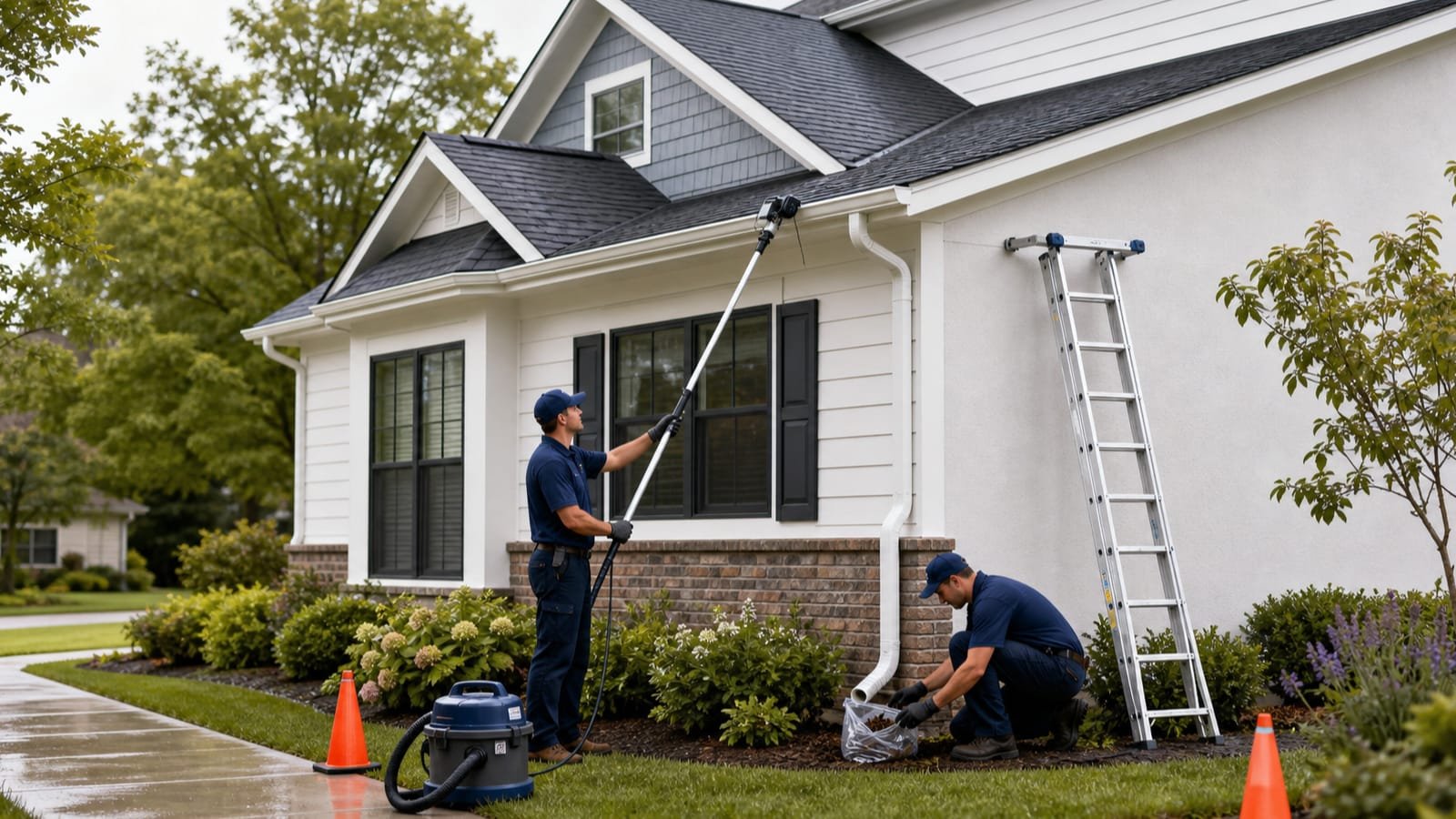

Gutter Installation
Install seamless, correctly sized gutters that protect your roof, siding, and foundation from water damage.
Direct water away from your home's most vulnerable points.
Compare Gutter Installation Quotes

Clogged, sagging, or leaking gutters put your roof and foundation at risk — clear them and fix them before the next storm.
Clogged or sagging gutters can quietly redirect water toward your fascia, siding, and foundation instead of away from them. This guide covers how to spot the warning signs and get repairs done before the next storm.
A gutter only protects your home when water can actually flow through it — and clogs, sags, and leaks quietly stop that from happening. When gutters back up or fail, water spills over the edge or seeps behind them, attacking your fascia, siding, and foundation exactly where it does the most expensive damage. Routine cleaning and prompt repair keep the system doing its job, and they cost a small fraction of the water damage they prevent. How often your gutters need attention depends heavily on the trees around your home and your local climate, so a schedule that fits your specific property matters more than a generic rule of thumb.
Both are about keeping water moving where it should — but one is a full replacement, the other keeps what you already have working.
You do not have gutters, or your current ones need to be replaced entirely rather than fixed.
Your gutter system is basically the right one — it just needs debris cleared or a section repaired.
The real-world benefits of moving forward.
Properties with nearby trees see gutters clog quickly and need more frequent cleaning.
Storms fill gutters with debris and can loosen sections, making post-storm service valuable.
Water spilling over gutters or streaking down siding signals clogs or damage needing attention.
Pooling water or basement moisture is often traced back to gutters that aren't draining.
Routine gutter service across rental properties prevents the water damage claims that are expensive to repair later.
Getting on a seasonal cleaning schedule is one of the simplest ways to avoid emergency repairs.
Gutters and downspouts are cleared of leaves, debris, and buildup so water flows freely again.
Leaking seams, corners, and end caps are resealed or repaired to stop water escaping where it shouldn't.
Sagging sections and loose hangers are refastened and re-pitched so water reaches the downspouts.
Blocked downspouts — a common hidden cause of overflow — are cleared to restore drainage.
A clear look at the typical steps involved, from start to finish.
The tech checks gutters and downspouts for clogs, leaks, sags, and any damage to the gutters or fascia.
Leaves, debris, and buildup are removed from gutters and downspouts to restore unobstructed flow.
Leaks are sealed, loose or sagging sections refastened and re-pitched, and blocked downspouts cleared.
Water is run through the system to confirm it drains properly and carries water away from the home.
You're advised on any larger issues, such as failing gutters or guards, and on a sensible cleaning schedule.
Important points to keep in mind as you explore this offer.
Clean at least twice a year, more with nearby trees, and after major storms.
Downspout clogs are a common hidden cause of overflow — don't overlook them.
Clogged gutters threaten both the foundation and the roof edge.
Ladder work causes serious falls yearly; weigh DIY savings against the risk.
Fix sags and leaks early before they spread or damage the fascia.
Guards reduce but don't eliminate the need for gutter maintenance.
Gutter cleaning is one of the more common causes of ladder-related injuries. This checklist helps you decide when to hire it out, based on CPSC and CDC ladder-safety guidance.
This tool is meant to help you organize your own thinking and the questions you ask a provider — it isn't personalized financial, legal, medical, or contracting advice, and it doesn't collect or store anything you enter.
These are the common gutter-related services and add-ons, and when each one tends to apply.
Best for: Gutters that are still in decent shape but clogged, sagging, or leaking at a seam.
Best for: Gutters too damaged, undersized, or outdated to be worth repairing.
Best for: Reducing how often cleaning is needed going forward.
This comparison describes general, commonly available options — not every provider offers every option, and actual terms, pricing, and availability depend on the specific provider and your circumstances.
Gutters are a system that only works when water can move through them freely, and that simple requirement is exactly what neglect defeats. Leaves pile up, debris settles, downspouts clog, sections sag, and seams begin to leak — and one day, during a heavy rain, the water that's supposed to be flowing safely away is instead spilling over the edge and running down your walls or pooling against your foundation. Gutter cleaning and repair is unglamorous work, but it's among the highest-return maintenance a homeowner can do, because it prevents damage that costs many times more to fix.
To understand why gutter maintenance is worth taking seriously, it helps to follow the water. When gutters clog and overflow, that runoff doesn't disappear — it goes exactly where you don't want it:
That last point is important and often missed: clogged gutters don't just threaten the foundation below, they threaten the roof above. Gutter care is connected to roof health, which is why it belongs in any serious home maintenance routine.
The standard guidance is to clean gutters at least twice a year, typically in spring and fall, with the fall cleaning especially important to clear the season's falling leaves before winter. But that's a baseline, not a rule for every home. Properties surrounded by trees can fill their gutters far faster and may need cleaning more frequently. And it's always worth checking gutters after a major storm, which can pack them with debris and loosen sections. The core principle is simple: don't let debris accumulate to the point of clogging, because that's when the damage begins.
Your home will tell you when gutters aren't working, if you know what to watch for. Water overflowing the edges during rain is the obvious one — and it frequently traces to a clogged downspout, an easy-to-miss blockage, or gutters that have lost their proper slope and are pooling. Sagging sections signal loose hangers or the weight of trapped debris and standing water. Streaks or stains on the siding below the gutters indicate overflow. Peeling paint, rot, or water marks on the fascia point to water getting where it shouldn't. And pooling water or basement dampness near the house often leads straight back to gutters that aren't carrying water away. Any of these is a cue to clean and inspect.
One of the underrated benefits of professional gutter service is that a good technician doesn't just clear the debris and leave — they spot problems while they're up there. Leaking seams and corners can be resealed. Sagging sections and loose hangers can be refastened and the slope corrected so water reaches the downspouts. Blocked downspouts get cleared. Early fascia rot gets flagged before it spreads. Catching and fixing these small issues during a routine cleaning is far cheaper than dealing with them after they've caused damage, which is why cleaning and repair go hand in hand.
It's entirely possible to clean your own gutters, and plenty of homeowners do. But it's worth being honest about the risk: gutter cleaning means working from a ladder at height, and ladder falls cause serious injuries every year. That's a real reason many homeowners choose to hire insured professionals — not just for the convenience, but because pros have the equipment and experience to do the work safely and to catch repairs at the same time. If you do clean your own, take ladder safety seriously. If the risk gives you pause, professional service is a reasonable investment.
Sometimes cleaning reveals that the gutters need more than a clear-out. Sagging is often repairable by refastening hangers and correcting the pitch, particularly when the gutters themselves are sound. But if they're old, rusted, or damaged in multiple places, new seamless gutters may be the better long-term value than repeated repairs. And if constant clogging is the recurring problem — common on tree-heavy lots — gutter guards can dramatically cut how often cleaning is needed. Guards don't eliminate upkeep entirely, but they reduce the burden considerably, and they're worth considering if you're tired of frequent cleanings.
Professional gutter cleaning is among the least expensive services a homeowner can buy, typically priced by the home's size, height, and how badly clogged the system is — a single-story ranch costs meaningfully less than a three-story Victorian with steep pitches and mature oaks. Small repairs are similarly modest: re-securing loose hangers, resealing a leaking seam or end cap, re-pitching a sagging run, or reattaching a downspout are commonly same-visit additions. The comparison worth keeping in mind isn't cleaning versus doing nothing — it's cleaning versus what clogs cause. Fascia rot, foundation moisture, ice dams, and a flooded basement each cost multiples of a decade of cleanings. If a company inspects while cleaning and photographs what it finds, you're getting the real value of the visit: an early-warning system for the top of your house.
Overflowing gutters are often the first visible symptom of trouble that gets misdiagnosed elsewhere. Water sheeting behind a gutter can imitate a roof leak and rot the fascia board the gutter hangs on; water pooling at the foundation shows up later as damp basement walls that lead homeowners toward basement waterproofing when the first fix was drainage; and winter overflow feeds the ice dams that damage roof edges. That interconnection cuts the other way too: if cleaning reveals shingle granules filling your gutters, that's your roof aging visibly, worth a look through a roof inspection. And when repairs stop holding — seams reopening, metal fatigued, pitch unfixable — replacement through a proper gutter installation beats an endless patch cycle.
Gutter cleaning and repair is the kind of humble, routine maintenance that's easy to postpone and expensive to skip. Keeping your gutters clear and in good repair protects your roof edge, your siding, your fascia, and — most importantly — your foundation, all for a small fraction of what water damage to those areas would cost. Whether you keep to a regular cleaning schedule yourself or hand it to insured professionals who can clean, repair, and advise in one visit, staying ahead of clogs and leaks is one of the simplest ways to protect your home from the top down.
Facts and figures in this guide that come from an outside authority are backed by the sources below. Pricing, program rules, and eligibility details change — always confirm current specifics with the source directly or a licensed professional before acting.
Still have questions? The FAQ below covers the most common ones. Or use the button to check availability — there's no cost and no obligation.
Work at height carries real risk — hiring insured pros with proper equipment beats gambling on DIY ladder work.
Good techs spot and fix leaks, sags, and early fascia damage while they're clearing the gutters.
Trustworthy pros tell you when cleaning suffices and when repair or replacement is the better value.
A common guideline is at least twice a year — typically spring and fall — but homes surrounded by trees may need it more often, and it's wise after major storms. Letting debris accumulate leads to clogs, overflow, and the water damage gutters are meant to prevent.
Overflow usually means a clog — often in the downspout, which is easy to miss — or gutters that have lost their proper slope and are pooling water. Sometimes it's undersized gutters overwhelmed by heavy rain. Clearing the blockage and checking pitch typically resolves it.
Neglected gutters clog and overflow, sending water down your siding and against your foundation. Over time this rots fascia and soffit, stains and damages siding, and can cause basement moisture and foundation problems — expensive repairs that routine cleaning prevents cheaply.
Sagging is often repairable by refastening or replacing hangers and correcting the slope, especially if the gutters themselves are sound. If the gutters are old, rusted, or damaged along with the sagging, replacement may be the better long-term value. An assessment tells you which.
You can, but it involves ladder work at height, which causes serious falls every year. Many homeowners prefer to hire insured professionals who have the equipment and experience to do it safely and to spot repairs at the same time. Weigh the savings against the genuine risk.
Guards significantly reduce cleaning frequency by keeping debris out, but no guard eliminates upkeep entirely — fine debris can still accumulate, and guards themselves benefit from occasional checks. They reduce the burden rather than eliminate it.
Backed-up gutters let water pool at the roof edge, where it can seep under shingles and, in cold climates, contribute to ice dams that force water beneath the roofing. Keeping gutters clear protects the roof edge as well as the foundation, tying gutter care to roof health.
Continue your research with the most closely related offers, or browse every Home Services offer.
Install seamless, correctly sized gutters that protect your roof, siding, and foundation from water damage.
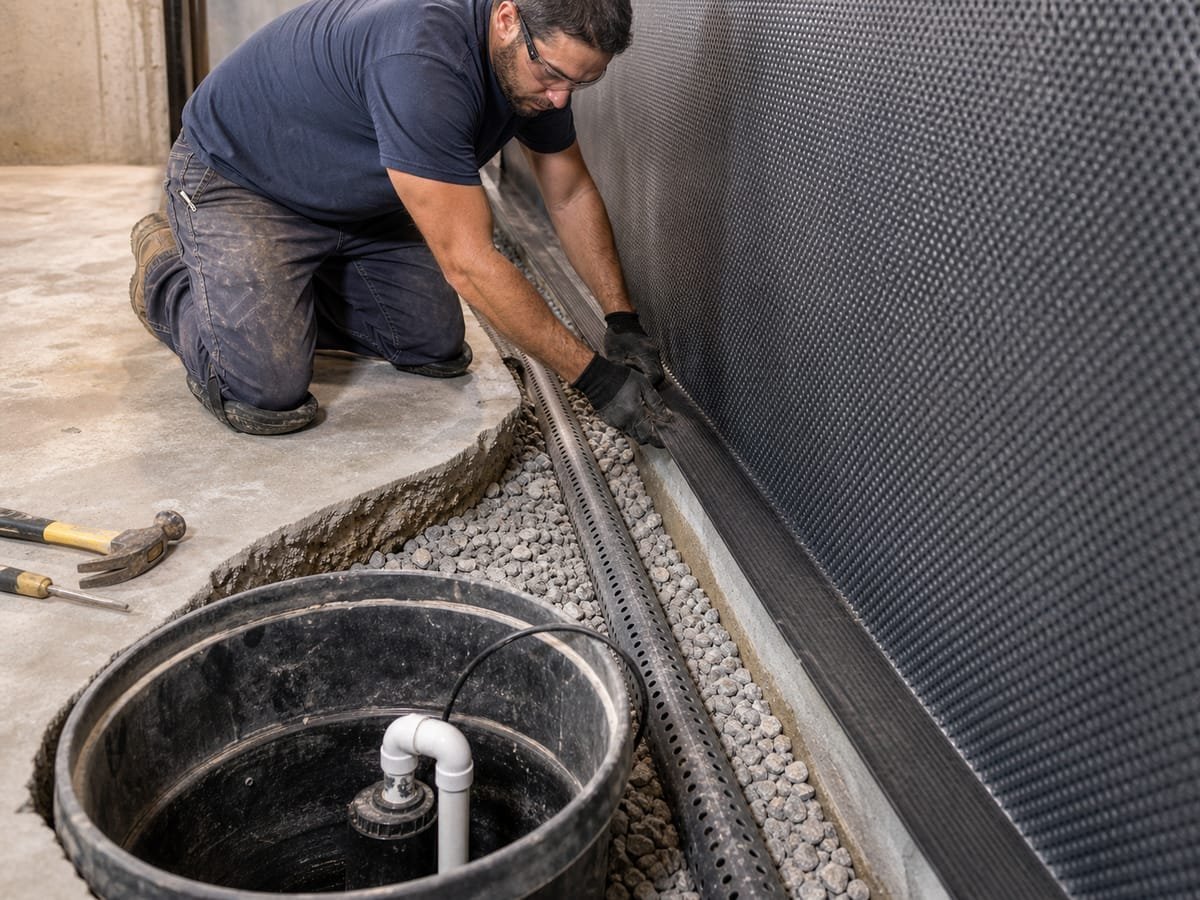
Stop basement leaks and dampness with proper drainage, sealing, and sump systems that address water at its source.
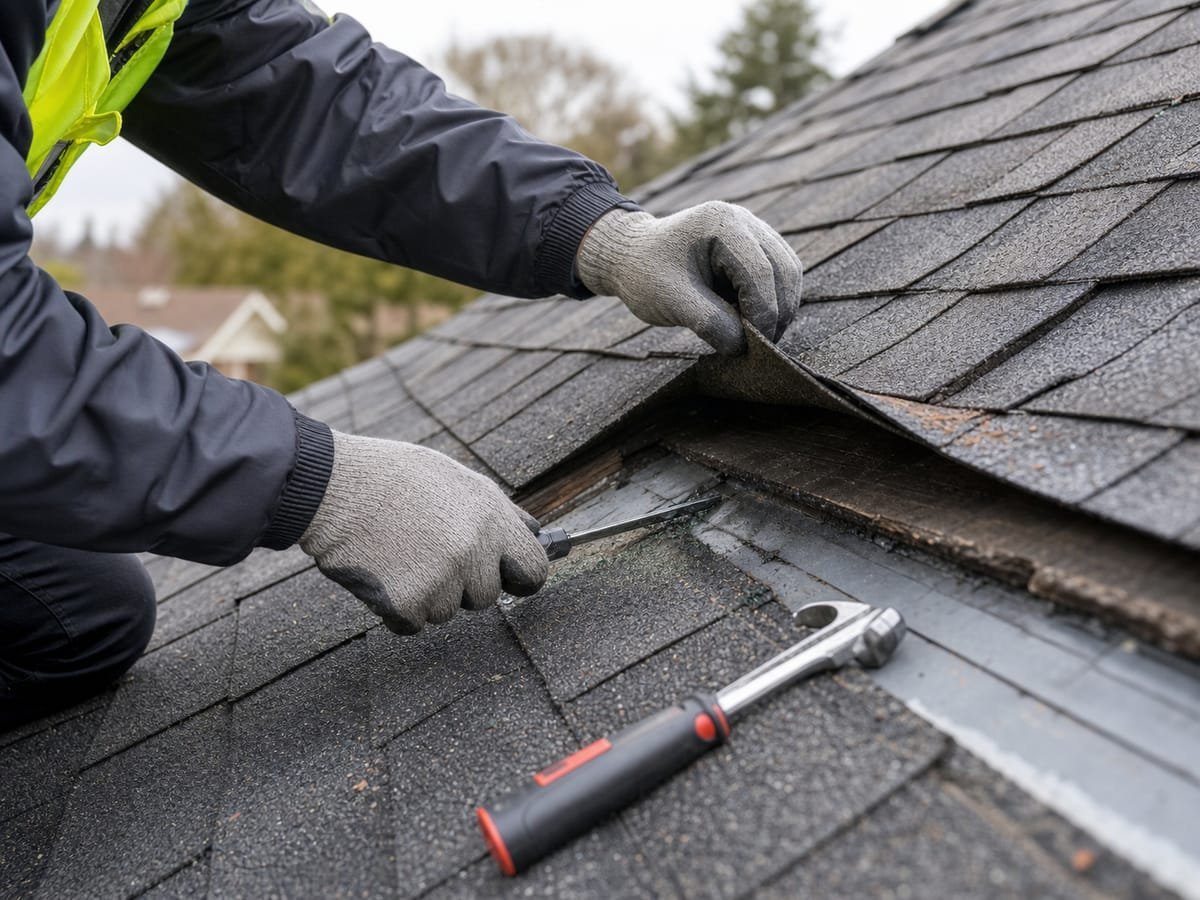
Get a professional roof inspection to catch problems early and understand the true condition and lifespan of your roof.
Independent reading on questions this offer doesn't answer on its own.
No sign-up needed. No calls until you decide. Check availability, compare options, and proceed only when you're ready.