Home Services Full Bathroom Remodel

Bathroom Remodeling That Blends Everyday Function With Lasting Style

From a refreshed guest bath to a spa-like primary suite — design, fixtures, and layout planned around how you actually live.

An outdated bathroom can make a daily routine feel like a chore instead of a comfort. This guide covers planning a remodel around layout, fixtures, and budget so the result actually fits how you live.

Outdated layoutBudgeting the remodelChoosing fixtures
Overview

What you need to know about Bathroom Remodeling

A well-designed bathroom remodel improves your daily routine and your home's value at the same time. Whether you're modernizing a dated guest bath or building a spa-like primary retreat, the difference between a good remodel and a forgettable one comes down to planning: a layout that fits how you actually move through the space, fixtures chosen for the long haul, and finishes that look current without dating quickly. This guide helps you plan a remodel that delivers on all three. Getting quotes from multiple licensed contractors, and comparing exactly what's included in each bid, is one of the simplest ways to avoid surprises once work is underway.

At a glance

Category
Home Services
Read time
12 min read
Key benefits covered
6
Sources cited
4
Decision guide
Included on this page
Comparing your options

Which bathroom projects do you need?

The right project depends on why you're starting one — an isolated problem, damage that needs rebuilding, or a voluntary upgrade.

Repair

Bathroom Repair

One thing is broken or failing — a leak, a fixture, a crack — and the rest of the room is otherwise fine.

Reconstruction

Bathroom Reconstruction

The bathroom needs to be rebuilt because of major damage — water, fire, mold, or a structural failure.

Remodeling

Bathroom Remodeling

You're on this page

Everything works, but you want a new layout, finishes, or fixtures by choice, not necessity.

Why people choose this

What you get with Bathroom Remodeling

The real-world benefits of moving forward.

  • A layout tailored to your routine, with better storage, flow, and usable space
  • Modern, water-efficient fixtures that lower utility use while looking sharp
  • Durable, moisture-smart finishes that stay beautiful in a high-humidity room
  • Improved lighting and ventilation for comfort and healthier air
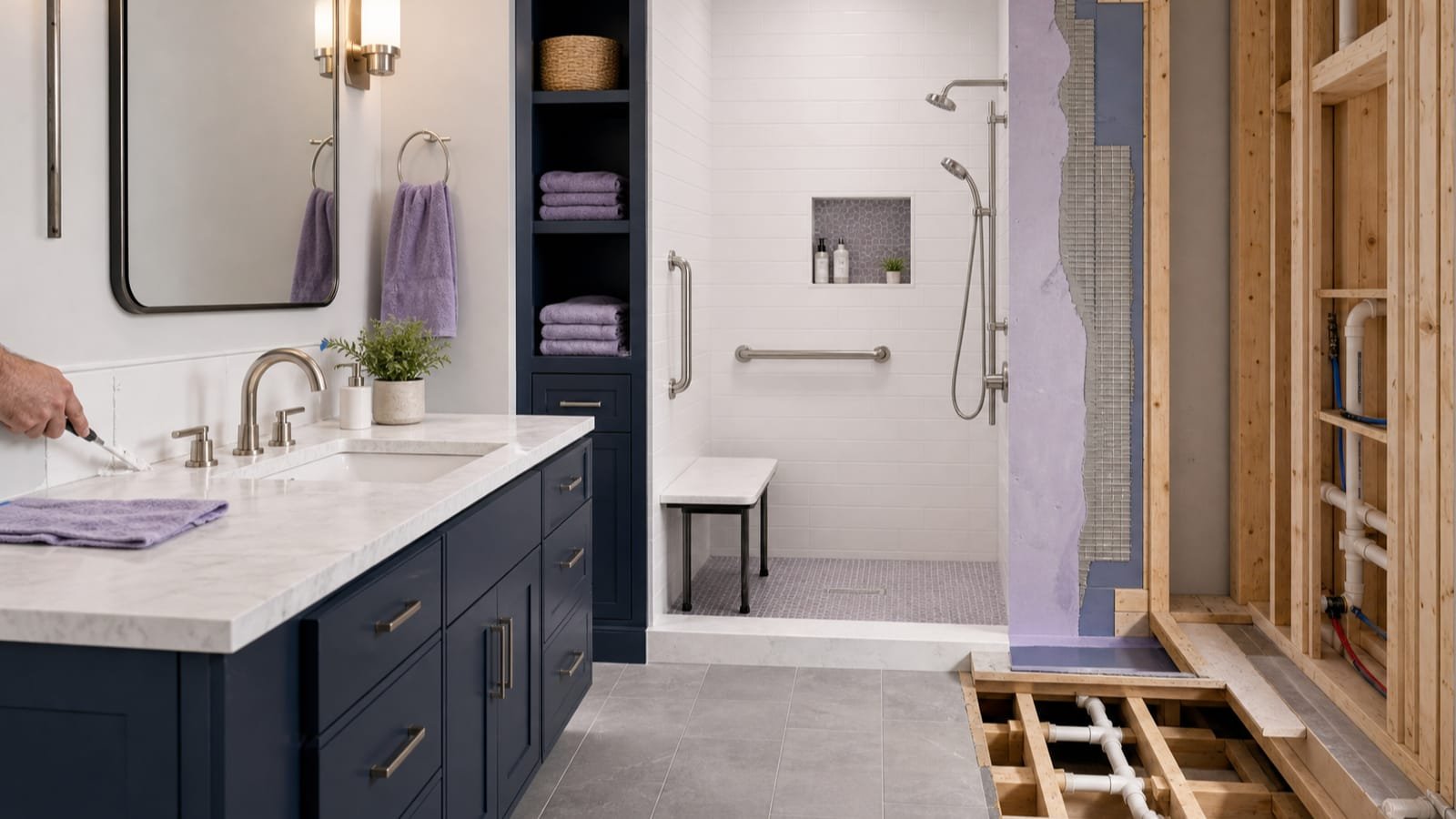
  • Aging-in-place features like curbless showers and grab-bar blocking, added while walls are open
  • One of the more dependable remodels for recouping value at resale
Is this right for you?

Who benefits most from Bathroom Remodeling

🛁

Homeowners wanting a modern space

If your bathroom feels dated or cramped, a remodel updates style and function in one project.

📈

Owners improving resale value

Bathrooms strongly influence buyers, and a tasteful remodel is among the more reliable value-adding upgrades.

🧓

Those planning to age in place

Curbless showers, grab-bar reinforcement, and comfort-height fixtures make a home livable for the long term.

👨‍👩‍👧

Growing or busy families

Double vanities, better storage, and smart layouts ease the daily crunch in shared bathrooms.

🧴

Owners wanting a spa-like primary bath

Soaking tubs, rainfall showers, and heated floors turn a functional bathroom into a daily retreat.

📏

Homeowners working with a small footprint

Smart layout choices can make even a compact bathroom feel significantly larger and easier to use.

What's included

What to expect

Layout and space planning

Good design starts by rethinking the floor plan — where the shower, vanity, and toilet sit — not just swapping fixtures in place.

Fixture and finish selection

Vanities, tile, faucets, and lighting are chosen to balance style, durability, and budget for a room used every day.

Walk-in and curbless showers

Popular, accessible shower designs replace cramped tubs or dated enclosures with open, easy-to-use space.

Smart storage solutions

Recessed niches, vanity organization, and built-ins make a small bathroom feel far more functional.

What to expect

How it works

A clear look at the typical steps involved, from start to finish.

Design and planning

You define goals and budget, then develop a layout and select fixtures, tile, and finishes that fit both.

Quote and scheduling

An itemized estimate confirms scope and cost tiers, and material orders are placed ahead of demolition.

Demolition and rough-in

Old fixtures are removed and any plumbing or electrical changes are roughed in and inspected where required.

Tile, fixtures, and finishes

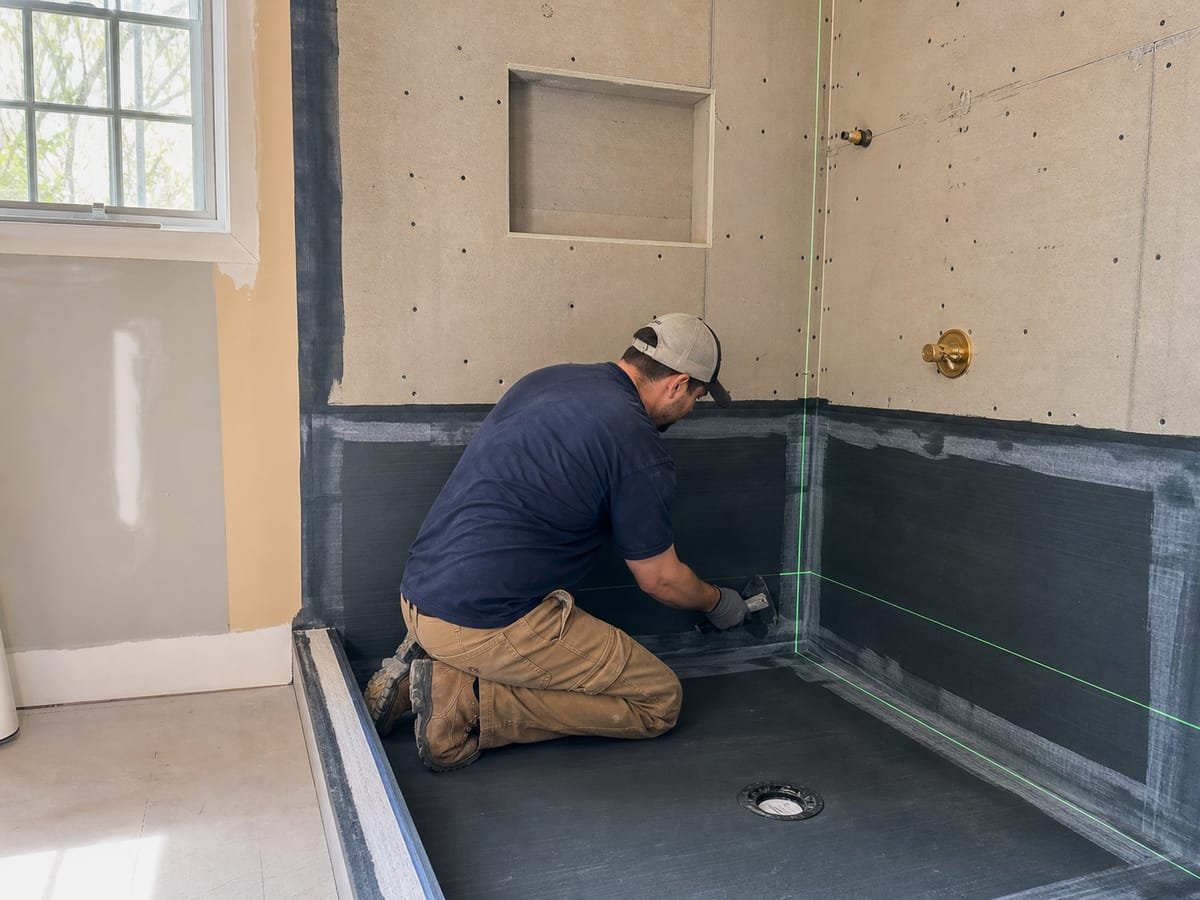
Waterproofing, tile, vanity, lighting, and fixtures are installed to bring the design to life.

Final walkthrough

You review the finished room together, confirming operation, fit, and finish before sign-off.

Before you decide

Key considerations

Important points to keep in mind as you explore this offer.

1

Keeping fixtures in their existing spots stretches your budget toward better finishes.

2

Choose timeless materials for permanent elements; save trends for easily swapped accessories.

3

Keeping at least one tub in the home is often smart for resale.

4

Add grab-bar blocking and accessibility features while walls are open — it's cheap insurance.

5

A properly sized exhaust fan protects your remodel from moisture damage.

6

If demolition reveals hidden water damage, budget flexibility for structural repair matters.

Decision support

Remodel Scope Comparison

Bathroom remodels range from a cosmetic refresh to a full gut renovation. Scope is the single biggest driver of cost and timeline — this table is a starting point for the conversation with a contractor.

What's typically includedTypical timelineGood fit when
Cosmetic refreshPaint, fixtures, hardware, maybe a new vanityDaysLayout works, finishes are dated
Mid-level remodelNew tile, tub/shower, vanity, some plumbing moves1–3 weeksLayout mostly works, want updated materials
Full renovationLayout changes, new plumbing/electrical, structural workSeveral weeks+Layout doesn't work, accessibility needs, or major damage

This tool is meant to help you organize your own thinking and the questions you ask a provider — it isn't personalized financial, legal, medical, or contracting advice, and it doesn't collect or store anything you enter.

Compare your options

Remodeling, Repair, or Reconstruction?

These three bathroom services solve different problems. Use this to confirm you're looking at the right one before requesting a quote.

Bathroom Remodeling (this service)

Best for: Updating the layout, fixtures, or finishes because you want a different bathroom — not because something is broken.

  • Full creative control over design and materials
  • Can significantly change how the space functions
  • Highest discretionary cost of the three
  • Longest typical timeline

Bathroom Repair

Best for: A specific, contained problem that doesn't require a full redesign.

  • Much lower cost and faster turnaround
  • Doesn't address a bathroom you simply want to look or function differently

Bathroom Reconstruction

Best for: Rebuilding after damage — a different starting point than a discretionary remodel.

  • Restores a damaged bathroom to functional condition
  • Driven by damage, not by design preference, and often insurance-involved rather than a personal budget decision

This comparison describes general, commonly available options — not every provider offers every option, and actual terms, pricing, and availability depend on the specific provider and your circumstances.

In depth

Bathroom Remodeling: Designing a Room That Works as Well as It Looks

A bathroom remodel is one of the most rewarding home improvements you can make — and one of the easiest to get wrong. Get it right, and you gain a space that makes every morning smoother and adds real value to your home. Get it wrong, and you've spent serious money on a room that photographs well but frustrates you daily, or looks dated within a few years. The difference almost always comes down to planning: thinking through how you actually use the room before choosing a single tile.

This guide walks through the decisions that matter most — layout, fixtures, finishes, budget, and future-proofing — so your remodel delivers on both function and style.

Start With Function, Not Finishes

It's tempting to begin a remodel by browsing beautiful tile and gleaming fixtures. Resist that. The most successful bathrooms start with a clear-eyed look at what isn't working now. Is the vanity too small for two people getting ready at once? Does the door swing into the shower? Is storage nonexistent? Is the shower cramped, the lighting flat, the ventilation weak?

Answering those questions shapes the layout, which is the single most impactful decision in a remodel. Sometimes the best improvement isn't a fancier fixture — it's moving the door, widening the vanity, or reconfiguring the shower. Once the layout serves how you live, the finishes have something worth dressing up.

The Layout Decision: To Move Plumbing or Not

One choice influences your budget more than almost any other: whether to relocate plumbing. Keeping the toilet, sink, and shower in their existing positions is far more economical, because it avoids running new supply and drain lines. If your current layout basically works, staying put lets you spend more on the finishes you'll see and touch every day.

Moving plumbing, on the other hand, unlocks layouts that a cramped or awkward footprint otherwise prevents — a larger walk-in shower, a double vanity, a better-placed toilet. It costs more and adds time, but for a bathroom that fundamentally doesn't function, it can be worth every dollar. The key is deciding deliberately, with a clear picture of the trade-off, rather than discovering the cost mid-project.

Choosing Fixtures and Finishes That Last

A bathroom is a demanding environment — constant humidity, temperature swings, daily wear. The materials you choose need to handle that while looking good for years.

  • Tile is the workhorse. Porcelain and ceramic resist moisture beautifully and come in nearly limitless looks. For the permanent, expensive surfaces, timeless and neutral choices age far better than of-the-moment trends.
  • Vanities balance storage and style; solid construction and moisture-resistant surfaces matter in a wet room.
  • Faucets and fixtures in quality finishes resist spotting and wear — worth spending on since you touch them constantly.
  • Ventilation is the unsung hero: a properly sized exhaust fan pulls moisture out and protects your entire remodel from the mold and damage that humidity causes.
  • Lighting works best in layers — task lighting at the mirror, ambient light overhead, and accent light to set a mood.

Walk-In Showers, Tubs, and the Resale Question

Curbless and walk-in showers have become the centerpiece of many modern remodels, prized for their open look and easy, curbless access. They're a strong choice — but there's a resale nuance worth knowing. Buyers with young children often want at least one bathtub in the home. A common, smart solution is to install a generous walk-in shower in the primary bath while keeping a tub in a secondary bathroom, satisfying both your daily preference and future buyers.

Designing for the Long Term

The best remodels think a few years ahead. Two forms of future-proofing cost little now and save a great deal later.

First, aging in place. Even if you don't need them today, features like a curbless shower entry, comfort-height fixtures, and blocking in the walls for future grab bars make a home livable for decades. Adding reinforcement while the walls are already open is inexpensive; retrofitting it later means opening the walls again. None of this has to look clinical — these features integrate invisibly into an attractive design.

Second, timelessness. Trends move fast, and the costliest elements of a bathroom — tile, vanity, fixtures — are the hardest to change. Anchor those in timeless, neutral choices, and express personality through paint, mirrors, hardware, and accessories that are cheap and easy to swap when tastes shift. That's how a remodel stays fresh without a second renovation.

Understanding the Budget

Bathroom remodel costs span a wide range because "remodel" covers everything from a cosmetic refresh to a full redesign. The major drivers are whether you move plumbing, the quality tier of fixtures and tile, the amount of custom work, and the size of the room. A refresh that keeps the layout and updates fixtures and paint sits at the affordable end; a redesign that relocates plumbing and adds custom tile and built-ins sits well above it.

One budgeting reality deserves special mention: the hidden surprise. When walls and floors are opened, remodels sometimes reveal water damage, rot, or outdated wiring that must be addressed. Wise homeowners keep a contingency in their budget for exactly this. If the damage turns out to be extensive, what began as a remodel may need to incorporate structural repair — a different and larger scope worth understanding up front.

Does a Bathroom Remodel Pay Off?

Financially, bathrooms punch above their weight. They strongly influence how buyers feel about a home, and a tasteful, well-executed remodel is consistently among the more reliable value-adding projects. Notably, it's the sensible mid-range remodels — not the most extravagant luxury builds — that tend to recoup value most dependably. Beyond resale, the daily return is real: a bathroom that fits your routine improves your mornings for as long as you live there.

What a Realistic Timeline Looks Like

From demolition to finished room, a full bathroom remodel typically runs three to five weeks on site, preceded by a planning-and-ordering phase that can take just as long — custom vanities, tile, and glass shower enclosures often have multi-week lead times, and a smart remodeler won't start demolition until materials are in hand. The on-site rhythm: demo and rough-in first, inspections, then waterproofing and tile (the slowest, most craft-dependent stretch), then fixtures, glass, paint, and punch list. Households with one bathroom should plan around a stretch with no usable shower; ask your contractor to sequence the work to shorten that window.

Common Remodeling Mistakes

The mistakes that haunt bathroom remodels are decisions, not workmanship. Skimping on ventilation is first — a beautiful room with an undersized exhaust fan grows mildew in its grout lines within a year. Others: choosing porous natural stone without committing to sealing it, moving plumbing for a minor layout gain that consumes a quarter of the budget, selecting a trendy vessel sink or wall-mount faucet without checking daily practicality, and ordering tile without extra for cuts and future repairs. Finally, remodeling a bathroom around damage — soft floors, stained ceilings below — without investigating the cause first turns a design project into a rebuild mid-stream; that scenario belongs to bathroom reconstruction and should be scoped honestly from the start. If the bathroom is one piece of a larger vision for the house, planning it inside a whole-home remodeling sequence often improves both the budget and the result.

Hiring the Right Remodeler

A bathroom remodel weaves together plumbing, tile, electrical, and finish carpentry, so coordination is everything. Look for remodelers who handle design and build together or coordinate the trades tightly, who are licensed and insured, and who provide itemized estimates that make the scope and cost tiers clear. Ask to see completed projects, ask how they handle unexpected findings behind the walls, and confirm they manage permits and inspections. A remodeler who communicates clearly before the work starts is the one most likely to deliver a room you love when it's done.

Bringing It Together

A great bathroom remodel is equal parts practical and beautiful — a room planned around your real routine, built with materials that endure, and finished with a look that won't feel dated next season. If you're ready to turn a tired or awkward bathroom into a space that works better every day and strengthens your home's value, the next step is to connect with an experienced remodeler who can translate your goals into a clear, itemized plan.

Where this comes from

Sources

Facts and figures in this guide that come from an outside authority are backed by the sources below. Pricing, program rules, and eligibility details change — always confirm current specifics with the source directly or a licensed professional before acting.

Ready to explore Bathroom Remodeling?

Still have questions? The FAQ below covers the most common ones. Or use the button to check availability — there's no cost and no obligation.

How we research every listing

Why you can rely on this information

Design-and-build experience

Listed remodelers coordinate design, plumbing, tile, and finishing so the project runs as one, not a series of disconnected trades.

Realistic budgets and timelines

A trustworthy remodeler sets clear expectations on cost tiers and schedule before demolition begins.

Verify the trades

Plumbing, electrical, and structural work belongs with licensed, insured trades — verify credentials before hiring.

Common questions answered

Bathroom Remodeling — questions people actually ask

How much does a bathroom remodel cost?

Cost depends heavily on scope, from a cosmetic refresh with new fixtures and paint to a full redesign that moves plumbing and adds custom tile. Fixture quality, tile choices, and whether the layout changes are the biggest drivers. Itemized quotes for your specific plan give the most accurate number.

Does a bathroom remodel add value to my home?

Bathrooms strongly influence buyers, and a tasteful, well-executed remodel is generally one of the more dependable value-adding projects. Mid-range remodels that modernize function and style tend to recoup value more reliably than the most expensive luxury builds.

How long does a bathroom remodel take?

A straightforward remodel often runs a couple of weeks; a full redesign that relocates plumbing, adds custom tile, or changes the layout takes longer. Material lead times and any permit or inspection steps also affect the schedule.

Should I move the plumbing in my bathroom?

Relocating the toilet, shower, or sink opens up layout possibilities but adds cost and time because it means new supply and drain lines. If the existing layout works, keeping fixtures in place stretches your budget further toward finishes.

Is a walk-in shower better than a tub?

It depends on your household. Curbless and walk-in showers are popular for accessibility and a modern look, but keeping at least one tub in the home is often wise for resale, especially for families with young children. Many remodels keep a tub in a secondary bath and add a large shower in the primary.

Do I need a permit for a bathroom remodel?

Cosmetic updates usually don't, but moving plumbing or electrical, or altering structure, typically requires a permit and inspection. A professional remodeler handles permitting and ensures the work meets local code.

How do I keep my remodel from looking dated in a few years?

Favor timeless, neutral choices for the expensive, permanent elements — tile, vanities, and fixtures — and express trends through easily changed items like paint, mirrors, and accessories. That keeps the room current without a costly redo when styles shift.

Can I add aging-in-place features without a clinical look?

Absolutely. Curbless showers, comfort-height toilets, and blocking for future grab bars can be integrated invisibly into an attractive design. Adding reinforcement while the walls are open is inexpensive and saves a much larger project later.

How this page was put together

Editorial information

  • We prioritize primary, authoritative sources over provider marketing.
  • Commercial relationships never influence what we publish or how it's written.
  • Pages are dated and updated only when they've genuinely been reviewed or changed.
Design & LayoutFixtures & TileWalk-In ShowersResale ValueAging in Place

Get started with Bathroom Remodeling — no obligation

No sign-up needed. No calls until you decide. Check availability, compare options, and proceed only when you're ready.