Health priority
Home Services

Mold Remediation
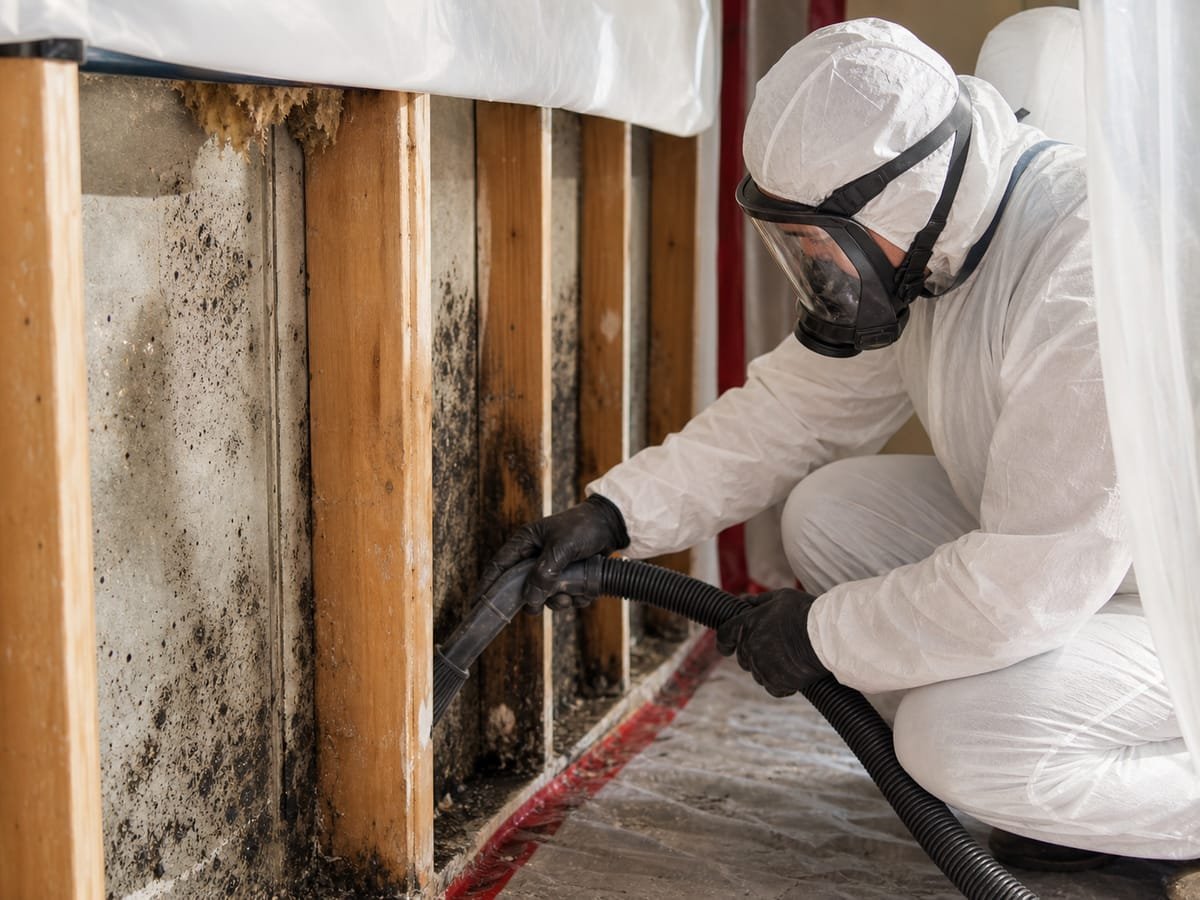
Safely contain, remove, and prevent mold — and correct the moisture source so it doesn't return.
Remove mold safely and stop it coming back.
Find Mold Remediation Pros

Wet basements come from water and pressure you can't wish away — proper drainage, sealing, and sump systems solve it at the source.
A basement that stays damp no matter how many times you clean it up is usually fighting groundwater pressure, not just surface moisture. This guide explains the drainage and sealing approaches that address the actual source.
A wet basement is rarely a mystery — it's water finding the path of least resistance through your foundation, driven by rain, groundwater, and hydrostatic pressure. Ignoring it invites mold, damaged belongings, and, over time, foundation problems. Proper basement waterproofing addresses the water at its source through the right combination of drainage, sealing, and pumping, turning a damp, unusable space into dry, reliable square footage you can actually live with. Because the right fix depends on exactly how water is entering — through the walls, the floor slab, or window wells — an accurate diagnosis before work begins matters as much as the materials used.
These overlap because water, mold, and contamination often show up together — but each has a different cause and cleanup protocol.
The source is a burst pipe, appliance failure, or other clean-water leak inside the home.
The water came from outside — storm surge, rising groundwater, or a natural flood event — which usually has different insurance implications (flood insurance vs. standard homeowners).
The problem is visible or suspected mold growth, whether or not you know the original water source.
The water is contaminated — sewage backup or Category 3 water — which requires different safety protocols than a clean-water leak.
You are trying to prevent water intrusion before it happens, not clean up after an event.
You are sealing and conditioning the crawl space itself, usually to control moisture and air quality, rather than responding to a specific leak or flood.
The real-world benefits of moving forward.
Any basement that leaks, seeps, or feels humid benefits from waterproofing to reclaim the space.
Frequent rain and high groundwater put constant pressure on foundations that waterproofing manages.
Waterproofing first protects the investment before adding flooring, drywall, and finishes below grade.
Basement dampness driving musty smells and mold is resolved by controlling the moisture at its source.
A documented waterproofing history reassures buyers and can prevent a wet basement from becoming a negotiating point.
Protecting stored belongings from moisture damage is a common, practical reason to waterproof.
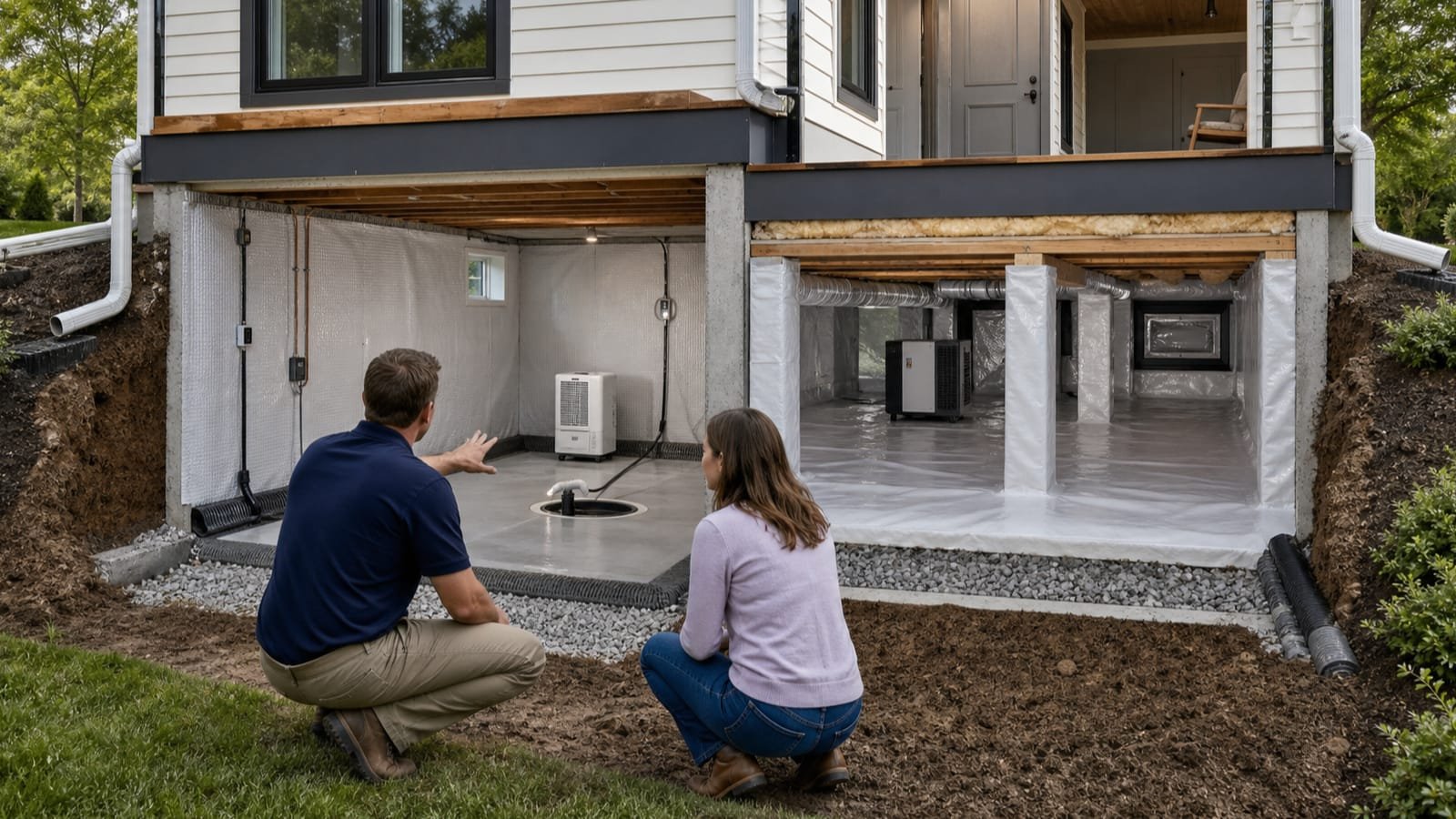
Perimeter drains and channels collect water that enters and route it to a sump for removal, a core interior solution.
A sump pump — often with a backup — actively removes collected water before it can flood the basement.
Exterior membranes, sealing, and drainage keep water away from the foundation from the outside where feasible.
Foundation cracks and seepage points are sealed to close the paths water uses to get in.
A clear look at the typical steps involved, from start to finish.
A professional identifies where and why water is entering, examining cracks, seepage, grading, and drainage.
The right mix of interior drainage, sump pump, exterior work, and sealing is planned for your specific problem.
Drainage systems, sump pumps, and sealing are installed to collect, remove, and block water at its source.
Grading and downspout adjustments direct surface water away to reduce the load on the foundation.
The system is checked to confirm it keeps the basement dry, often backed by a warranty.
Important points to keep in mind as you explore this offer.
Wet basements come from water pressure — sealing alone rarely solves serious cases.
A sump pump with a backup protects against storm-related power outages.
Fixing grading, gutters, and downspouts reduces the water load at the source.
Waterproof before finishing a basement to protect the investment.
Persistent basement water can worsen foundation cracks over time.
Basement moisture drives mold — controlling it protects air quality too.
These are common warning signs worth having evaluated by a professional before they become a larger water or mold issue.
This tool is meant to help you organize your own thinking and the questions you ask a provider — it isn't personalized financial, legal, medical, or contracting advice, and it doesn't collect or store anything you enter.
Basement waterproofing generally falls into a few categories, depending on whether you're managing water that's already getting in or stopping it from entering at all.
Best for: Managing water that's already getting in, from the inside.
Best for: Stopping water from reaching the foundation wall in the first place.
Best for: A basement with a sump pump system already in place that's failing, undersized, or missing a backup.
This comparison describes general, commonly available options — not every provider offers every option, and actual terms, pricing, and availability depend on the specific provider and your circumstances.
A wet basement feels like bad luck, but it's really just physics. Rain falls, groundwater rises, and the water that collects in the soil around your foundation is under pressure — hydrostatic pressure — that pushes it toward any available opening. Concrete is porous, foundations develop cracks, and joints offer paths inward. Given those conditions, water gets in not because something went dramatically wrong, but because water always finds the path of least resistance. Basement waterproofing is the practice of managing that reality: keeping the water out where you can, and safely removing what does get in, so a damp and unusable space becomes dry, reliable square footage.
It's tempting to treat a damp basement as a nuisance to live around, but the consequences compound. The moisture creates ideal conditions for mold and mildew, which affect both the space and the air quality of the whole house above. It ruins belongings, flooring, and finishes stored or installed below. It drives up indoor humidity, making the home less comfortable and harder to condition. And over the long term, persistent water and pressure can worsen foundation cracks and contribute to structural deterioration, turning a moisture problem into a much more expensive one. Addressing basement water isn't just about reclaiming a room; it's about protecting the structure, the air, and the value of the home.
Effective waterproofing starts with understanding the sources, because the fix depends on them. Most basement water traces to rain and groundwater accumulating around the foundation and being forced inside through cracks, joints, and porous concrete. Several factors make it worse: poor grading that slopes soil toward the house instead of away, clogged or failing gutters that overflow near the foundation, and downspouts that discharge water right at the base of the wall. Often, the water problem is a combination — pressure from below meeting extra water delivered from above by a drainage system that isn't doing its job. A good assessment identifies the specific paths and contributors for your home rather than guessing.
Waterproofing generally works from one of two directions, and understanding the difference helps you evaluate proposals.
Interior systems manage water that enters. A perimeter drain installed inside the basement collects water and channels it to a sump pump, which removes it before it can pool on the floor. This approach is less invasive, doesn't require excavating around the house, and is a common, effective solution for many wet basements.
Exterior waterproofing aims to keep water away from the foundation before it ever reaches the wall, using membranes, sealing, and exterior drainage — typically installed by excavating around the foundation. It's more involved and more expensive, but it addresses water at the outside face of the structure.
Neither is universally "better"; the right choice depends on the nature and severity of your water problem, which is exactly what a professional assessment determines.
For interior waterproofing, the sump pump is the workhorse. A drainage system collects water, but something has to actively move it out — that's the pump's job, lifting collected water up and away from the basement. Because the heaviest water intrusion so often coincides with major storms, and because major storms so often cause power outages, a backup pump (battery-powered or otherwise) is frequently recommended. There's a cruel irony to a sump pump that fails during the exact storm it was installed to handle, and a backup guards against precisely that scenario. When evaluating a system, ask about backup protection.
Homeowners frequently hope that a waterproofing paint or sealer will solve the problem cheaply, and for very minor surface dampness these products can help. But it's important to be realistic: coatings and sealers generally can't overcome significant water pressure. When water is being pushed against the foundation with real force, it will find a path around a coating, or the coating will fail. Serious or persistent basement water almost always needs an actual drainage-and-pump system that gives the water somewhere to go, not just a barrier hoping to hold it back. Being clear-eyed about this saves the disappointment of a "solution" that peels and leaks within a season.
The smartest waterproofing strategies don't just handle water at the wall — they reduce how much water reaches the foundation in the first place. This is where the humble exterior details matter. Correcting grading so the soil slopes away from the house, keeping gutters clear so they don't overflow, and extending downspouts to discharge water several feet from the foundation all lighten the load on any waterproofing system. These measures connect basement waterproofing to your home's broader water management, including how well your gutters carry roof runoff away. Handling the water before it becomes a basement problem is always cheaper than handling it after.
One piece of timing advice can save a homeowner a great deal of money: waterproof before finishing a basement. Finishing a basement that isn't reliably dry is an invitation to disaster — new flooring buckles, drywall grows mold, and moisture gets trapped behind finishes where it does hidden damage. If a finished, livable basement is your goal, waterproofing is the essential first step that protects everything you build on top of it. And if recurring dampness is already fueling mold below, controlling the moisture through waterproofing is what makes remediation last.
Costs track the approach: exterior drainage corrections (grading, downspout extensions) are the inexpensive first tier; interior perimeter drain systems with a sump are the mid-range workhorse, priced substantially by linear footage; full exterior excavation and membrane work is the premium tier reserved for cases that truly need it. A typical interior system installation runs two to four days — jackhammering the slab perimeter, setting drain tile and sump, and re-pouring concrete — noisy, dusty, and then done. When comparing bids, insist each contractor explains why their proposed method fits your specific water problem; identical houses can need different solutions depending on soil, grade, and water table. A transferable warranty matters here more than in most trades, both because water problems recur and because buyers ask.
The perennial one is treating symptoms in the wrong order: buying dehumidifiers and sealer paint while downspouts still pour roof water beside the foundation — check the cheap exterior causes (a task as simple as gutter cleaning and repair or properly sized gutters with extended downspouts) before financing an interior system. Others: finishing a basement that hasn't stayed dry through a full wet season, skipping the battery backup on a sump pump that will be needed precisely when storms knock out power, ignoring hairline wall cracks until they widen, and accepting a one-size-fits-all system from a company that quotes without diagnosing. Take the adjacent risks seriously too: a persistently damp basement is a mold remediation project in the making, and if your home sits over a dirt crawl space instead of a full basement, the equivalent fix is crawl space encapsulation. When water arrives catastrophically rather than chronically, that's flood damage restoration first — waterproofing comes after the recovery, to prevent the sequel.
A wet basement isn't a permanent condition you have to accept — it's a solvable problem, once you address the water at its source with the right combination of drainage, pumping, sealing, and exterior improvements. Done properly, waterproofing reclaims usable space, protects your foundation and belongings, and improves the health of your whole home. Connecting with professionals who diagnose where and why water enters, design a complete system rather than a superficial coating, and stand behind their work is the way to get a basement that stays dry through every storm.
Facts and figures in this guide that come from an outside authority are backed by the sources below. Pricing, program rules, and eligibility details change — always confirm current specifics with the source directly or a licensed professional before acting.
Still have questions? The FAQ below covers the most common ones. Or use the button to check availability — there's no cost and no obligation.
Listed pros diagnose where and why water enters, rather than applying a one-size coating that won't hold.
Reputable teams pair sealing with drainage and pumping, since sealing alone rarely defeats water pressure.
Look for waterproofing solutions and installers that stand behind the results.
Basement water usually comes from rain and groundwater building up around the foundation and being pushed inside by hydrostatic pressure, entering through cracks, joints, and porous concrete. Poor grading, clogged gutters, and downspouts discharging near the foundation often make it worse. Identifying the specific paths is key to fixing it.
Interior systems manage water that enters by collecting it with perimeter drains and removing it with a sump pump. Exterior waterproofing keeps water away from the foundation from outside using membranes, sealing, and drainage. Interior solutions are less invasive and common; exterior work is more involved but addresses water before it reaches the wall. The right approach depends on your situation.
For many wet basements, yes. A sump pump actively removes water collected by a drainage system before it can flood the floor, making it a cornerstone of interior waterproofing. A battery or backup pump is often recommended so protection continues during the power outages that frequently accompany heavy storms.
Waterproofing coatings and sealers can help with minor dampness on the surface, but they generally can't overcome significant water pressure on their own, and water often finds another path. Persistent or serious basement water usually needs a drainage-and-pump system, not just a coating.
Cost depends on the method, the size of the basement, the severity of the water problem, and whether interior or exterior work is involved. A localized crack repair is modest; a full perimeter drainage system with a sump pump is a larger investment. An on-site assessment provides the accurate figure.
Over time, yes. Persistent water and pressure can worsen cracks and contribute to foundation deterioration, and the moisture fuels mold and damages anything stored below. Addressing basement water protects both the structure and the home's air quality, which is why it's worth doing rather than ignoring.
Absolutely. Finishing a basement that isn't dry risks ruining new flooring, drywall, and finishes and trapping moisture that breeds mold. Waterproofing first protects that investment and ensures the finished space stays healthy and usable.
Continue your research with the most closely related offers, or browse every Home Services offer.
Safely contain, remove, and prevent mold — and correct the moisture source so it doesn't return.
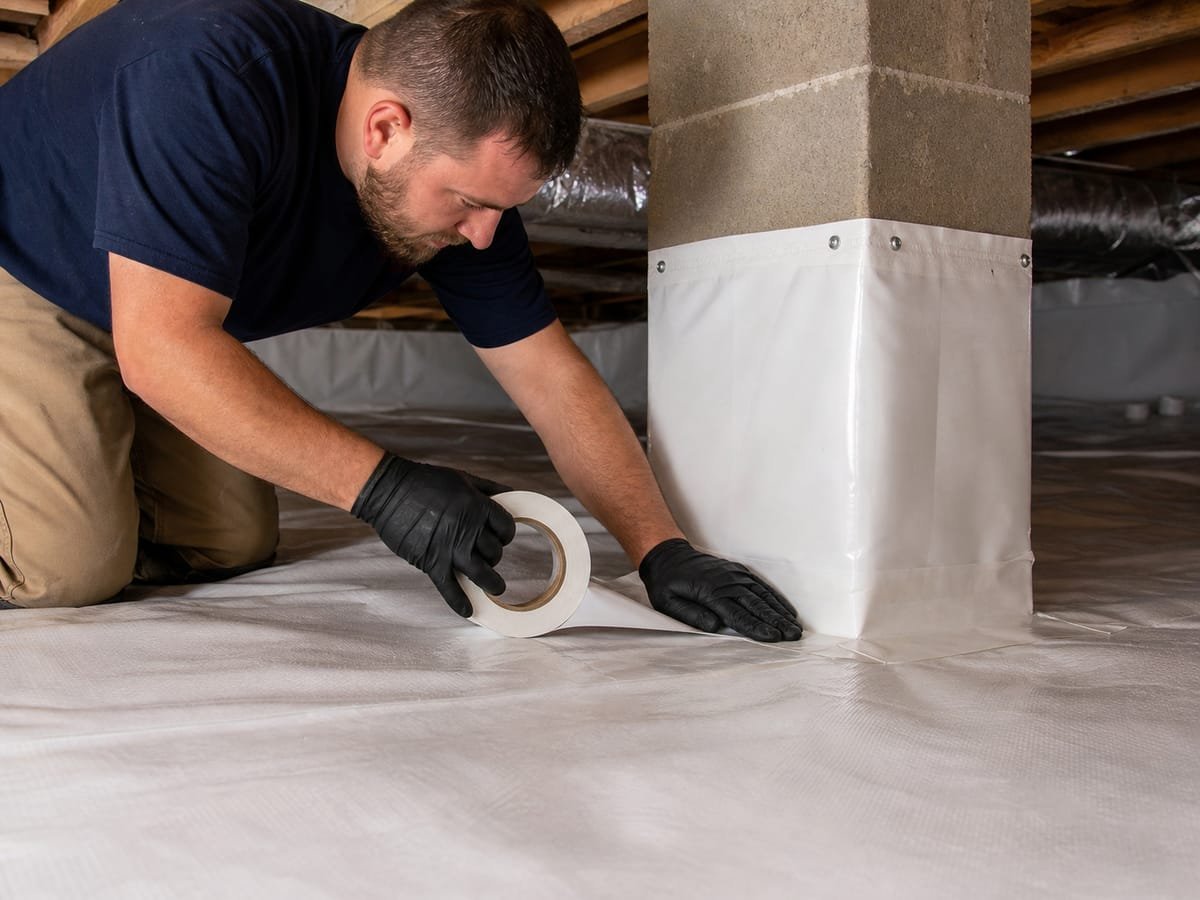
Seal your crawl space with a vapor barrier and moisture control to stop mold, wood rot, humidity, and energy loss.
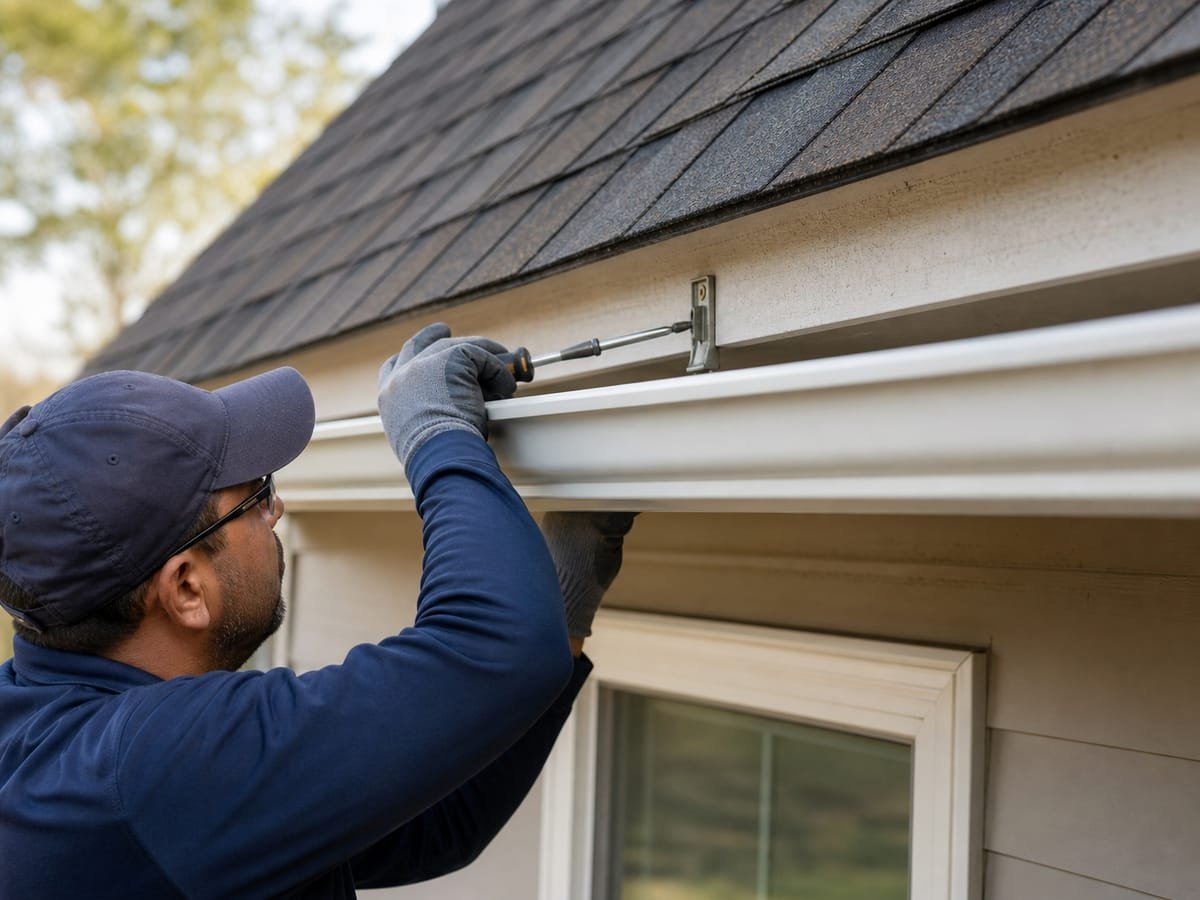
Install seamless, correctly sized gutters that protect your roof, siding, and foundation from water damage.
Independent reading on questions this offer doesn't answer on its own.
No sign-up needed. No calls until you decide. Check availability, compare options, and proceed only when you're ready.