
Water Damage Cleanup: Which Service Do You Need?
A safety-first triage guide for matching the water source and contamination risk to the right cleanup service.
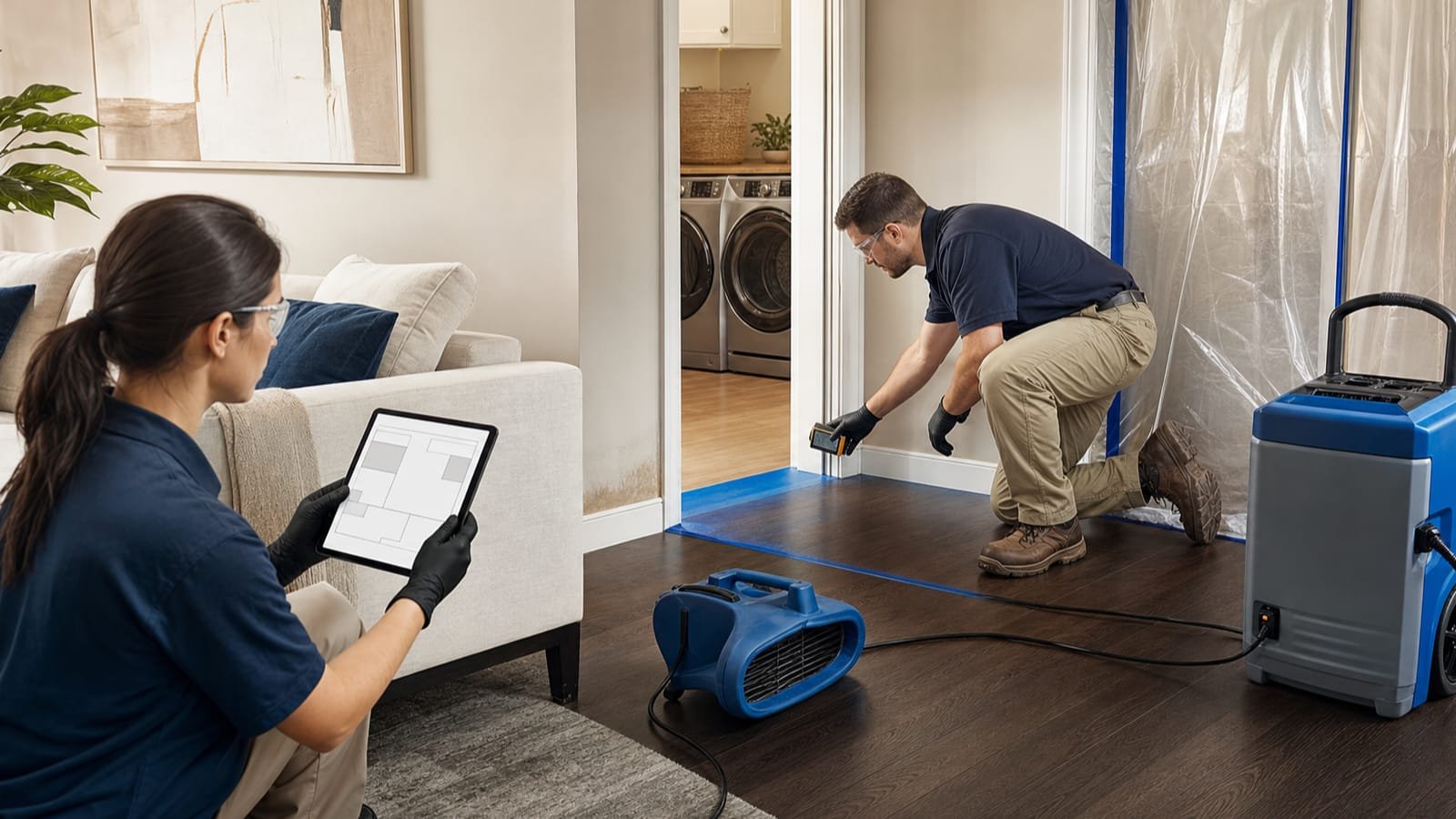
Key takeaways
- The water source and contamination risk determine the appropriate cleanup path, not simply how much water is visible.
- Electrical, gas, structural, sewage, and chemical hazards must be addressed before cleanup begins.
- Document conditions and contact the insurer before discarding or altering property when it is safe to wait.
- EPA and CDC guidance emphasizes drying water-damaged materials quickly, generally within 24 to 48 hours, to reduce mold growth.
- Cleanup is incomplete until the source is corrected, moisture is measured, contaminated materials are handled appropriately, and drying is verified.
A wet floor can begin with a supply-line break, rainwater entering from outside, a sewer backup, or a slow leak that has already supported mold. Those events may look similar in a photograph, but they do not create the same hazards or require the same cleanup. Choose the service by source, contamination, affected materials, and time, not by water depth alone. This guide helps you identify the correct first call while preserving the role of an on-site professional assessment.
Stay out when water may contact electricity, the structure appears unstable, sewage or chemicals may be present, gas is suspected, or authorities have not cleared a flood-damaged building. Never operate a generator, fuel-powered pump, or other combustion equipment indoors or near openings. Use emergency services, the utility, or qualified professionals as appropriate.
Start with the source
Match the event to the likely first service
| What happened | Likely first service | Why the distinction matters |
|---|---|---|
| Broken supply line, appliance leak, or other indoor water release without known contamination | Water damage restoration | Extraction, material assessment, controlled drying, and moisture verification begin after the source is stopped and safety is established |
| Stormwater, rising groundwater, river, coastal, or other outdoor flooding | Flood damage restoration | Outdoor floodwater may carry sewage, chemicals, soil, and debris and can affect structure, utilities, and large areas |
| Toilet overflow involving waste, sewer-line backup, or septic-system release | Sewage cleanup | Contamination changes personal protection, containment, removal, cleaning, and disposal decisions |
| Visible growth, persistent musty odor, or water-damaged materials that remained wet | Mold remediation or assessment | The moisture source must be corrected and affected materials evaluated rather than simply covered or deodorized |
| Uncertain source or overlapping conditions | Qualified restoration assessment | A professional can trace moisture, assess contamination and materials, and coordinate specialty work |
Conditions can change. Water that began from a relatively clean indoor source may pass through dirty assemblies, remain in place, or mix with other contaminants. Outdoor floodwater can include sewage or chemicals. A sewage backup is not an ordinary drying job. Mold may become a separate problem when materials are not dried promptly. Describe the source and path honestly when calling; do not label water as clean merely because it looks clear.
The safe first-response sequence
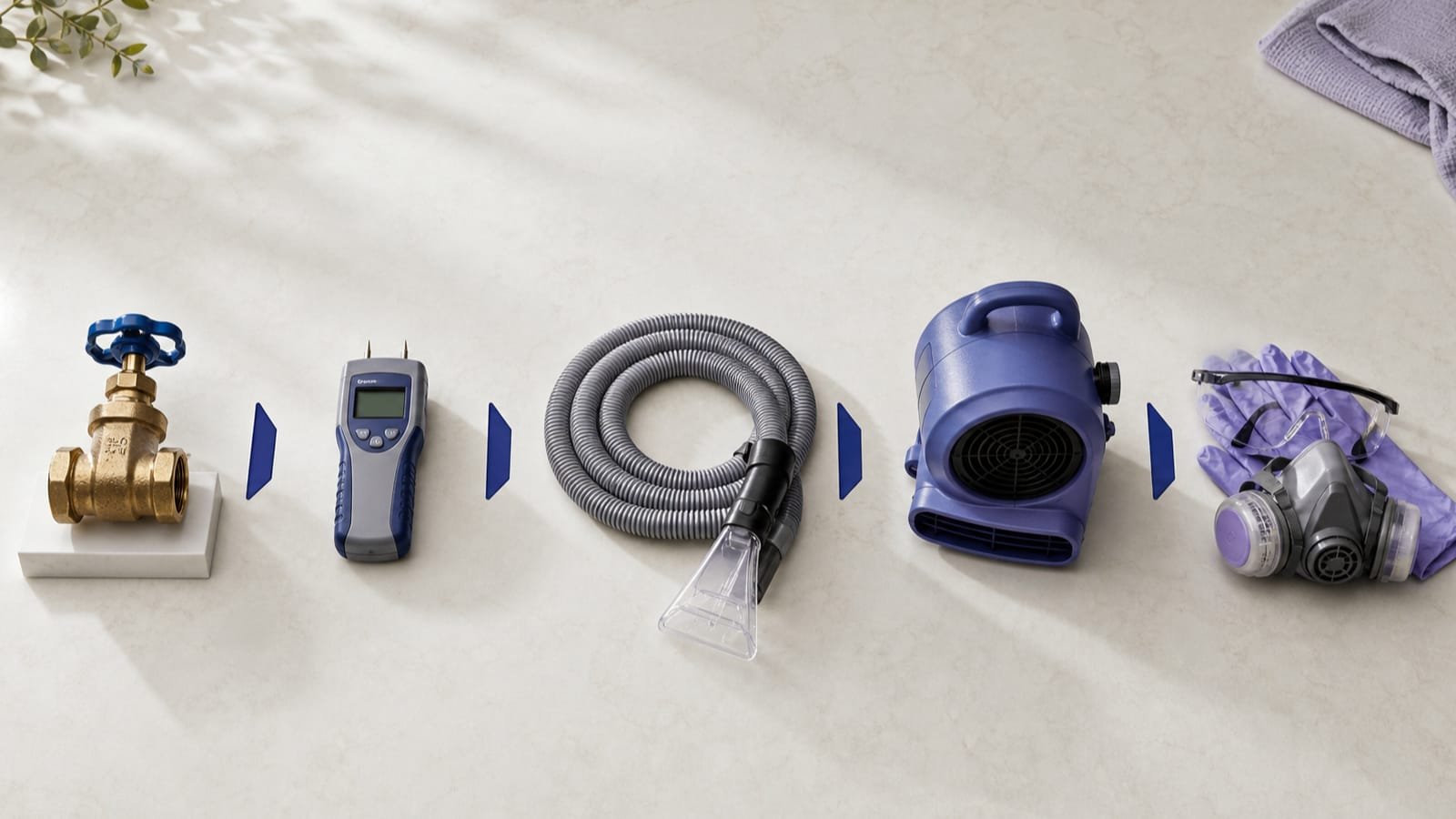
- Protect people and pets; avoid contaminated water, unstable areas, and electrical or gas hazards.
- Stop the water only if the shutoff can be reached safely; otherwise call the utility, plumber, emergency service, or building professional.
- Photograph rooms, water lines, damaged belongings, and the apparent source before cleanup changes the scene.
- Contact the insurer promptly when coverage may apply and ask what emergency steps and documentation are required.
- Remove standing water and begin controlled drying only after the area has been declared safe and the contamination level is understood.
- Separate salvageable items from materials that cannot be safely cleaned and dried, using professional guidance for contaminated losses.
- Verify that the source is repaired and moisture goals are met before reconstruction closes walls or floors.
The EPA and CDC both emphasize speed: water-damaged areas and belongings should generally be dried within 24 to 48 hours to reduce the chance of mold growth. That is a response target, not a promise that every material can be saved. Drying time depends on the material, assembly, humidity, airflow, temperature, contamination, and how far water traveled. Materials contacted by floodwater or sewage may need removal even when equipment could physically dry them.
What professional restoration should measure
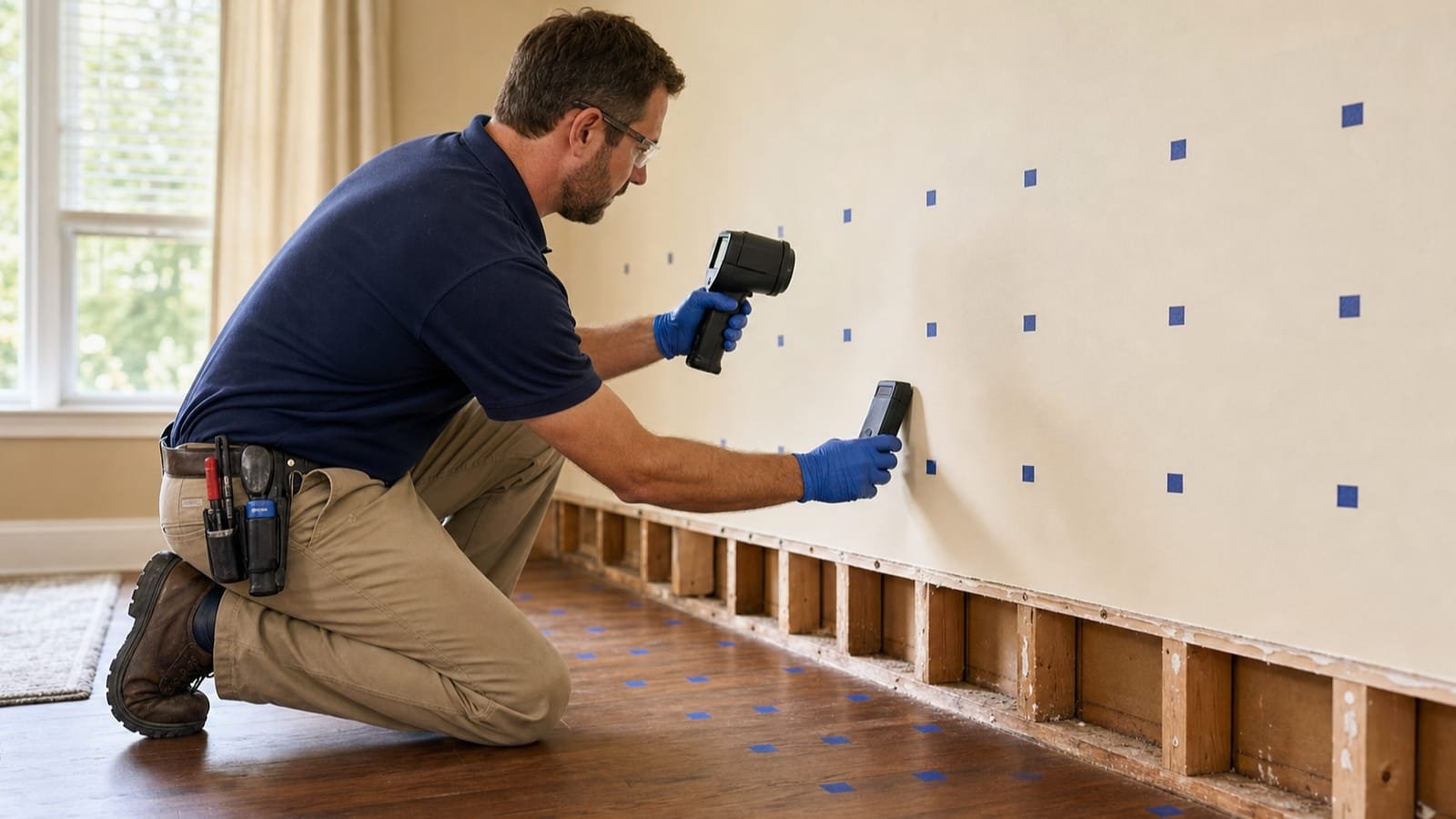
A room can look dry while moisture remains beneath flooring, behind baseboards, inside wall cavities, or in insulation. A defensible restoration scope identifies affected materials and uses moisture readings to establish where water traveled. Ask what instruments are used, where readings are recorded, what unaffected comparison area is used, and what drying goal will close the project. Equipment placement should follow the affected volume and materials rather than a generic number of fans or dehumidifiers.
What to request in the written restoration scope
- Water source, affected rooms, known contamination, and safety limitations
- Moisture map or documented readings for affected materials and comparison areas
- Items and building materials proposed for cleaning, drying, removal, or specialist evaluation
- Containment, air movement, dehumidification, filtration, and monitoring plan
- Daily or scheduled drying documentation and the criteria for completion
- Contents handling, storage, disposal, and photograph or inventory process
- Work excluded from mitigation, including plumbing, electrical, structural, mold, or reconstruction work
- Pricing method, authorization process, equipment charges, and change-order rules
When mold changes the job
Mold is a moisture-control issue before it is a cleaning-product issue. EPA guidance says the water problem must be fixed or mold is likely to return. If a flooded home or its contents could not be dried within 24 to 48 hours, EPA and CDC guidance says to assume mold growth may be present. Visible growth, odor, prolonged wetting, affected HVAC components, or concealed wet assemblies may require a mold-specific assessment and containment plan rather than ordinary cleaning.
Health vulnerabilities matter. CDC advises that people with asthma, chronic lung disease, weakened immune systems, or other relevant conditions avoid mold-contaminated spaces or seek appropriate medical guidance. Children should not take part in disaster cleanup. This guide cannot decide whether a person can safely participate; use current public-health advice and qualified local help.
Compare restoration companies by process
The Institute of Inspection, Cleaning and Restoration Certification publishes the ANSI/IICRC S500 professional water-damage restoration standard. Ask whether the company follows the current applicable standard, who holds relevant certifications, and how the firm handles conditions beyond its scope. Verify required local licensing, insurance, physical business details, and references. A credible firm should explain why materials are being removed or retained, show how drying is documented, and identify when a plumber, electrician, structural professional, industrial hygienist, mold specialist, or reconstruction contractor is needed.
Signals in a restoration proposal
| Stronger signal | Reason for caution |
|---|---|
| Written source, contamination, material, and moisture assessment | A room-size price before the source and water path are assessed |
| Clear boundary between emergency mitigation and reconstruction | Pressure to authorize an undefined rebuild at the first visit |
| Documented monitoring and completion criteria | Equipment left without recorded readings or a drying target |
| Specific reasons for discarding or salvaging each material type | Everything is discarded or everything is promised salvageable without support |
| Written pricing, equipment rates, authorizations, and change process | Blank forms, verbal promises, large upfront payment, or cash-only pressure |
Avoid five expensive handoff failures
Before mitigation becomes reconstruction
- Confirm the original plumbing, roof, drainage, sewer, or groundwater source is corrected
- Obtain final moisture documentation rather than relying only on appearance
- Confirm contaminated and unsalvageable materials were handled as specified
- Resolve whether mold assessment or post-remediation verification is appropriate before closing assemblies
- Make the reconstruction scope identify permits, matching limitations, code upgrades, warranties, and responsibility for hidden damage
The most common failure is closing the project too early. New flooring over a wet subfloor, new drywall over damp framing, or paint over unresolved growth can convert an emergency cleanup into a recurring problem. Keep the mitigation documentation with photographs, readings, invoices, disposal records, and the source repair. Those records help the reconstruction contractor understand what happened and give the homeowner a clearer basis for future questions.
Explore Water Damage RestorationRapid water extraction, drying, and restoration after leaks, burst pipes, or storm intrusion — before mold and structural damage set in. Explore Flood Damage RestorationSpecialized cleanup, drying, and restoration after external flooding — handling contamination, scale, and the flood insurance realities. Explore Sewage CleanupSafe removal, decontamination, and restoration after sewage backups — handling a serious biohazard the right way. Explore Mold RemediationSafely contain, remove, and prevent mold — and correct the moisture source so it doesn't return.


Frequently asked questions
Is water from a broken pipe always safe to clean myself?
Not necessarily. Electricity, structural damage, the water's path, affected materials, elapsed time, hidden contamination, and household health risks still matter. Stop the source only when it is safe and obtain professional assessment when conditions are uncertain or extensive.
What is the difference between water damage restoration and flood damage restoration?
Water damage restoration often begins with an indoor release such as plumbing or appliance water. Flood restoration addresses water entering from outdoors and the broader contamination, structural, utility, and debris risks that may follow. The on-site condition determines the actual protocol.
When does a water loss become a mold problem?
There is no single visible threshold, but EPA and CDC guidance stresses drying within 24 to 48 hours. If materials remained wet, growth or odor is present, or moisture is concealed, a mold-specific assessment may be appropriate.
Should I throw damaged belongings away immediately?
Address safety first and follow public-health guidance for contaminated items. When it is safe to wait, photograph and inventory damage and contact the insurer before disposal. Some porous materials cannot be safely restored, while specialist conservation may be possible for certain valuable items.
How do I know when a structure is dry?
Appearance and touch are not enough. Ask for documented moisture readings, unaffected comparison readings or material-specific drying goals, and an explanation of which assemblies were tested before equipment is removed or reconstruction begins.
Can one company handle cleanup, mold, and reconstruction?
Some companies offer all phases, while others specialize. Either model can work if scopes, qualifications, conflicts, documentation, pricing, and completion criteria are clear. Local rules may require separate licenses or independent assessment for certain work.
Related offers
Sources
Facts and figures in this guide that come from an outside authority are backed by the sources below. Pricing, program rules, and eligibility details change — always confirm current specifics with the source directly or a licensed professional before acting.
- Flooded HomeU.S. Environmental Protection Agency · Accessed 2026-07-19
- Safety Guidelines: Reentering Your Flooded HomeCenters for Disease Control and Prevention · Accessed 2026-07-19
- ANSI/IICRC S500 Standard for Professional Water Damage RestorationInstitute of Inspection, Cleaning and Restoration Certification · Accessed 2026-07-19
- Disaster Cleanup and Repair for Your HomeAmerican Red Cross · Accessed 2026-07-19
- Homeowner SolutionsRestoration Industry Association · Accessed 2026-07-19
Editorial information
- We prioritize primary, authoritative sources over provider marketing.
- Commercial relationships never influence what we publish or how it's written.
- Pages are dated and updated only when they've genuinely been reviewed or changed.
Related guides
Window Replacement or Remodeling? Choose the Right Project Scope
Compare insert replacement, full-frame replacement, and structural window remodeling before requesting bids or choosing products.
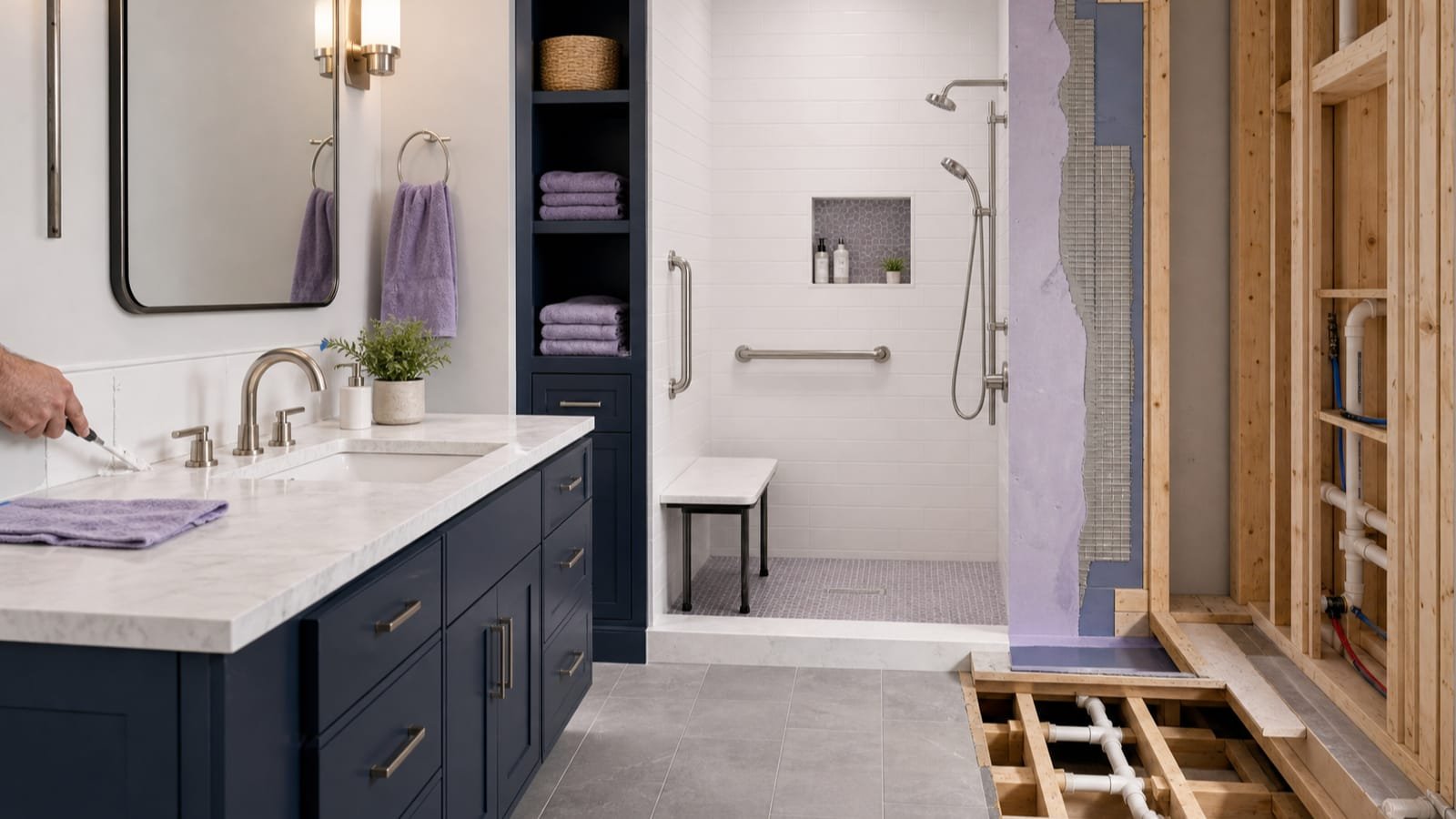
Bathroom Repair, Remodel, or Reconstruction? A Scope Decision Guide
Use moisture, safety, layout, and system-condition evidence to decide whether a bathroom needs repair, remodeling, or reconstruction.

Kitchen Repair, Remodel, or Reconstruction? A Scope Decision Guide
Separate targeted kitchen repairs from functional remodeling and damage-driven reconstruction, then compare bids on one consistent scope.
Ready to explore Water Damage Restoration?
Continue your research or check availability — there's no cost and no obligation.