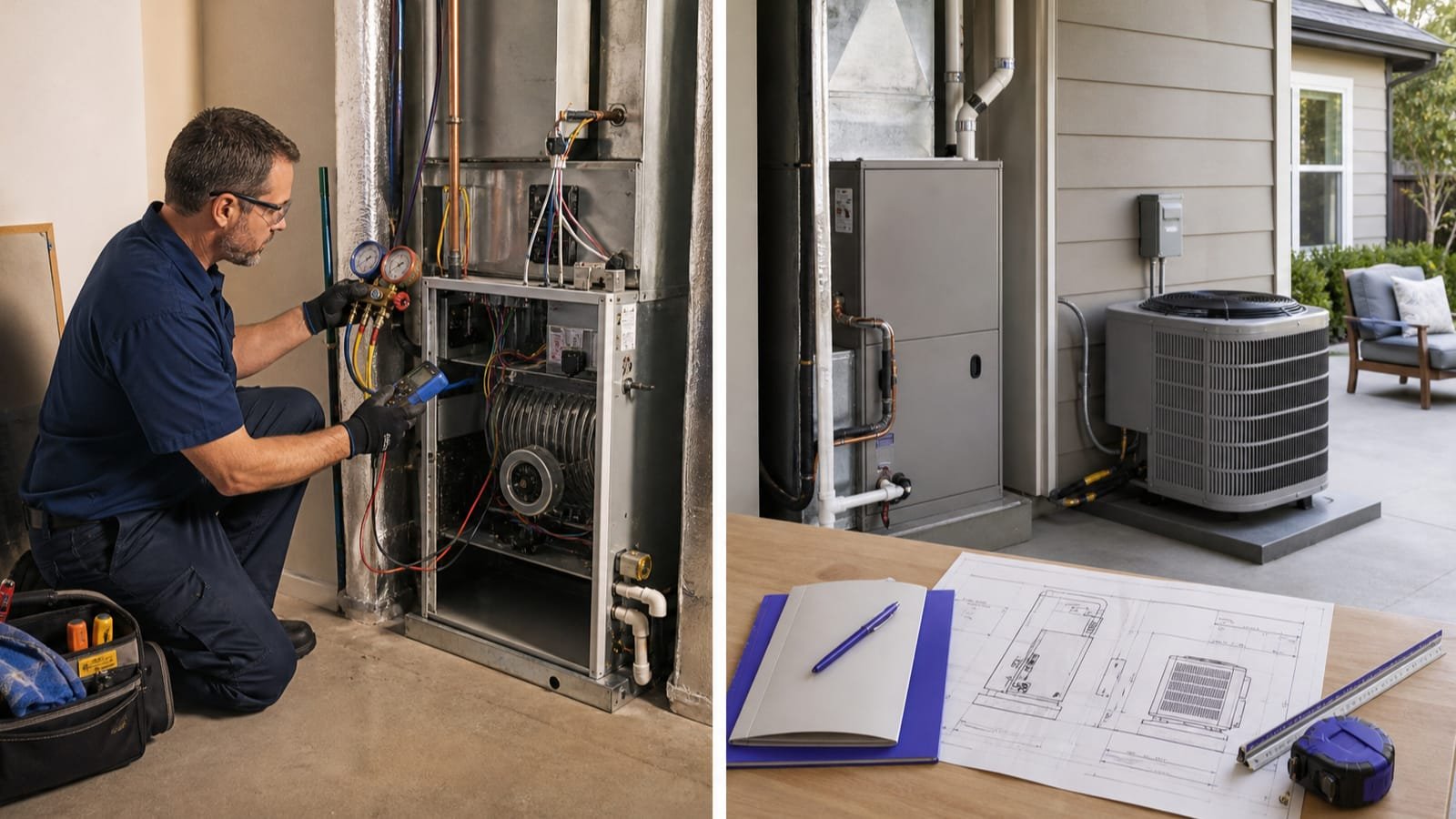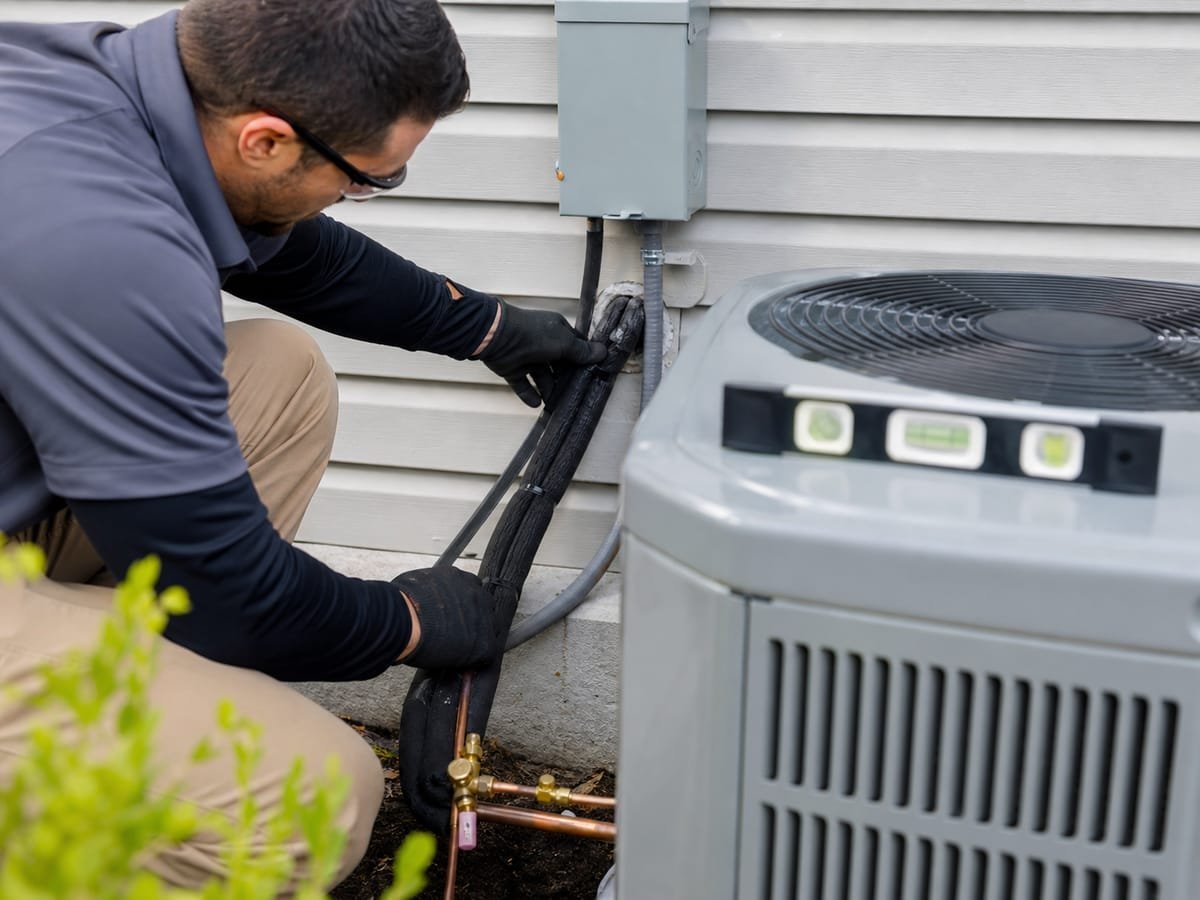

HVAC Installation
Install a properly sized, efficient heating and cooling system — with guidance on system type, efficiency ratings, and rebates.
The right system, sized and installed correctly.
Compare HVAC Installation Quotes

No cool air, no heat, strange noises, or a spiking bill — connect with experienced technicians who diagnose and fix it right.
A heating or cooling system rarely fails at a convenient moment — often it's during a heat wave or cold snap when comfort matters most. This guide helps you understand common failure signs and find a technician who diagnoses the real issue.
When your heating or cooling quits, comfort disappears fast — and in extreme weather, a failed system is more than an inconvenience. HVAC repair gets you comfortable again quickly, with skilled technicians who diagnose the real cause of a breakdown rather than guessing. Whether it's an AC blowing warm air, a furnace that won't fire, an unfamiliar noise, or an energy bill that's suddenly climbing, a proper repair restores performance and often saves you from an unnecessary early replacement. Catching a developing problem early — an odd sound, a spike in your bill, uneven temperatures — often makes the difference between a routine repair and a much larger one.
Heating and cooling needs generally fall into three buckets: something is broken and needs fixing, the whole system needs replacing, or you are staying ahead of both with routine service.
Your current system has a specific problem — it is not heating, cooling, or running correctly — and needs a fix, not a replacement.
You need a new system entirely — replacing an aging or failed unit, or installing one where there was not one before.
Nothing is currently broken — you want routine service to keep the system running efficiently and catch small issues early.
The real-world benefits of moving forward.
An AC blowing warm air in summer heat is urgent, especially for children, older adults, and pets.
A furnace or heat pump that won't warm the house in cold weather needs prompt, safe repair.
Grinding, banging, or squealing signals a developing failure best addressed before it worsens.
A sudden jump in cooling or heating costs often points to a system working harder than it should.
Fast HVAC repair keeps rental units comfortable and habitable, which matters for tenant retention and local codes.
Repeated small repairs on an older system are worth having a technician assess honestly before the next breakdown.
Technicians test the components — compressor, capacitor, blower, ignition, refrigerant, thermostat — to pinpoint the true cause.
Air conditioners, heat pumps, furnaces, and their controls are repaired across the failures homeowners encounter most.
Low refrigerant, dirty coils, and airflow restrictions that cripple performance and raise bills are identified and resolved.
Furnace repairs include safety-critical checks, since faults in gas equipment can pose real hazards.
A clear look at the typical steps involved, from start to finish.
You describe what's happening — no cooling, no heat, noises, or high bills — to guide the technician's diagnosis.
The tech tests components to pinpoint the true fault rather than treating the surface symptom.
You get an explanation of the problem and a price for the repair before work begins.
The faulty component is repaired or replaced, and the system is restored to proper operation.
The tech verifies cooling or heating output and safe operation before completing the job.
Important points to keep in mind as you explore this offer.
In extreme heat or cold, a failed system is a safety issue for vulnerable household members.
Several faults share the same symptom — professional diagnosis avoids wasted parts and money.
Weigh repair cost against the system's age and repair history before deciding.
Persistent burning, electrical, or gas odors mean shut it off and call a pro.
Routine maintenance prevents many of the failures that lead to repair calls.
Schedule promptly during heat waves and cold snaps, when demand spikes.
Whether to repair or replace an HVAC system depends on age, repair cost, and frequency of breakdowns. This is a general framework — a qualified technician should evaluate your specific system.
| Repair usually makes sense | Replacement usually makes sense | |
|---|---|---|
| System age | Under ~10 years | Beyond manufacturer's expected lifespan |
| Repair cost | Well below replacement cost | Approaching or exceeding a large share of replacement cost |
| Repair frequency | First issue in years | Repeated breakdowns in a short period |
| Efficiency | Performance still acceptable | Noticeably higher bills for the same comfort |
This tool is meant to help you organize your own thinking and the questions you ask a provider — it isn't personalized financial, legal, medical, or contracting advice, and it doesn't collect or store anything you enter.
These three HVAC services solve different problems. Use this to confirm you're looking at the right one.
Best for: A system that's not working right now — no heat, no cool air, strange noises, or a breakdown.
Best for: Replacing an old or failed system, or adding HVAC to a space that doesn't have it.
Best for: A working system you want to keep running reliably and avoid surprise breakdowns.
This comparison describes general, commonly available options — not every provider offers every option, and actual terms, pricing, and availability depend on the specific provider and your circumstances.
There's rarely a convenient time for a heating or cooling system to break down. It happens on the hottest afternoon of the summer or the coldest night of the winter, precisely when you need it most — and in those conditions, a failed HVAC system is more than uncomfortable. For young children, older adults, and anyone with health vulnerabilities, extreme indoor temperatures are a genuine safety concern. HVAC repair is about getting comfort and safety back quickly, and doing it right the first time by diagnosing the real cause instead of guessing.
Most HVAC repair calls start with one of a handful of symptoms, and understanding them helps you describe the problem and act appropriately.
Each of these can have several underlying causes, which is exactly why a professional diagnosis matters so much.
Consider the most common summer complaint: the air conditioner is running but not cooling. That single symptom could be low refrigerant from a leak, a frozen evaporator coil, a failed capacitor, a dying compressor, a clogged filter choking airflow, or a thermostat problem. Replacing the wrong part fixes nothing and wastes money. A skilled technician tests the system methodically — checking electrical components, refrigerant levels, airflow, and controls — to pinpoint the actual fault before touching a single part. That diagnostic discipline is the difference between a repair that lasts and a string of frustrating guesses.
One of the most important questions a repair visit answers is whether repairing is even the right move. There's no rigid formula, but a few principles guide it. For a relatively new system or a minor, inexpensive fault, repair is almost always the clear choice. The calculus shifts toward replacement when the system is well into its later years, when repairs are becoming frequent or expensive, or when efficiency has declined so much that you're paying a premium every month to run failing equipment. Weighing the repair cost against the system's age and history is the sensible approach, and an honest technician will lay out that trade-off rather than pushing you toward the bigger sale. If replacement does turn out to be the better path, a proper installation sized correctly to your home is what delivers the efficiency and comfort a new system promises.
Some HVAC issues carry real safety weight, particularly with gas furnaces. A brief dusty smell when the heat first runs at the start of the season is normal — that's dust burning off. But a persistent burning, electrical, or gas odor is not something to wait out. Shut the system down and call a professional promptly. If you ever suspect a natural gas leak, treat it as the priority it is and contact your gas utility. Reputable furnace repairs always include the safety-critical checks that gas equipment demands, because a fault here is not just a comfort problem.
HVAC repair cost tracks directly to what's actually wrong. A capacitor, thermostat, or flame sensor is inexpensive; a compressor or major component is a substantial repair. Costs generally combine a diagnostic fee, parts, and labor. The honest way to know your number is an on-site diagnosis, after which a good technician quotes the repair before proceeding — no surprises. Be a little wary of anyone who wants to sell you a whole new system before they've properly diagnosed the fault in the one you have.
Here's the quiet truth of HVAC service: a large share of breakdowns are preventable. Dirty coils, clogged filters, low refrigerant, and worn parts that could have been caught early are behind many of the failures that leave homeowners sweating or shivering at the worst possible moment. Routine seasonal maintenance addresses exactly these issues before they cascade into a no-cool or no-heat emergency. If you find yourself calling for repairs regularly, a maintenance routine is often the more economical long-term answer — and it's far more pleasant than an emergency call in extreme weather.
Most HVAC repair visits follow a predictable arc: a diagnostic fee covers the technician's investigation, you receive a diagnosis with a repair quote (the diagnostic fee is often credited toward approved work), and common repairs — capacitors, contactors, ignitors, condensate blockages, minor refrigerant leak repairs — are completed the same visit from truck stock. Parts that must be ordered, compressor work, and refrigerant system repairs can add days. During peak heat waves and cold snaps, response times stretch for everyone; companies typically triage no-heat and no-cooling calls for vulnerable households first. Asking two questions on the phone — the diagnostic fee, and whether it applies to the repair — removes most billing surprises before anyone arrives.
The most expensive habit is running a struggling system hard: a unit that's short-cycling, icing over, or blowing weak air is asking for a shutdown, and continuing to run it can convert a modest repair into a compressor replacement. Others: repeatedly resetting a tripping breaker instead of treating it as a symptom, ignoring the drain line until condensate overflows into the ceiling, replacing thermostat batteries as a diagnosis, and letting a filthy filter suffocate airflow — the single most preventable cause of service calls. There's also a judgment mistake: paying for a third major repair on an aging, inefficient system without pricing the alternative. When repair costs start compounding, weigh them honestly against a properly sized new installation — and once your system is healthy again, a regular maintenance plan is the cheapest insurance against making this call twice a year.
Facts and figures in this guide that come from an outside authority are backed by the sources below. Pricing, program rules, and eligibility details change — always confirm current specifics with the source directly or a licensed professional before acting.
Still have questions? The FAQ below covers the most common ones. Or use the button to check availability — there's no cost and no obligation.
Electrical, gas, and refrigerant work requires proper licensing and EPA refrigerant certification — ask before you book.
A trustworthy tech explains what failed and why, with clear pricing before the repair.
Reputable pros recommend replacement only when it genuinely serves you better than a repair.
Common causes include low refrigerant from a leak, a dirty or frozen evaporator coil, a failed capacitor or compressor, a clogged filter restricting airflow, or a thermostat issue. Because several faults share this symptom, a technician's diagnosis is the reliable way to identify the real cause.
It depends entirely on the fault — a capacitor or thermostat is inexpensive, while a compressor or major component costs far more. Diagnostic fees, parts, and labor all factor in. An on-site diagnosis gives the accurate figure, and a good tech quotes the repair before proceeding.
Repair usually makes sense for a newer system or a minor fault. Replacement becomes worth considering when the system is aging, repairs are frequent or expensive, or efficiency has badly declined. Weighing the repair cost against the system's age and condition guides the decision.
It can be. A brief dusty smell when heat first runs each season is normal, but persistent burning, electrical, or gas odors warrant shutting the system off and calling a professional promptly. For any suspected gas smell, prioritize safety and contact your gas utility.
Many repairs are completed in a single visit once the fault is diagnosed and the part is available. Less common parts may need to be ordered. During extreme weather, demand is high, so scheduling promptly helps.
Short-cycling — turning on and off rapidly — can stem from an overheating system, a dirty filter, a faulty flame sensor, thermostat problems, or an oversized unit. It stresses the equipment, so it's worth diagnosing rather than ignoring.
Largely, yes. Many breakdowns trace back to dirty components, low refrigerant, or worn parts that routine maintenance catches early. A seasonal tune-up is one of the most effective ways to avoid inconvenient, costly failures.
Continue your research with the most closely related offers, or browse every Home Services offer.
Install a properly sized, efficient heating and cooling system — with guidance on system type, efficiency ratings, and rebates.
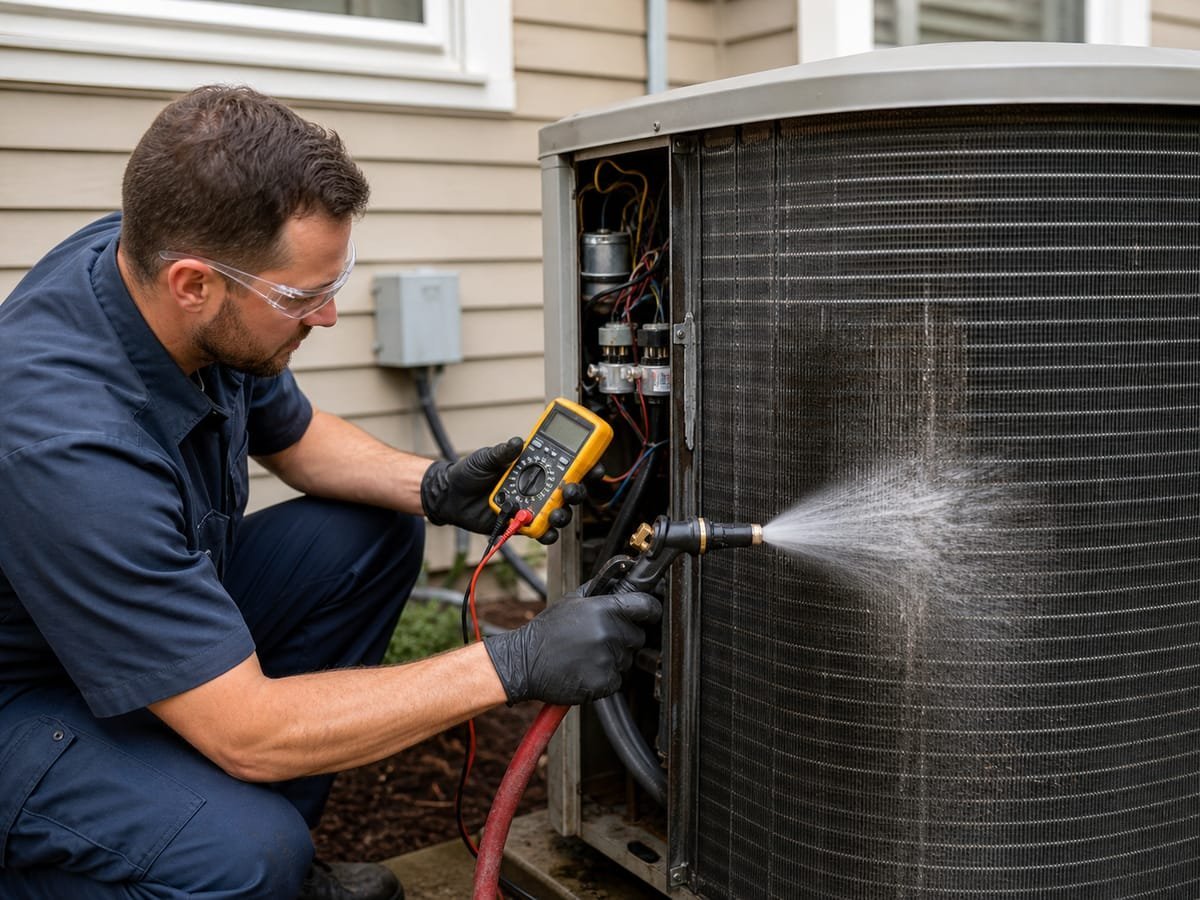
Keep your heating and cooling efficient and reliable with seasonal tune-ups that prevent breakdowns and extend system life.
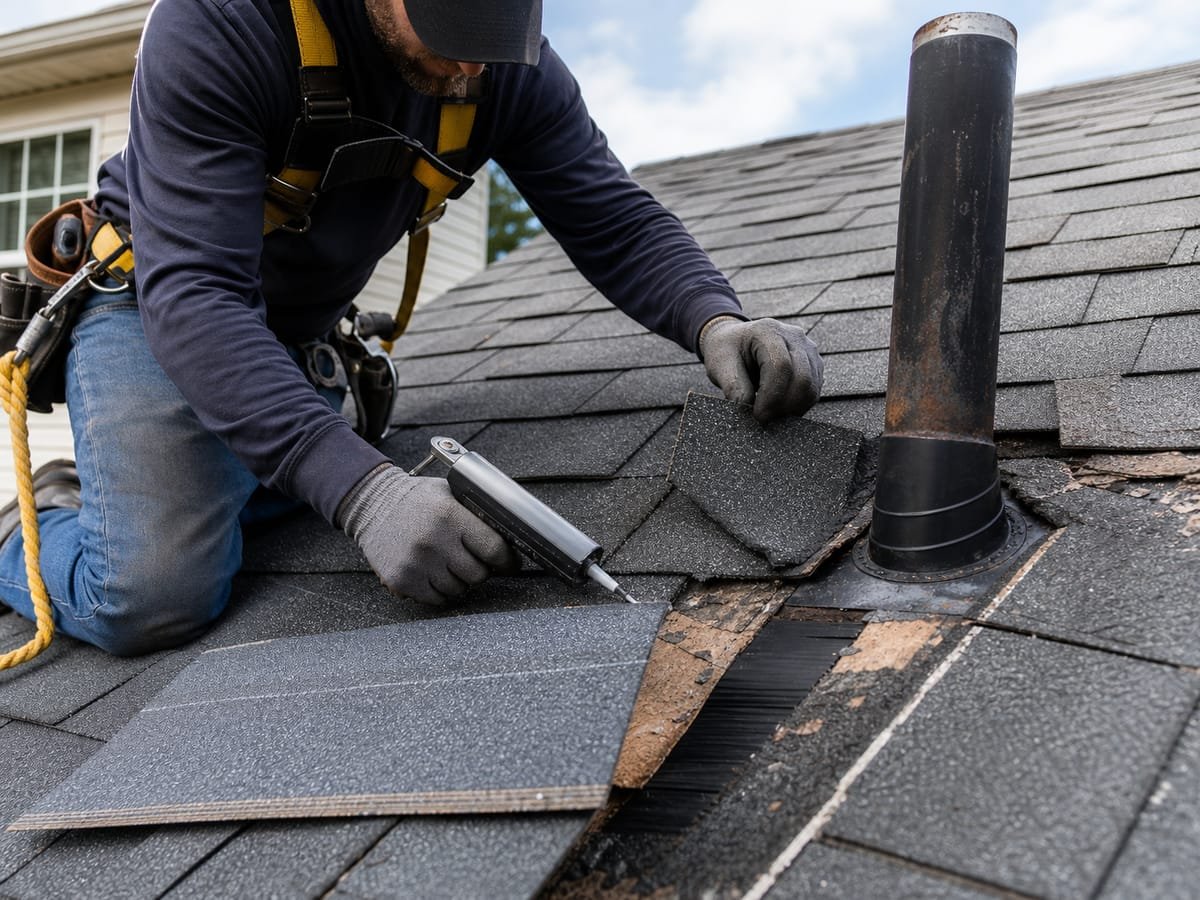
Repair roof leaks, damaged shingles, and worn flashing before small problems turn into costly structural damage.
Independent reading on questions this offer doesn't answer on its own.
No sign-up needed. No calls until you decide. Check availability, compare options, and proceed only when you're ready.