Home Services Emergency

Water Damage Restoration That Stops the Damage Clock Fast

Burst pipes, appliance leaks, or storm intrusion — rapid extraction, drying, and restoration to save your home from spreading damage and mold.

Water damage becomes harder — and more costly — to fix with every hour it sits untreated, since conditions for mold can begin forming within days. This guide covers what fast, professional extraction and drying typically involve.

Time-sensitive damageMold riskFinding rapid response
Overview

What you need to know about Water Damage Restoration

Water damage is a race against time. The moment water enters where it shouldn't — from a burst pipe, an overflowing appliance, or a storm — it begins soaking into flooring, drywall, and framing, and within a day or two the conditions for mold are already forming. Professional water damage restoration moves quickly to extract the water, dry the structure thoroughly, and restore what was damaged, stopping the cascade before a manageable problem becomes a major one. Documenting the damage thoroughly before cleanup begins also matters, since that record often plays a direct role in how an insurance claim gets handled.

At a glance

Category
Home Services
Read time
11 min read
Key benefits covered
6
Sources cited
4
Decision guide
Included on this page
Comparing your options

Which water & environmental service do you need?

These overlap because water, mold, and contamination often show up together — but each has a different cause and cleanup protocol.

Clean Water Damage

Water Damage Restoration

You're on this page

The source is a burst pipe, appliance failure, or other clean-water leak inside the home.

Flood & Storm Damage

Flood Damage Restoration

The water came from outside — storm surge, rising groundwater, or a natural flood event — which usually has different insurance implications (flood insurance vs. standard homeowners).

Mold Growth

Mold Remediation

The problem is visible or suspected mold growth, whether or not you know the original water source.

Contaminated Water (Sewage)

Sewage Cleanup

The water is contaminated — sewage backup or Category 3 water — which requires different safety protocols than a clean-water leak.

Basement Waterproofing

Basement Waterproofing

You are trying to prevent water intrusion before it happens, not clean up after an event.

Crawl Space Encapsulation

Crawl Space Encapsulation

You are sealing and conditioning the crawl space itself, usually to control moisture and air quality, rather than responding to a specific leak or flood.

Why people choose this

What you get with Water Damage Restoration

The real-world benefits of moving forward.

  • Rapid extraction that limits how far water spreads into materials and structure
  • Thorough structural drying that prevents warping, rot, and hidden moisture
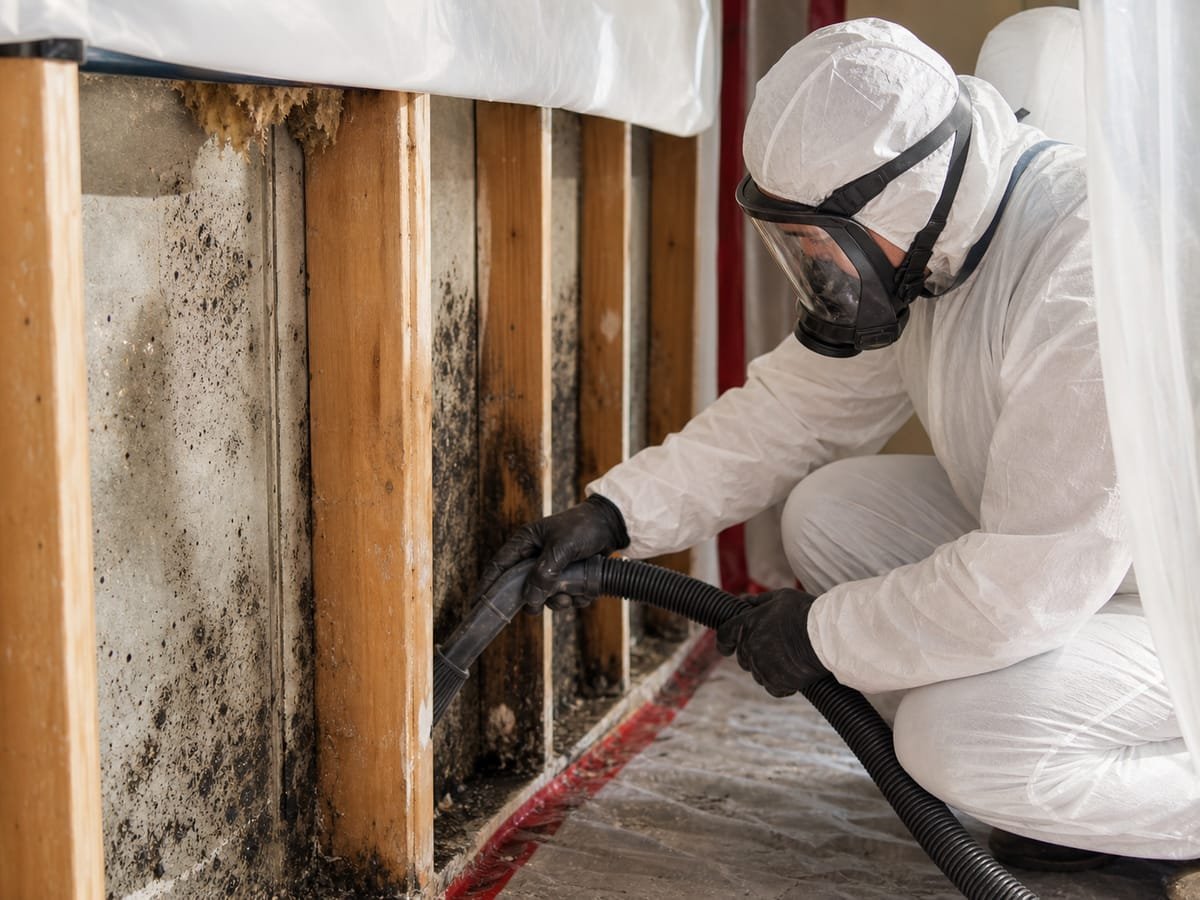
  • Mold growth headed off by drying quickly, before spores can take hold
  • Salvage of more flooring, drywall, and belongings through fast action
  • Documentation that supports a homeowners insurance claim
  • A clear path from cleanup back to a fully restored, livable home
Is this right for you?

Who benefits most from Water Damage Restoration

🚰

Burst or leaking pipes

Plumbing failures release large volumes of water fast, requiring immediate extraction and drying.

🌀

Appliance overflows

Water heaters, washing machines, and dishwashers can flood a home quietly and quickly.

🌧️

Storm and roof intrusion

Rain entering through a damaged roof or window soaks ceilings, walls, and insulation.

📋

Homeowners filing a claim

Those navigating insurance need documented, professional restoration to support the process.

🏢

Landlords managing tenant damage

Fast, professional restoration limits downtime and disputes when a unit is affected by a plumbing failure.

Anyone who just discovered standing water

The first hours after discovery matter most, making quick access to a responsive restoration company valuable.

What's included

What to expect

Emergency response

Fast arrival matters because water damage worsens by the hour — quick extraction limits the spread.

Professional water extraction

Powerful equipment removes standing water far faster and more completely than household tools.

Structural drying and dehumidification

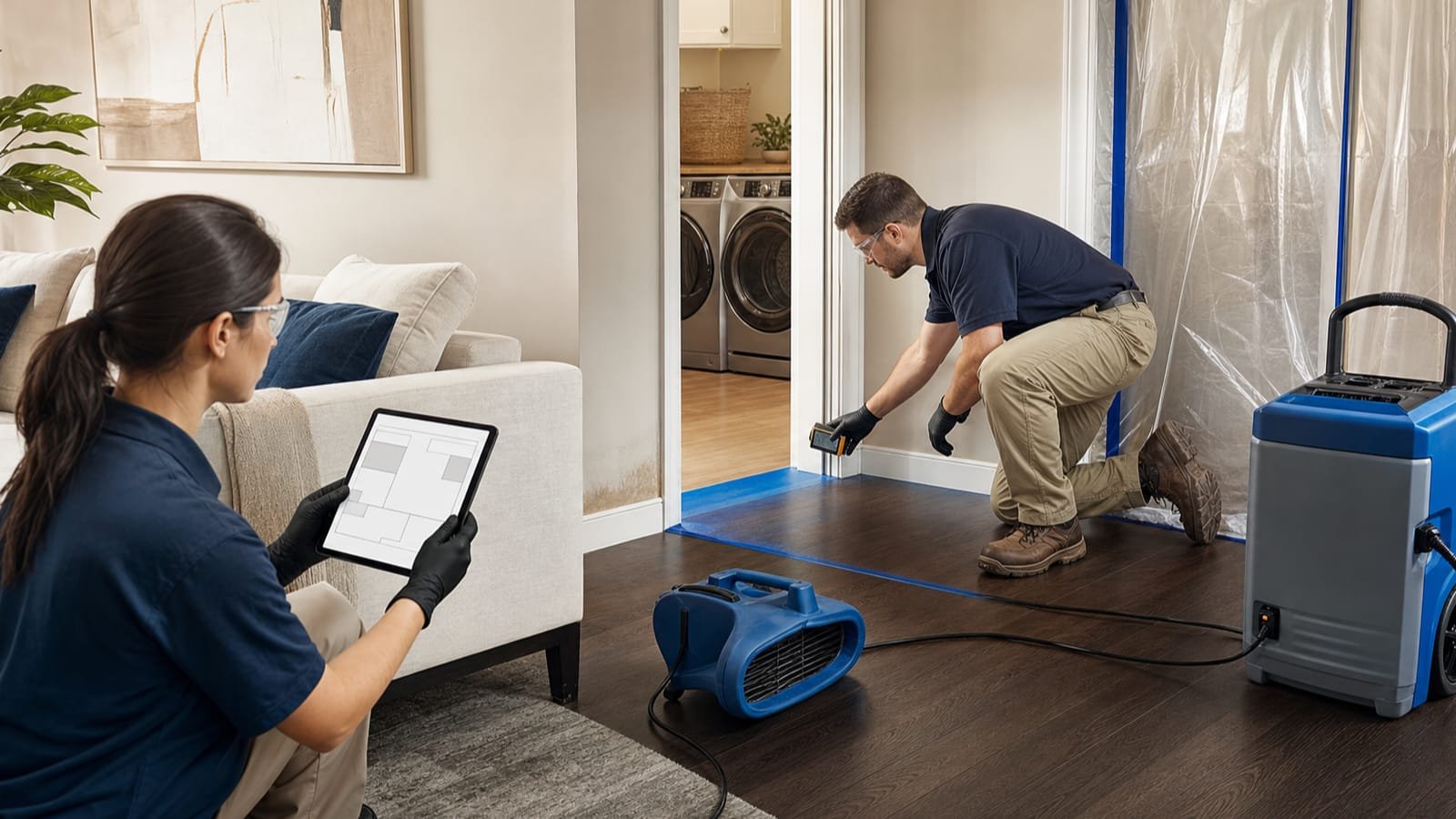
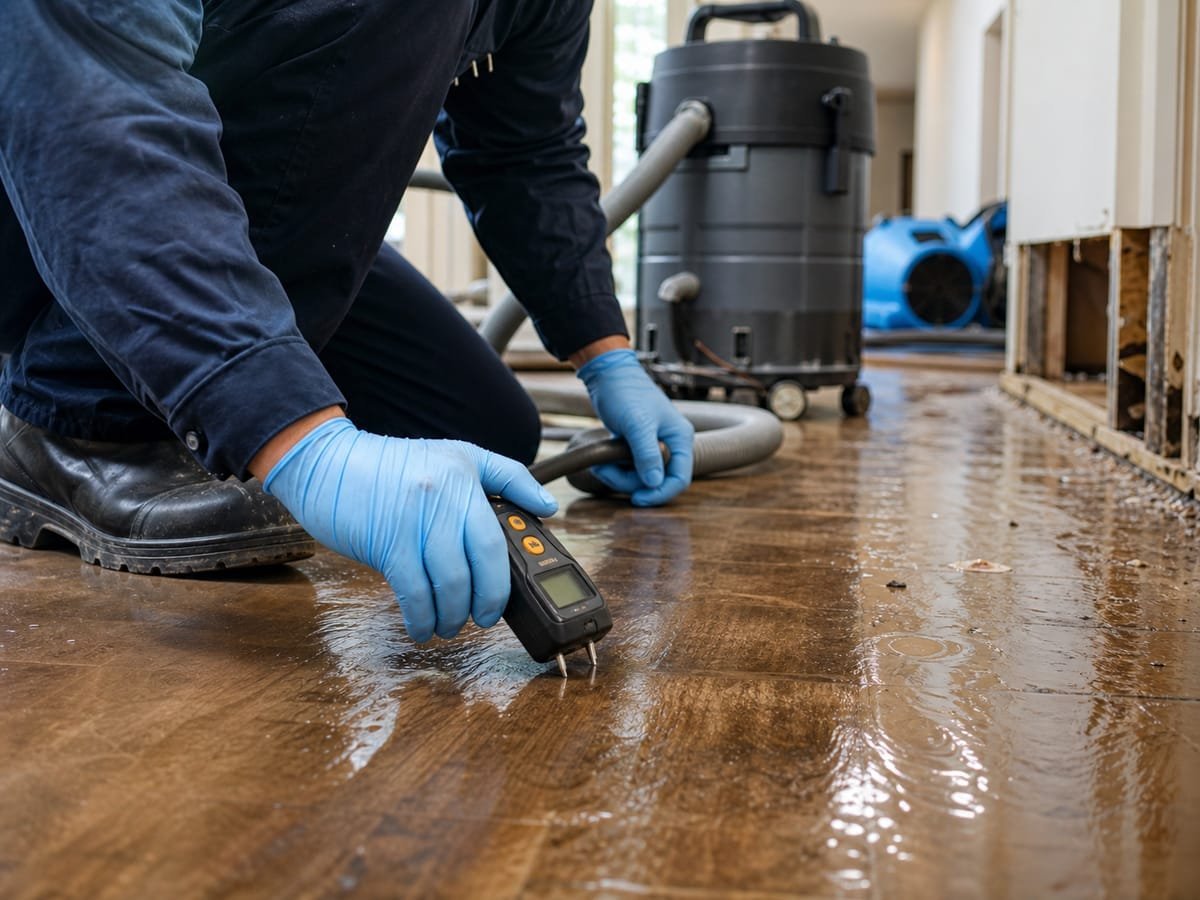
Air movers and dehumidifiers dry framing, subfloor, and cavities — not just visible surfaces — using moisture meters to verify.

Moisture mapping

Technicians locate water that has traveled into walls and under floors, so nothing damp is sealed up to fester.

What to expect

How it works

A clear look at the typical steps involved, from start to finish.

Emergency assessment

Technicians assess the source, the extent, and the category of water to plan a safe, effective response.

Water extraction

Standing water is removed quickly with professional equipment to limit further spread and damage.

Drying and dehumidification

Air movers and dehumidifiers dry the structure, with moisture meters confirming hidden areas are truly dry.

Cleaning and sanitizing

Affected areas are cleaned and treated to prevent mold and address any contamination.

Restoration

Damaged materials are repaired or replaced to return the home to its pre-loss condition.

Before you decide

Key considerations

Important points to keep in mind as you explore this offer.

1

Speed is everything — mold can begin within 24–48 hours of water exposure.

2

Sudden, accidental damage is often insurable; gradual leaks and outside flooding usually are not.

3

Surfaces can feel dry while cavities stay wet — professional drying verifies with meters.

4

The water's contamination category determines safety precautions and material handling.

5

Document the damage with photos before cleanup for your insurance claim.

6

If water sat before treatment, plan for possible mold remediation.

Decision support

How Fast You Need to Act, by Situation

Response time affects both damage and mold risk. These are general scenarios based on industry standards, not a diagnosis of your specific situation.

Clean water leak (supply line, appliance)

Lower contamination risk, but still needs prompt drying — EPA guidance notes materials should be dried within 24–48 hours to limit mold growth.

Gray water (dishwasher, washing machine overflow)

Some contamination; affected porous materials often need to be removed rather than just dried.

Black water (sewage, flooding)

Significant contamination risk; the IICRC S500 standard treats this as the highest-risk category, generally requiring professional remediation.

This tool is meant to help you organize your own thinking and the questions you ask a provider — it isn't personalized financial, legal, medical, or contracting advice, and it doesn't collect or store anything you enter.

Compare your options

Stages of a Water Damage Restoration Project

Restoration typically happens in stages, and it helps to know what each one covers.

Water Extraction

Best for: The first hours after water intrusion, before drying can start.

  • Removes standing water quickly
  • Limits how much material has to be replaced later
  • Doesn't address materials that are already soaked and drying
  • Not a complete fix on its own

Drying & Dehumidification

Best for: After standing water is gone but materials are still wet.

  • Reduces mold risk if done within the industry-recommended window
  • Can save materials that would otherwise need replacement
  • Takes days, not hours
  • Some materials may still need to be removed if saturation was severe

Repair & Restoration

Best for: Once everything is dry and it's time to rebuild affected areas.

  • Returns the space to its pre-damage condition
  • Can include code-required upgrades along the way
  • Only starts once drying is fully complete
  • Scope depends on how much needed to be removed earlier

This comparison describes general, commonly available options — not every provider offers every option, and actual terms, pricing, and availability depend on the specific provider and your circumstances.

In depth

Water Damage Restoration: Winning the Race Against Time

There's no home emergency where speed matters more than water damage. The instant water escapes where it belongs — a pipe bursts, a water heater fails, a storm drives rain through a compromised roof — a clock starts. Water spreads across floors in minutes, wicks up into drywall, seeps under flooring, and soaks into the subfloor and framing within hours. And within roughly a day or two, the damp, dark conditions it leaves behind become an invitation for mold. Professional water damage restoration exists to win that race: extract the water fast, dry the structure completely, and restore what was damaged before a contained problem spirals into a costly one.

Why Every Hour Counts

It's worth internalizing just how quickly water damage escalates, because it explains why professionals stress rapid response so heavily. In the first minutes, water spreads and begins saturating whatever it touches. Within hours, drywall swells, finishes delaminate, and moisture travels into wall cavities and under floors where you can't see it. Within about 24 to 48 hours, mold can begin to develop, and materials that might have been saved start to become unsalvageable. This progression is why the total cost and disruption of water damage depend enormously on how fast the response begins. The same leak addressed in two hours versus two days can be the difference between drying out a room and gutting it.

Not All Water Is the Same

A crucial concept in water damage is that water is classified by how contaminated it is, because that determines how dangerous it is and how it must be handled. Professionals generally think in three categories:

  • Clean water comes from a sanitary source like a supply line or a rain leak. It poses the least health risk, though it still causes structural damage if not dried.
  • Gray water carries some contaminants — think discharge from a dishwasher or washing machine — and requires more caution.
  • Black water is highly contaminated and hazardous, including sewage backups and floodwater from outside. It demands specialized, safety-focused cleanup and often means contaminated materials must be removed rather than dried.

Understanding the category matters because it affects safety precautions, what can be salvaged, and the whole approach to cleanup. Contaminated-water events like a sewage backup or external flooding are their own specialized situations that go beyond ordinary water extraction.

The Restoration Process

Professional restoration follows a proven sequence designed to be both fast and thorough. It begins with an assessment of the source, extent, and category of water, which shapes a safe response plan. Next comes extraction — removing standing water quickly with powerful equipment that vastly outpaces household tools. Then the critical phase: structural drying and dehumidification, using air movers and dehumidifiers to dry not just visible surfaces but the framing, subfloor, and hidden cavities. This is where professionals earn their value, because they use moisture meters to verify dryness rather than trusting how something feels. After drying, affected areas are cleaned and sanitized to prevent mold and address contamination, and finally the home is restored — damaged drywall, flooring, and finishes repaired to their pre-loss condition.

The Danger of "Dry to the Touch"

One of the most common and costly mistakes homeowners make is assuming that because surfaces feel dry, the problem is solved. Water hides. It travels into wall cavities, saturates insulation, pools beneath flooring, and soaks into subfloor and framing where the surface above gives no hint of the moisture below. Sealing up or covering these areas while they're still damp is exactly how you end up with rot and mold weeks or months later, often discovered only when a musty smell or a stain appears. This is why professional drying — verified with instruments — matters so much, and why thorough restoration is worth more than a quick surface cleanup.

Water Damage and Insurance

Water damage is one of the more common homeowners insurance claims, but coverage hinges on the cause. Policies typically cover sudden, accidental events — a pipe that bursts, an appliance that suddenly fails — while excluding damage from gradual leaks and lack of maintenance. And critically, flooding from outside is generally not covered by standard homeowners insurance at all; it usually requires separate flood insurance, a distinction that catches many homeowners off guard. Because coverage varies so much, the smart steps are to document the damage thoroughly with photos before cleanup begins, review your policy, and confirm coverage directly with your insurer. Many restoration providers are experienced with the claims process and can help keep documentation complete.

What to Do in the First Moments

While professional help is on the way, a few safe actions can limit the damage. If you can do so safely, stop the water at its source and shut off electricity to affected areas. Keep away from any water that may be contaminated. Move valuables and lift belongings off wet floors where you can, and photograph everything for your claim. Then step back and let professionals handle the extraction and drying — the parts that actually determine how well your home recovers.

What Restoration Costs and How Long It Takes

Two factors dominate both cost and timeline: how much water, and how long it sat. A contained clean-water event caught quickly — a burst supply line found the same day — may dry in three to five days of equipment time with modest demolition. Water that soaked for days, spread across levels, or involved contaminated sources multiplies everything: more tear-out, longer drying, antimicrobial treatment, and a rebuild phase that follows the drying phase. Expect the process in two acts: mitigation (extraction, demolition of unsalvageable materials, drying, documented moisture readings) measured in days, then restoration (rebuilding what was removed) measured in weeks. Insurance typically treats these as one claim but two scopes — keep every moisture log, photo, and invoice, because that documentation is what turns a fair claim into a paid one.

Choosing a Restoration Company — Often at 2 A.M.

Water emergencies rarely schedule themselves during business hours, and choosing under pressure is exactly when standards slip. What separates professionals: true 24/7 response with equipment on the truck, IICRC-certified technicians, moisture documentation as standard practice (meters and thermal imaging, with readings you can see), direct experience working with insurance scopes, and a clear explanation of what they're removing and why. Be cautious of anyone who quotes a total price before measuring moisture, pressures you to sign over your entire claim, or promises to skip the drying and go straight to rebuild. The cluster of problems around water is predictable, and good companies handle the handoffs: growth discovered behind walls belongs to mold remediation, contaminated backups to sewage cleanup, rising water from outside to flood damage restoration, and major structural rebuilds to home reconstruction. If the same water event keeps repeating from the ground up, the durable answer may be basement waterproofing rather than a better mop.

From Emergency to Restored

Water damage is frightening in the moment, but a rapid, professional response turns it from a potential catastrophe into a manageable recovery. The priorities are always the same: act fast, extract completely, dry thoroughly and verify it, and restore properly. Connecting quickly with equipped, insurance-experienced restoration professionals — and knowing that contaminated water, external flooding, or lingering moisture may call for specialized flood, sewage, or mold services — is the surest way to protect both your home and your health after water strikes.

Where this comes from

Sources

Facts and figures in this guide that come from an outside authority are backed by the sources below. Pricing, program rules, and eligibility details change — always confirm current specifics with the source directly or a licensed professional before acting.

Ready to explore Water Damage Restoration?

Still have questions? The FAQ below covers the most common ones. Or use the button to check availability — there's no cost and no obligation.

How we research every listing

Why you can rely on this information

Speed and equipment matter

When water is spreading, response time and professional extraction equipment drive the outcome — ask about both when you call.

Verified, thorough drying

Reputable teams use moisture meters to confirm the structure is truly dry, not just dry to the touch.

Ask about insurance documentation

A qualified provider should document the loss thoroughly as they work, since that paperwork supports your insurance claim — ask how they handle it before you hire.

Common questions answered

Water Damage Restoration — questions people actually ask

How quickly do I need to respond to water damage?

As fast as possible. Water spreads within minutes and soaks into materials within hours; mold can begin developing within roughly 24 to 48 hours. The sooner extraction and drying begin, the more of your home and belongings can be saved and the lower the total cost.

Does homeowners insurance cover water damage?

It often covers sudden, accidental water damage — a burst pipe or a suddenly failed appliance — while gradual leaks, poor maintenance, and flooding from outside are commonly excluded (flooding usually requires separate flood insurance). Document everything and confirm coverage with your insurer, since terms vary.

Can't I just dry it out myself?

For very small, clean spills, sometimes. But water that has spread into walls, under floors, or into subfloor and framing needs professional extraction and drying, because moisture trapped in cavities leads to rot and mold even when surfaces feel dry. Professionals verify dryness with meters rather than by touch.

How long does water damage restoration take?

Extraction and drying typically take several days, depending on how much water was involved and how far it spread. Repairs and reconstruction of damaged materials add time. The drying phase can't be rushed — sealing up materials before they're fully dry causes bigger problems later.

Will there be mold after water damage?

Not necessarily, if the area is dried quickly and thoroughly. Mold needs moisture and time, so fast professional drying is the best prevention. If water sat for a while before being addressed, mold remediation may be needed alongside restoration.

What are the categories of water damage?

Water is classified by contamination: clean water from a supply line, gray water from appliances with some contaminants, and black water that is highly contaminated, such as sewage or floodwater. The category affects safety precautions and how materials are handled, with contaminated water requiring specialized cleanup.

What should I do before help arrives?

If safe, stop the water source and shut off electricity to affected areas. Avoid contact with contaminated water. Move valuables and lift what you can off wet floors, and document the damage with photos for your claim. Then let professionals handle extraction and drying.

How this page was put together

Editorial information

  • We prioritize primary, authoritative sources over provider marketing.
  • Commercial relationships never influence what we publish or how it's written.
  • Pages are dated and updated only when they've genuinely been reviewed or changed.
Emergency ResponseWater ExtractionStructural DryingMold PreventionInsurance Claims

Get started with Water Damage Restoration — no obligation

No sign-up needed. No calls until you decide. Check availability, compare options, and proceed only when you're ready.