In depth
In depth
Replacing Your Home's Windows: A Complete Homeowner's Guide
Windows do far more than let in light. They shape how comfortable your rooms feel, how much you spend heating and cooling your home, how quiet your interior stays, and how your house looks from the street. When they start to fail, the effects show up everywhere at once — a cold draft by the sofa, a utility bill that keeps climbing, condensation clouding the glass, a sash that no longer stays up on its own. Replacing your windows solves those problems together, and for most homeowners it is one of the most satisfying upgrades they make.
This guide covers what actually matters when you replace windows in a US home: how to know it's time, the material and glass choices in front of you, what drives the cost, the incentives you may qualify for, and how to separate a skilled installer from a fast-talking sales crew.
When It's Time to Replace Your Windows
Windows rarely fail overnight. They decline gradually, and it's easy to normalize the discomfort until you stop noticing it. A few clear signals mean replacement deserves serious consideration.
- Fogging or moisture between the panes. This means the insulating seal has failed and the gas fill that blocks heat transfer is gone. The window will only get less efficient.
- Drafts you can feel near a closed window, or curtains that stir on a windy day.
- Rising energy bills without a change in your habits, especially if rooms feel hard to keep warm or cool.
- Sashes that won't stay open, stick, or won't lock — a sign the mechanical hardware and frame are worn out.
- Visible rot, soft wood, or peeling frames, which compromise both performance and security.
- Single-pane glass, common in older homes, which offers minimal insulation by modern standards.
One or two of these might point to a simple repair. Several together usually mean the window has reached the end of its useful life.
Replacement or Repair: Making the Right Call
Not every window problem calls for replacement, and a trustworthy contractor will tell you so. A broken balance, a failed lock, torn weatherstripping, or a damaged screen are usually inexpensive fixes. Even a single failed glass unit can sometimes be swapped without replacing the whole window.
Replacement becomes the smarter investment when the frame itself is failing, when multiple windows have lost their seals, or when single-pane units are driving up your energy costs year after year. At that point, repairs become a series of temporary patches on a system that's fundamentally worn out. If your windows are also more than two decades old, replacement modernizes security, operation, and efficiency in one step.
Understanding Your Window Material Options
The frame material shapes price, longevity, maintenance, and appearance more than almost any other decision. There is no universally correct choice — only the one that fits your climate, budget, and taste.
Vinyl
Vinyl is the most popular replacement material in the US for good reason: it offers strong energy performance at an accessible price, never needs painting, and resists moisture. The trade-off is a more limited color range and a look that some homeowners of period houses find too plain.
Fiberglass
Fiberglass frames are exceptionally stable, expanding and contracting very little as temperatures swing. That stability makes them a durable, long-lived option that holds seals well, and they can be painted. They cost more than vinyl but less than premium wood.
Wood and Wood-Clad
Wood delivers a warm, traditional appearance prized in historic and high-end homes. Fully exposed wood requires regular upkeep, so most modern products are wood-clad — a wood interior wrapped in aluminum or vinyl outside — which pairs the classic look with far less maintenance. Expect a premium price.
Aluminum and Composite
Aluminum is strong and slim-framed but conducts heat readily, making it a weaker insulator unless it includes a thermal break; it suits milder climates and certain modern designs. Composite frames blend materials to balance strength, insulation, and low maintenance, often landing between fiberglass and wood on price.
Full-Frame vs. Insert Replacement
You'll hear installers describe two approaches. An insert or retrofit replacement fits a new window into your existing frame, provided that frame is solid and square. It's faster, less invasive, and less expensive, and it's ideal when the surrounding structure is in good shape.
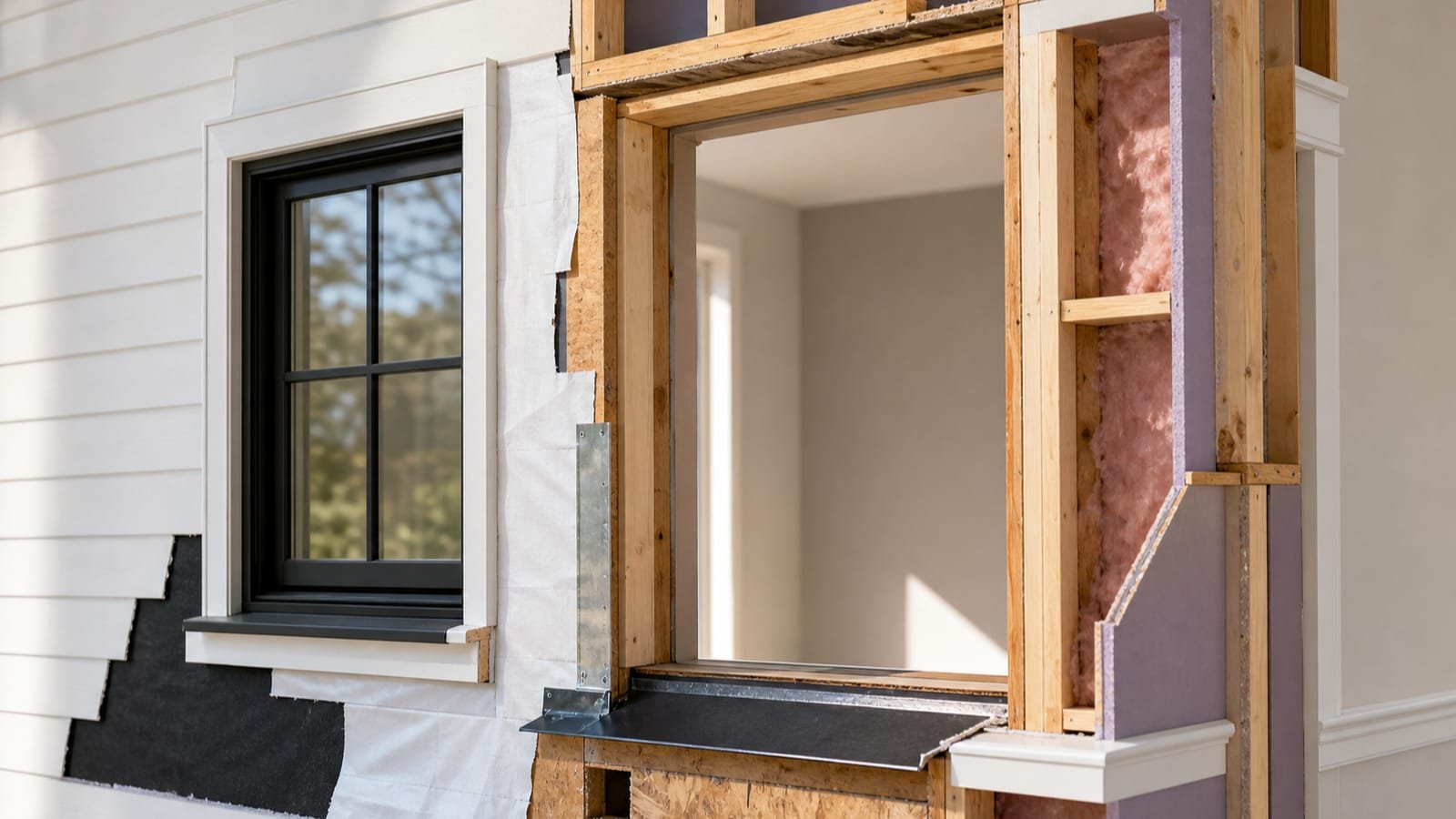
A full-frame replacement removes the window down to the rough opening, including the old frame and trim. It's the right call when frames are rotted or out of square, when you want to change the size or style of the opening, or when you want to inspect and reseal the structure behind the window. It costs more and takes longer, but it resolves problems an insert would simply cover up.
Energy Efficiency: What the Ratings Actually Mean
Energy performance is where replacement windows earn back their cost, and a few numbers tell you most of what you need to know.
- U-factor measures how well the window insulates. Lower is better — it means less heat escapes in winter.
- Solar Heat Gain Coefficient (SHGC) measures how much of the sun's heat passes through. In hot climates you want a low SHGC to keep interiors cooler; in cold northern climates a slightly higher SHGC can help with passive winter warmth.
- Low-E coatings are microscopically thin layers that reflect heat while letting light through, tuned differently for different climates.
- Gas fills such as argon or krypton sit between the panes to slow heat transfer far better than plain air.
Look for the ENERGY STAR label matched to your climate zone — it's the simplest shorthand that a window meets efficiency standards appropriate for where you live. Just remember that a great window installed poorly still leaks; the airtight fit is part of the performance.
What Window Replacement Typically Costs
Window pricing resists a single tidy number because so much depends on your specific project. The biggest cost drivers are the number of windows, the frame material and glass package, the window size and style (a fixed picture window differs from a double-hung or a bay), and whether you choose insert or full-frame installation. Custom sizes, specialty shapes, and premium finishes add to both price and lead time.
Because of that variability, the most reliable way to understand your cost is to gather itemized quotes for your exact openings and compare them line by line. Be wary of quotes that bundle everything into one figure — a clear estimate separates product, labor, disposal of the old units, and any permit fees.
Financing and Tax Incentives
Many installers offer financing that spreads the project across manageable monthly payments, which can make a whole-home replacement feasible without draining savings. Compare any financing terms — interest rate, length, and total cost — the same way you'd compare the windows themselves.
On the incentive side, know the current rules before you count on savings: the federal Energy Efficient Home Improvement Credit that previously applied to ENERGY STAR windows ended for products placed in service after December 31, 2025, so new projects shouldn't assume a federal credit (as of 2026 — see the IRS credit page for current status). Some states and utilities still offer their own rebates for efficiency upgrades, and these can be worth real money — check your utility's current programs and any state energy office listings before you buy, and keep your receipts and the manufacturer's certification documents in case a program requires them.
The Window Replacement Process, Step by Step
A well-run project follows a predictable path. It begins with an in-home measurement and consultation, where the installer checks each opening for hidden rot and reviews your material and glass options. You then receive a written, itemized quote. Once you approve it, your windows are manufactured to exact size — the stage that adds lead time for custom or specialty units. On install day, crews remove the old windows, prepare and insulate the openings, set and level the new units, and flash and seal them against air and water. Finally, you walk the finished job together to confirm smooth operation and receive your warranty paperwork.
Choosing a Qualified Window Installer
The installer matters as much as the window. Prioritize contractors who are licensed and insured, who provide references and a physical business address, and who are certified by the manufacturers they install — that certification often protects your product warranty. Ask how they handle flashing and insulation around each opening, whether their labor warranty is separate from the product warranty, and how long each lasts. A quality crew welcomes those questions.
Get at least three itemized quotes so you can compare like for like. The lowest bid can be a false economy if it reflects rushed installation or a thinner product; the highest isn't automatically the best either. You're looking for the clearest scope, the strongest workmanship, and the warranty terms you can actually rely on.
Common Mistakes Homeowners Make
The most frequent misstep is choosing on price alone and discovering the drafts a cheap installation left behind. Others include ignoring climate when selecting glass, forgetting to confirm who pulls permits and disposes of the old windows, discarding the manufacturer certification paperwork that some state or utility rebate programs require, and scheduling a whole-home replacement for the peak of summer or winter rather than a milder season. A little planning avoids all of them.
When Replacement Isn't Quite the Right Project
Replacement swaps what you have for something better in the same openings. If what you actually want is different openings — a picture window where a small double-hung sits, a new opening on a dark wall, or a bay window that changes the room — that's window remodeling, a design-and-construction project with its own process and budget. Knowing which project you're really shopping for keeps your quotes comparable and your expectations accurate. And if new windows are part of a larger update to the house, coordinating them with a broader home remodeling plan often saves money, since trades and permits can be combined.