Finance & Insurance Compare & save

Home Insurance That Protects Your Biggest Investment the Right Way

Understand what your policy covers, what it excludes, and how to insure your home for what it would actually cost to rebuild.

It's common to assume your home insurance covers more than it actually does, until a claim reveals the gaps. This guide walks through what policies typically include, exclude, and how coverage limits relate to rebuild cost.

Coverage gapsBeing underinsuredUnderstanding exclusions
Overview

What you need to know about Home Insurance

For most people, their home is the largest asset they'll ever own — and home insurance is what stands between a disaster and financial ruin. Yet many homeowners don't truly understand what their policy covers, what it quietly excludes, or whether they're insured for enough to actually rebuild. This guide explains how home insurance works, the gaps that surprise people at claim time, and how to make sure your coverage matches what your home would really cost to replace. Reviewing your coverage limits after any major renovation or purchase is one of the easiest ways to avoid an unpleasant surprise if you ever need to file a claim.

At a glance

Category
Finance & Insurance
Read time
11 min read
Key benefits covered
6
Sources cited
4
Decision guide
Included on this page
Why people choose this

What you get with Home Insurance

The real-world benefits of moving forward.

  • Protection for your home's structure against covered disasters
  • Coverage for your belongings and personal property
  • Liability protection if someone is injured on your property
  • Help with living expenses if a covered event makes your home uninhabitable
  • Clarity on common exclusions so you're not caught off guard
  • Confidence that your coverage reflects your home's rebuild cost, not just its market price
Is this right for you?

Who benefits most from Home Insurance

🏡

Homeowners

Anyone who owns a home needs coverage that protects the structure, belongings, and their liability.

🔑

New buyers

First-time buyers, often required to carry insurance by their lender, benefit from understanding what they're buying.

🏘️

Owners in disaster-prone areas

Those in regions prone to specific risks need to understand exclusions like flood and how to fill the gaps.

🔄

Anyone reviewing an existing policy

Homeowners who haven't reviewed coverage in years may be underinsured as rebuild costs have risen.

🏗️

Owners who've recently renovated

Coverage limits should reflect a home's updated value after a kitchen, addition, or other major project.

🏦

Homeowners with a mortgage

Lenders require proof of insurance, making understanding your policy's requirements part of the homebuying process.

What's included

What to expect

Dwelling coverage

Protects the structure of your home against covered perils — the core of any homeowners policy.

Personal property coverage

Covers your belongings, often up to a percentage of your dwelling coverage, with limits on certain valuables.

Liability protection

Helps cover costs if someone is injured on your property or you're responsible for damage to others.

Additional living expenses

Helps pay for temporary housing and costs if a covered event makes your home unlivable.

What to expect

How it works

A clear look at the typical steps involved, from start to finish.

Determine rebuild cost

Estimate what it would cost to rebuild your home, which is the basis for proper dwelling coverage.

Assess belongings and liability

Consider the value of your possessions and the liability protection your situation calls for.

Review exclusions and gaps

Identify risks like flood that a standard policy excludes and decide how to address them.

Compare policies

Gather quotes for equivalent coverage and compare what's included, not just the premium.

Review periodically

Revisit coverage as rebuild costs, home improvements, and your circumstances change.

Before you decide

Key considerations

Important points to keep in mind as you explore this offer.

1

Insure for rebuild cost, not market value or purchase price.

2

Flood is usually excluded and requires a separate policy — a critical gap to know.

3

Replacement cost coverage costs more but avoids depreciation deductions.

4

Rising construction costs can leave older policies underinsured.

5

Compare equivalent coverage, not just the lowest premium.

6

Read your exclusions so you understand your gaps before a claim.

Decision support

What a Standard Homeowners Policy Typically Covers

Per the Insurance Information Institute, a standard policy is generally built from four core coverage types. Exact terms vary by insurer and state.

What it coversTypically excluded
Dwelling/structureRepair or rebuild the home after covered damageFlood, earthquake — usually separate policies
Personal belongingsFurniture, clothing, and other contentsHigh-value items may need a rider
LiabilityInjury or damage you or family members cause to othersBusiness activities usually excluded
Additional living expensesTemporary housing if the home is uninhabitableOnly applies to a covered loss

This tool is meant to help you compare general concepts before you request quotes — it isn't personalized insurance advice, and actual coverage, pricing, and eligibility are set by the insurer and your state.

Compare your options

Policy Form & Coverage Comparison

Homeowners policies aren't all the same shape. These are the choices most homeowners actually weigh — which policy form to start from, and whether to add stronger rebuild-cost protection on top of it.

HO-3 (Special Form)

Best for: Most single-family homeowners — the standard policy most insurers default to.

  • Covers your dwelling on an open-perils basis (protected against any cause not specifically excluded)
  • Widely available and commonly required by mortgage lenders
  • Personal belongings are typically covered only against named perils unless you add an endorsement
  • Still excludes flood and earthquake — those require separate policies

HO-5 (Comprehensive Form)

Best for: Homeowners who want broader protection for personal belongings, not just the structure.

  • Extends open-perils coverage to personal belongings as well as the dwelling
  • Generally includes higher standard limits than HO-3
  • Costs more than an HO-3 policy for a comparable dwelling
  • Not offered by every insurer or in every state

Guaranteed/Extended Replacement Cost Add-on

Best for: Homeowners concerned that rebuilding costs could exceed their policy's stated dwelling limit after a major loss.

  • Pays to rebuild even if costs exceed your dwelling limit, up to the endorsement's cap
  • Helps protect against construction-cost inflation between purchase and a future claim
  • Added cost on top of your base premium
  • Still has an upper cap — it isn't unlimited coverage

This comparison describes general, commonly available options — not every provider offers every option, and actual terms, pricing, and availability depend on the specific provider and your circumstances.

In depth

Home Insurance: Protecting Your Largest Asset Properly

For most families, a home is the single largest financial commitment of their lives — and home insurance is the safety net that keeps a fire, storm, or disaster from turning into financial catastrophe. It's a requirement for anyone with a mortgage and a wise investment for anyone without one. Yet a surprising number of homeowners carry a policy they don't fully understand: unsure what it covers, unaware of what it quietly excludes, and uncertain whether it would actually pay to rebuild their home. Understanding how home insurance works is how you make sure that safety net is really there when you need it.

As with any insurance, this is general educational information rather than personalized advice. Policies, coverage, and exclusions vary by insurer and state, so use this as a framework and confirm the specifics of your own policy.

What a Standard Policy Covers

A typical homeowners policy bundles several protections together, each addressing a different kind of loss.

  • Dwelling coverage protects the physical structure of your home against covered perils. It's the heart of the policy.
  • Personal property coverage protects your belongings — furniture, electronics, clothing — often up to a percentage of your dwelling coverage, though certain high-value items like jewelry may have limits.
  • Liability protection helps cover costs if someone is injured on your property or you're held responsible for damage to others.
  • Additional living expenses helps pay for temporary housing and related costs if a covered event makes your home uninhabitable while it's repaired.

Each of these is subject to your policy's specific perils, limits, and deductible, which is why actually reading your policy matters.

The Exclusions That Catch People Off Guard

Just as important as what a policy covers is what it doesn't — and this is where homeowners are most often surprised at claim time. Standard policies commonly exclude certain risks, including flooding from external sources, earthquakes, normal wear and tear, and various other perils, which typically require separate policies or added endorsements.

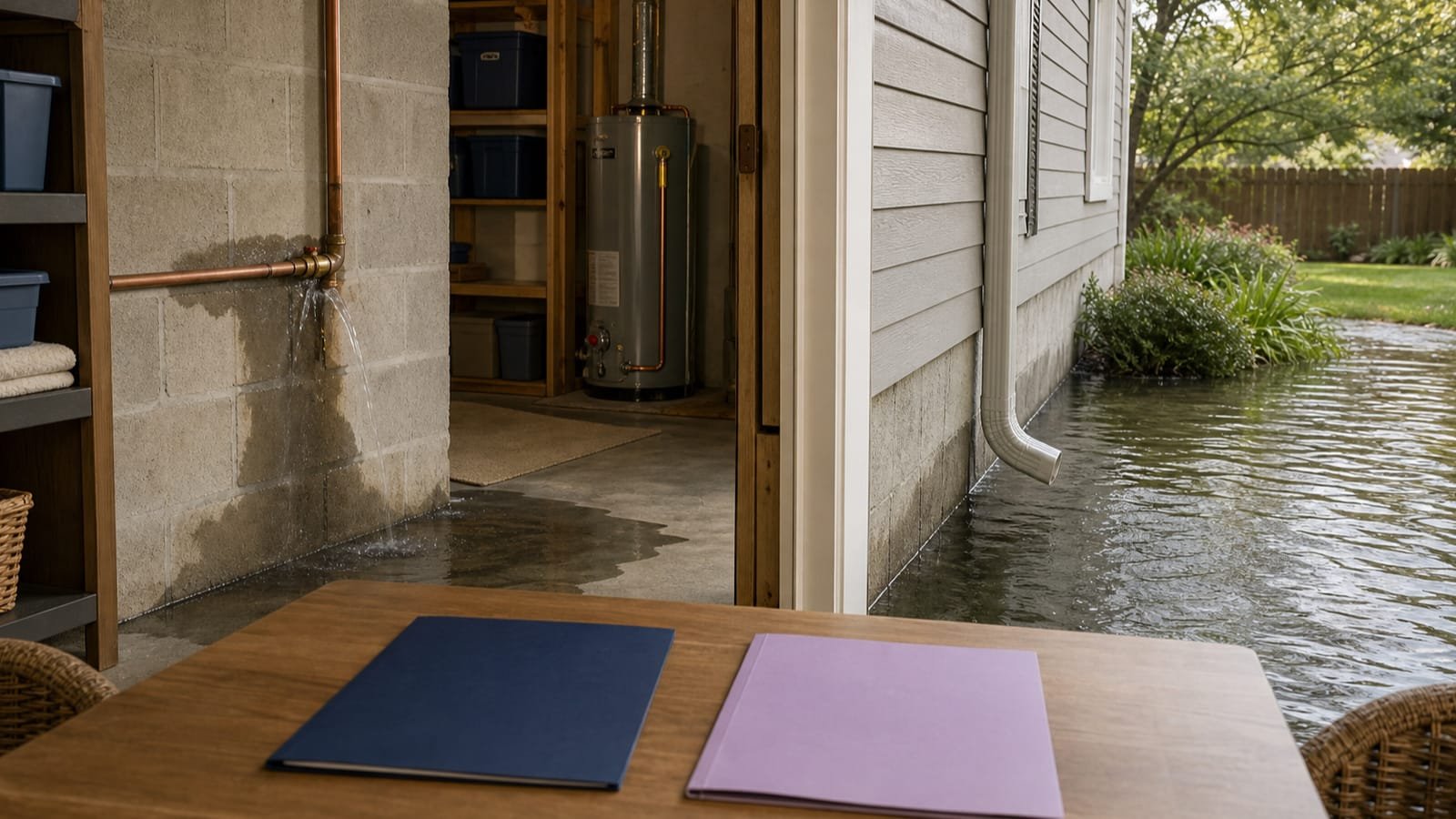
The exclusion that trips up the most people is flood. A standard homeowners policy generally does not cover damage from external flooding — that requires a separate flood insurance policy, often through the National Flood Insurance Program or a private insurer. Countless homeowners have discovered this gap only after floodwater was already in their living room. If you live in or near a flood-prone area, understanding and addressing this gap before a flood is one of the most important things you can do. The broader lesson: read your exclusions so you know exactly where your coverage ends.

Insuring for Rebuild Cost, Not Market Value

Here's a concept that's easy to get wrong and expensive to get wrong: how much to insure your home for. The right basis is your home's replacement cost — what it would actually cost to rebuild it — not its market value or the price you paid. These numbers can differ substantially. Market value includes the land and reflects the real estate market; rebuild cost reflects construction labor and materials. In some cases rebuild cost is higher than market value, in some cases lower, but insuring based on the wrong figure can leave you unable to fully rebuild after a total loss. Because construction costs also rise over time, a policy that was adequate years ago may quietly become underinsured, which is why periodic review matters.

Replacement Cost vs. Actual Cash Value

Related to this is how a policy pays out, and there are two common approaches. Replacement cost coverage pays to repair or replace damaged property without deducting for depreciation — so a ten-year-old roof is replaced with a new one. Actual cash value factors in depreciation, paying the depreciated value of older items, which can be considerably less. Replacement cost coverage generally costs more in premium but provides far more complete protection when you actually have a claim. It's worth checking which basis your policy uses, both for the dwelling and for personal property, so there are no unpleasant surprises.

What Affects Your Premium

Home insurance premiums reflect a range of factors, which can include your home's location, age, and construction, its rebuild cost, your chosen coverage and deductible, your claims history, and the specific risks of your area, among others. As with auto insurance, different insurers weigh these differently, so quotes for equivalent coverage can vary between companies. That variation is your opportunity: comparing several quotes for the same coverage helps you find genuine value. (The rating factors insurers may use vary by state and company.)

Comparing Policies the Smart Way

When comparing home insurance, resist the temptation to shop on premium alone. A cheaper policy may carry lower limits, a higher deductible, a less generous payout basis, or more exclusions — differences that only reveal themselves when you file a claim. Compare equivalent coverage: the same dwelling and property limits, the same payout basis, the same deductible, and a clear understanding of exclusions. Only then are you comparing value rather than just price. The goal is a policy that would genuinely make you whole after a loss, at a fair and competitive cost.

Managing Cost Without Underinsuring

There are legitimate ways to reduce your premium without gutting your protection: raising your deductible to a level you could comfortably afford, bundling home with auto insurance, improving your home's safety and security, and comparing quotes across insurers. What to avoid is the false economy of underinsuring your home — carrying too little dwelling coverage to save on premium — because that's precisely the shortcut that leaves families unable to rebuild after the worst happens. Save on price where you safely can, but protect the coverage that protects your home.

Filing a Home Insurance Claim Well

Good claims start before the loss: a home inventory — even a walk-through video updated yearly — is the single highest-value fifteen minutes in insurance. When damage happens, protect the property from further harm (insurers expect reasonable mitigation, and emergency tarping or professional water mitigation is typically covered), document everything before cleanup, report promptly, and keep receipts for any temporary living costs if your policy includes loss-of-use coverage. Expect an adjuster inspection, a scope of repairs, and an initial payment that may grow through supplements as hidden damage surfaces during repair — supplements are normal, not confrontational. For large or disputed losses, know that you can get your own contractor's estimate, request re-inspection, and in many states consult a licensed public adjuster. Claims also have a strategic side: small claims barely above your deductible can cost more in future premiums than they pay out, so run that math before filing.

Mistakes Homeowners Make With Coverage

The big one is insuring to the mortgage balance or purchase price instead of rebuild cost — construction inflation means many homes are quietly underinsured, and a total loss is the worst possible time to learn it; review your dwelling limit after any major renovation and every few years regardless. Others: carrying actual-cash-value contents coverage without realizing depreciation will shrink every payout, ignoring the water-backup endorsement that would cover the sewer backup scenario a standard policy excludes, assuming a home office or business inventory is covered (it's usually capped or excluded), and never updating the insurer about the new roof, alarm system, or monitored security setup that would lower the premium. And repeat the flood lesson until it sticks: flood damage needs its own policy with its own waiting period — a fact best confronted while the sun is out, not while reading about flood damage restoration.


Where this comes from

Sources

Facts and figures in this guide that come from an outside authority are backed by the sources below. Pricing, program rules, and eligibility details change — always confirm current specifics with the source directly or a licensed professional before acting.

Ready to explore Home Insurance?

Still have questions? The FAQ below covers the most common ones. Or use the button to check availability — there's no cost and no obligation.

How we research every listing

Why you can rely on this information

Coverage matched to rebuild cost

Insuring for what it costs to rebuild — not market value — is central to being properly protected.

Understand the exclusions

Knowing what a standard policy doesn't cover, like flood, lets you fill gaps before you need them.

Compare policies carefully

Policies differ in coverage and limits, so compare what's included, not just the premium.

Common questions answered

Home Insurance — questions people actually ask

What does homeowners insurance typically cover?

A standard policy generally covers the dwelling structure, personal belongings, liability if someone is injured on your property, and additional living expenses if a covered event makes your home uninhabitable — all subject to your policy's perils, limits, and deductible. Exact coverage varies by policy, so read yours to understand what applies.

What is usually excluded from home insurance?

Common exclusions include flooding from outside sources, earthquakes, normal wear and tear, and certain other risks, which typically require separate policies or endorsements. Flood is the exclusion that surprises homeowners most often, since it usually requires a separate flood insurance policy. Always review your exclusions so you know your gaps.

How much home insurance do I need?

A key principle is to insure your home for its replacement cost — what it would take to rebuild — rather than its market value or the price you paid, since those can differ significantly from rebuild cost. You'll also want enough personal property and liability coverage for your situation. Reviewing coverage as costs and your circumstances change helps avoid being underinsured.

What's the difference between replacement cost and actual cash value?

Replacement cost pays to repair or replace without deducting for depreciation, while actual cash value factors in depreciation, paying less for older items. Replacement cost coverage generally costs more but provides more complete protection. Check which basis your policy uses for the dwelling and for personal property.

Does home insurance cover flood damage?

Standard homeowners policies typically do not cover flooding from external sources; that usually requires a separate flood insurance policy, often through the National Flood Insurance Program or a private insurer. This is one of the most important gaps to understand, especially in flood-prone areas.

What factors affect my home insurance premium?

Factors can include your home's location, age, construction, rebuild cost, your coverage choices and deductible, your claims history, and local risks, among others. Because insurers weigh these differently, comparing quotes for equivalent coverage helps you find good value. Rating factors vary by insurer and state.

How can I lower my home insurance cost without losing protection?

Options can include raising your deductible, bundling with auto insurance, improving your home's safety and security, and comparing quotes from multiple insurers. Avoid underinsuring your home just to reduce the premium, since that can leave you unable to fully rebuild after a loss.

How this page was put together

Editorial information

  • We prioritize primary, authoritative sources over provider marketing.
  • Commercial relationships never influence what we publish or how it's written.
  • Pages are dated and updated only when they've genuinely been reviewed or changed.
Dwelling CoverageLiabilityReplacement CostExclusionsPolicy Comparison

Get started with Home Insurance — no obligation

No sign-up needed. No calls until you decide. Check availability, compare options, and proceed only when you're ready.