
Do You Need a Car to Get SR-22 Insurance? Non-Owner Policies Explained
Not owning a car doesn't exempt you from the requirement — it just changes which policy you need.

Key takeaways
- A non-owner SR-22 policy provides liability coverage that satisfies your state's SR-22 filing requirement without requiring you to own a vehicle.
- It covers you as a driver of vehicles you don't own — borrowed or rental cars, for instance — but generally does not cover a vehicle you regularly drive or have access to.
- Your insurer files the SR-22 certificate with the state on your behalf, just as they would with a standard owner's policy.
- Non-owner policies are typically liability-only and don't include collision or comprehensive coverage, since there's no owned vehicle to insure for physical damage.
A common misconception after a license suspension is that not owning a car somehow makes the SR-22 requirement irrelevant. It doesn't — the requirement is tied to your driving privileges, not your vehicle ownership, and states have a specific policy type built for exactly this situation: the non-owner SR-22 policy.
What a non-owner SR-22 policy actually is
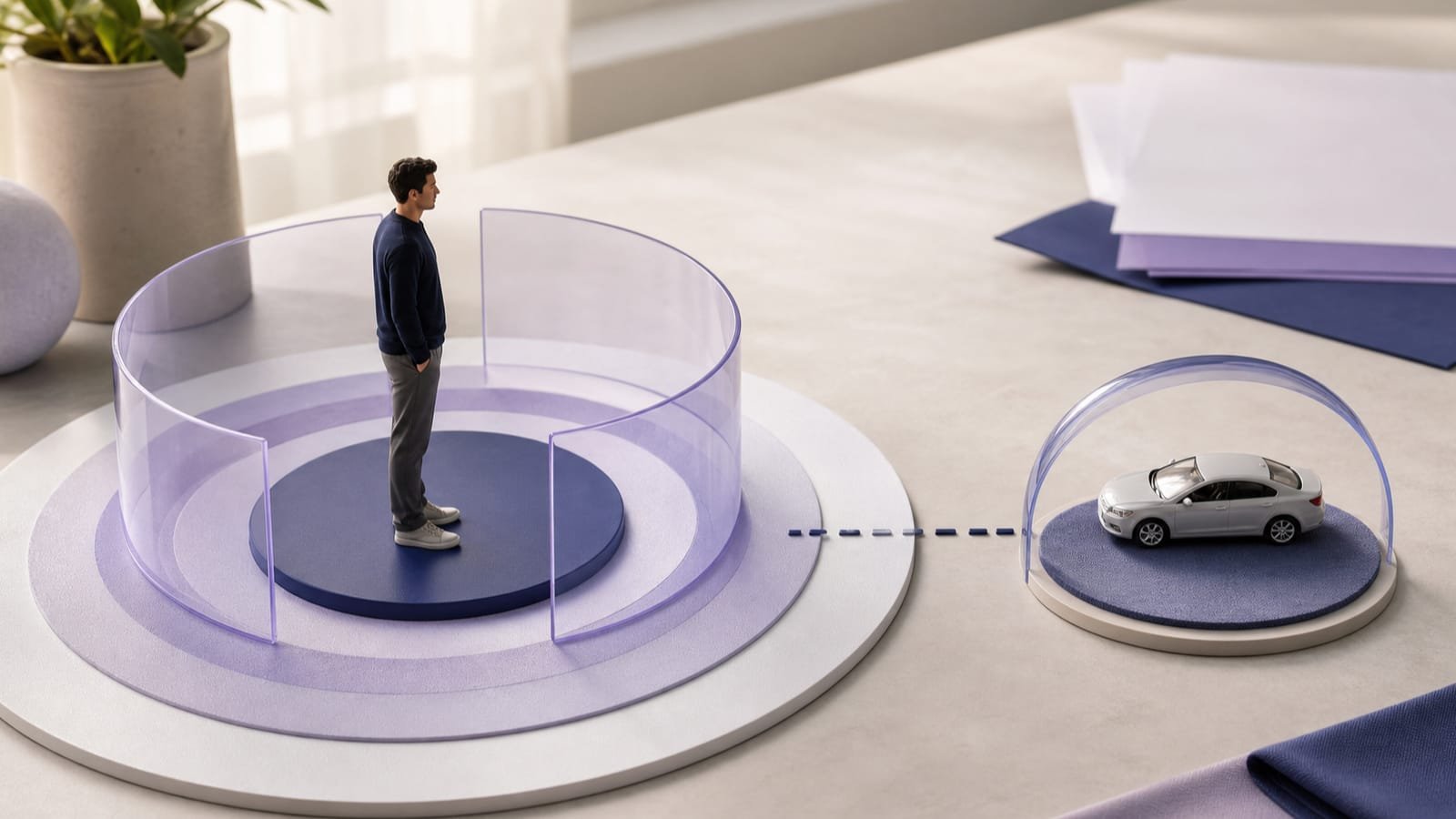
A non-owner car insurance policy provides liability coverage — the state-required minimum protection for injury or property damage you might cause while driving — without insuring any specific vehicle, because you don't own one. When an SR-22 is required, your insurer files that certificate with the state exactly as they would for a standard policy, confirming you're meeting your state's minimum financial responsibility requirement even though there's no vehicle attached to the policy.
How a non-owner SR-22 policy differs from a standard one
| Feature | Standard owner SR-22 policy | Non-owner SR-22 policy |
|---|---|---|
| Requires vehicle ownership | Yes | No |
| Covers liability (injury/property damage you cause) | Yes | Yes |
| Covers collision/comprehensive damage | Optional, often included | Not included — no owned vehicle to insure |
| Covers a car you regularly drive but don't own | N/A | Generally excluded — see below |
| Satisfies SR-22 filing requirement | Yes | Yes |
Who it's actually designed for
- Someone who lost their license and doesn't currently own a car, but still needs to satisfy an SR-22 requirement to get driving privileges reinstated.
- Someone who relies on borrowing a friend's or family member's car occasionally and needs their own liability coverage as a backup to the vehicle owner's policy.
- Someone who frequently rents cars and wants liability protection that travels with them rather than depending on rental company coverage.
- Someone between vehicles — sold a car, hasn't bought a new one yet — who still needs continuous SR-22 coverage during the gap.
What it typically doesn't cover
Non-owner policies are generally not designed to cover a vehicle you have regular, ongoing access to — for example, a car that's titled to a family member but that you drive daily. Insurers distinguish between occasional use of someone else's vehicle and regular access to a specific car, and misrepresenting regular access as occasional borrowing can jeopardize coverage exactly when you need it most. If you have regular access to a specific vehicle, that vehicle likely needs its own policy, or you need to be added to the owner's policy, rather than relying on a non-owner policy alone.
Non-owner SR-22 policy checklist
- Confirm with your state that a non-owner policy satisfies your specific SR-22 requirement — this is standard, but verify for your situation.
- Be honest with your insurer about how often you access any specific vehicle — regular access can change what policy you actually need.
- Ask your insurer to confirm they'll file the SR-22 with the state, and get confirmation once it's done.
- Understand that non-owner coverage is liability-only — if you're driving a borrowed car and cause damage to it, the owner's own collision coverage (if any) would typically apply, not your non-owner liability policy.
- If you buy a car during your SR-22 period, transition to an owner's policy promptly to keep your filing continuous.
Pros
- Satisfies the SR-22 requirement without forcing you to buy or own a vehicle you don't need.
- Generally less expensive than a comparable owner's policy, since it excludes collision and comprehensive coverage.
- Provides a layer of liability protection for occasional use of borrowed, rented, or rideshare vehicles.
Considerations
- Does not cover a vehicle you have regular access to — a real gap if your situation changes without you updating your coverage.
- No collision or comprehensive protection, meaning physical damage to a vehicle you're driving isn't covered by this policy.
- If you buy a car later in your SR-22 period, you'll need to switch to an owner's policy and coordinate the transition carefully to avoid a coverage lapse.
If your access to a specific vehicle changes from occasional to regular — you start borrowing your partner's car every day, for instance — update your coverage. A non-owner policy misrepresented as covering regular use can leave you without the protection you assumed you had.
Frequently asked questions
Can I use a non-owner policy if I drive for a rideshare service?
Generally no — rideshare driving typically requires specific commercial or rideshare-endorsed coverage, which a standard non-owner personal policy usually doesn't provide. Check with your insurer about your specific situation.
What happens if I buy a car while on a non-owner SR-22 policy?
You'll need to switch to a standard owner's policy that covers that vehicle, and it's important to coordinate the switch so your SR-22 filing stays continuous with no gap.
Is a non-owner policy cheaper than an owner's policy?
Generally yes, since it doesn't include collision or comprehensive coverage for a vehicle — but the SR-22-related rate increase still applies on top of the base non-owner premium.
Does a non-owner policy cover me driving a rental car?
It can provide liability coverage while driving a rental, but confirm the specific terms with your insurer — rental company coverage, credit card protections, and your non-owner policy can interact differently depending on the provider.
Related offers


Sources
Facts and figures in this guide that come from an outside authority are backed by the sources below. Pricing, program rules, and eligibility details change — always confirm current specifics with the source directly or a licensed professional before acting.
- Non-Owner SR-22 Insurance: Requirements & CostMoneyGeek · Updated 2026 · Accessed 2026-07-20
- Non-Owner SR-22 InsuranceProgressive · Updated 2026 · Accessed 2026-07-20
- Nevada SR22 Laws for Non-Owner DriversSR22Savings.com · Updated 2026 · Accessed 2026-07-20
- SR-22 & Insurance: What Is an SR-22?Progressive · Updated 2026 · Accessed 2026-07-20
- SR-22 and Insurance InformationColorado Department of Revenue — Division of Motor Vehicles · Updated 2026 · Accessed 2026-07-20
Editorial information
- We prioritize primary, authoritative sources over provider marketing.
- Commercial relationships never influence what we publish or how it's written.
- Pages are dated and updated only when they've genuinely been reviewed or changed.
Related guides

Non-Owner SR-22 and Borrowed or Rental Cars: What's Actually Covered
Non-owner SR-22 coverage follows you, not a vehicle — but the details of what that actually means for borrowed cars, rentals, and rideshare use trip people up more than they expect.

Pet Insurance Waiting Periods Explained
A policy that starts today doesn't mean coverage starts today. Here's exactly how pet insurance waiting periods work, why they exist, and how to avoid an unpleasant surprise at claim time.

Pre-Existing Conditions and Pet Insurance: What Counts and What Doesn't
A pre-existing condition doesn't require a formal diagnosis to be excluded — a single vet note can be enough. Here's exactly how insurers define it, and what curable conditions can mean for future coverage.
Ready to explore Non-Owner SR-22 Insurance?
Continue your research or check availability — there's no cost and no obligation.