
Pre-Existing Conditions and Pet Insurance: What Counts and What Doesn't
The definition is broader than most pet owners expect.

Key takeaways
- A pre-existing condition is any condition your pet showed signs of, was diagnosed with, or was treated for before coverage started or during the waiting period — a formal diagnosis is not required for exclusion.
- A brief note in a vet record about a symptom (a limp, a digestive issue, a skin irritation) can be enough for an insurer to classify a later, related claim as pre-existing.
- Some insurers distinguish between curable and incurable pre-existing conditions, allowing certain curable ones to become eligible for coverage again after a symptom-free period.
- Definitions of 'pre-existing' and how curable conditions are treated vary meaningfully between insurers — this is worth comparing directly, not assuming is standardized.
Most pet owners assume 'pre-existing condition' means something formally diagnosed by a vet before the policy started. The actual definition insurers use is broader — and understanding exactly how broad is the difference between an unpleasant claim denial and knowing what to expect going in.
The actual definition
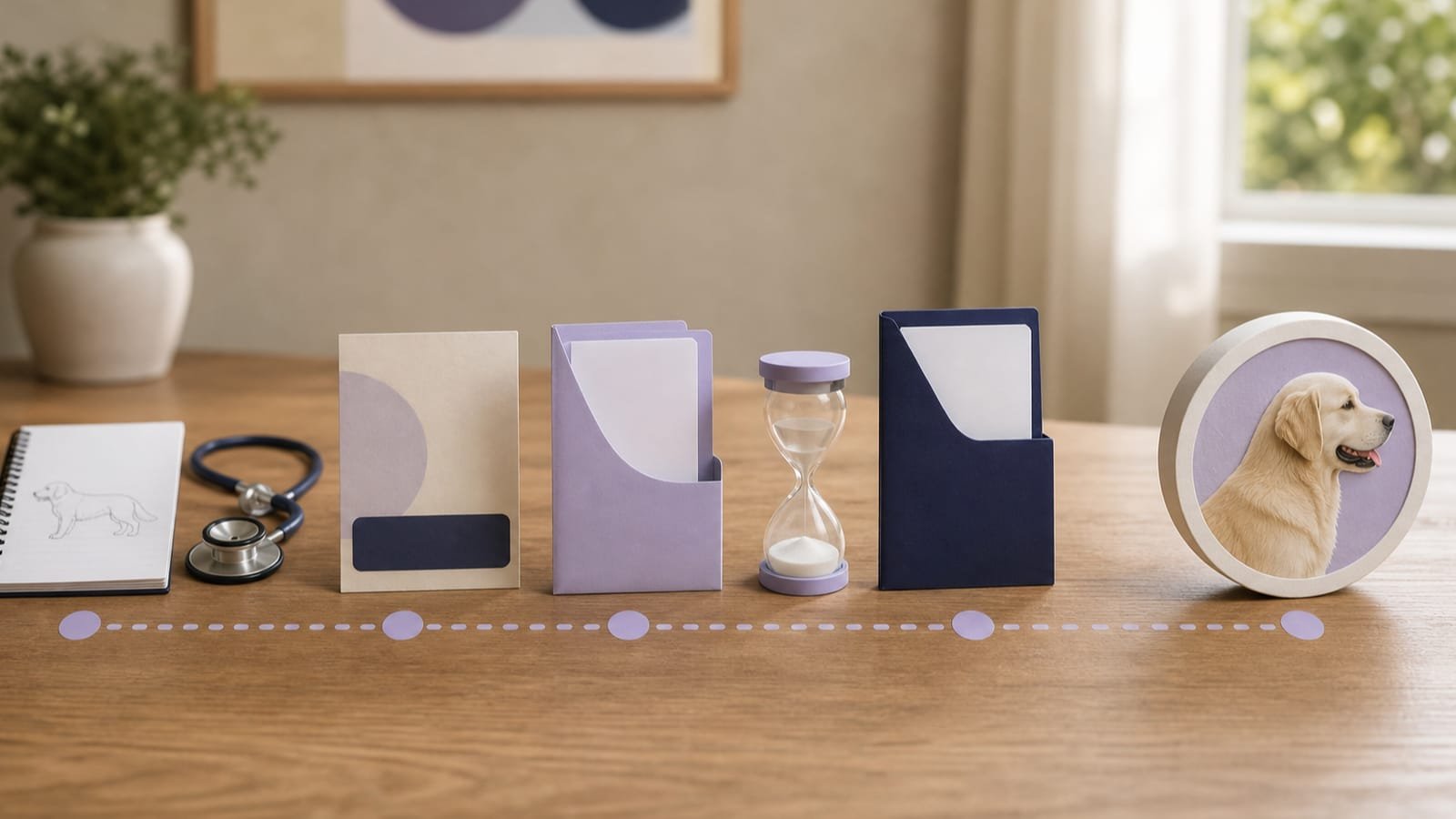
A pre-existing condition is generally defined as any illness or injury that occurred, recurred, existed, or showed symptoms — whether or not formally diagnosed by a veterinarian — before your policy's effective date, or during the waiting period. That 'whether or not formally diagnosed' clause is the part most pet owners don't expect: a documented symptom, even without a name or a confirmed diagnosis, can be sufficient grounds to classify a later, related claim as pre-existing.
How pet insurers typically classify pre-existing conditions
| Scenario | Typically treated as pre-existing? |
|---|---|
| Vet formally diagnosed a condition before the policy started | Yes |
| Vet record notes a symptom (e.g., "mild limp observed") before the policy started, no diagnosis given | Often yes — symptom alone can be enough |
| Condition first appears with no prior vet record of any related symptom, after the waiting period ends | Generally no — this is what standard coverage is for |
| Symptom noted during the waiting period, condition confirmed after | Yes — the waiting period counts the same as pre-policy for this purpose |
Curable vs. incurable: a distinction that can work in your favor
Not every pre-existing condition is treated as permanently excluded. Some insurers distinguish between curable and incurable pre-existing conditions, and for curable ones — certain infections, minor injuries, or issues that fully resolve — coverage can become available again after a defined symptom-free and treatment-free period, commonly around six months. Chronic or lifelong conditions are typically treated as incurable and remain excluded for the life of the policy, regardless of how much time passes.
- Ask your specific insurer directly whether they distinguish between curable and incurable pre-existing conditions — this varies meaningfully and isn't universal.
- If a condition does become symptom-free, keep clear veterinary documentation of that resolution, since you may need to demonstrate it to reactivate coverage eligibility.
- Understand that orthopedic conditions and chronic illnesses (like certain endocrine or heart conditions) are more commonly treated as incurable, regardless of how well-managed they are.
- A condition doesn't need to be severe to be classified as pre-existing — even a minor, resolved digestive issue noted in a record can trigger the exclusion.
How to protect yourself going in

Reducing pre-existing condition risk
- Get a full copy of your pet's veterinary history before applying, so you know exactly what's already documented.
- Ask the insurer directly how they define 'symptom' for pre-existing condition purposes — some are stricter than others.
- If switching insurers, understand that a condition covered under your old policy can become a pre-existing exclusion under the new one.
- Ask specifically whether curable conditions can become eligible for coverage again, and what the exact requirements are.
- Enroll while your pet is young and has minimal vet history, when possible — this meaningfully reduces pre-existing condition risk.
Pros
- Once a condition is clearly outside the pre-existing window, standard coverage applies normally going forward.
- Curable-condition provisions, where offered, provide a genuine path back to coverage for resolved issues.
- Understanding the definition clearly lets you make more informed decisions about vet visits during a waiting period, without avoiding care your pet actually needs.
Considerations
- The broad, symptom-based definition means even a minor, undiagnosed note can trigger a permanent exclusion.
- Switching insurers can convert a previously covered condition into a new pre-existing exclusion.
- Not every insurer offers a path back to coverage for curable conditions — this has to be confirmed directly, not assumed.
Switching pet insurers can reset your pre-existing condition exposure entirely — a condition that was actively covered under your old policy can become a new exclusion under a different insurer. Weigh this carefully before switching providers purely to save money.
Frequently asked questions
Does my pet need a formal diagnosis for something to count as pre-existing?
No — a documented symptom alone, even without a confirmed diagnosis, can be enough for an insurer to classify a later, related claim as pre-existing.
Can a pre-existing condition ever become covered later?
For some insurers and some conditions — specifically those the insurer classifies as curable — yes, typically after a defined symptom-free and treatment-free period, commonly around six months. Chronic or incurable conditions generally remain excluded permanently.
Should I avoid taking my pet to the vet during the waiting period to avoid creating a pre-existing record?
No — avoiding necessary veterinary care to manage insurance risk isn't a sound trade-off for your pet's health. If a real symptom appears, get it evaluated; understanding the exclusion rules is about setting expectations, not avoiding care.
Does switching pet insurers affect pre-existing condition coverage?
Yes, significantly — a condition actively covered under your current policy can become a new pre-existing exclusion under a different insurer, since each insurer evaluates your pet's history independently at the time you switch.

Sources
Facts and figures in this guide that come from an outside authority are backed by the sources below. Pricing, program rules, and eligibility details change — always confirm current specifics with the source directly or a licensed professional before acting.
- Pet Insurance and Pre-existing ConditionsASPCA Pet Health Insurance · Updated 2026 · Accessed 2026-07-20
- Understanding Pet Insurance: Pre-Existing ConditionsAKC Pet Insurance · Updated 2026 · Accessed 2026-07-20
- Pre-Existing Conditions in Pet Insurance: What You Need to KnowSpot Pet Insurance · Updated 2026 · Accessed 2026-07-20
- Does Pet Insurance Cover Pre-Existing Conditions?Progressive · Updated 2026 · Accessed 2026-07-20
- Understanding Pre-Existing ConditionsPetPartners Pet Insurance · Updated 2026 · Accessed 2026-07-20
Editorial information
- We prioritize primary, authoritative sources over provider marketing.
- Commercial relationships never influence what we publish or how it's written.
- Pages are dated and updated only when they've genuinely been reviewed or changed.
Related guides
Pet Insurance Waiting Periods Explained
A policy that starts today doesn't mean coverage starts today. Here's exactly how pet insurance waiting periods work, why they exist, and how to avoid an unpleasant surprise at claim time.

Documents You Need Before You Refinance Your Mortgage
Gathering the right paperwork before you apply is the single biggest thing you can do to speed up a mortgage refinance. Here's the complete list, organized by what lenders actually check first.

Rate-and-Term vs. Cash-Out Refinance: How to Tell Which One You Need
Both replace your existing mortgage with a new one — but they solve completely different problems, come with different rates, and have different waiting-period rules. Here's how to tell them apart.
Ready to explore Pet Insurance?
Continue your research or check availability — there's no cost and no obligation.