
Flood Insurance vs. Homeowners Insurance: Why Most Homes Aren't Covered for Water Damage
"Water damage" and "flood damage" are not the same thing to your insurer — and the difference determines whether you're covered.
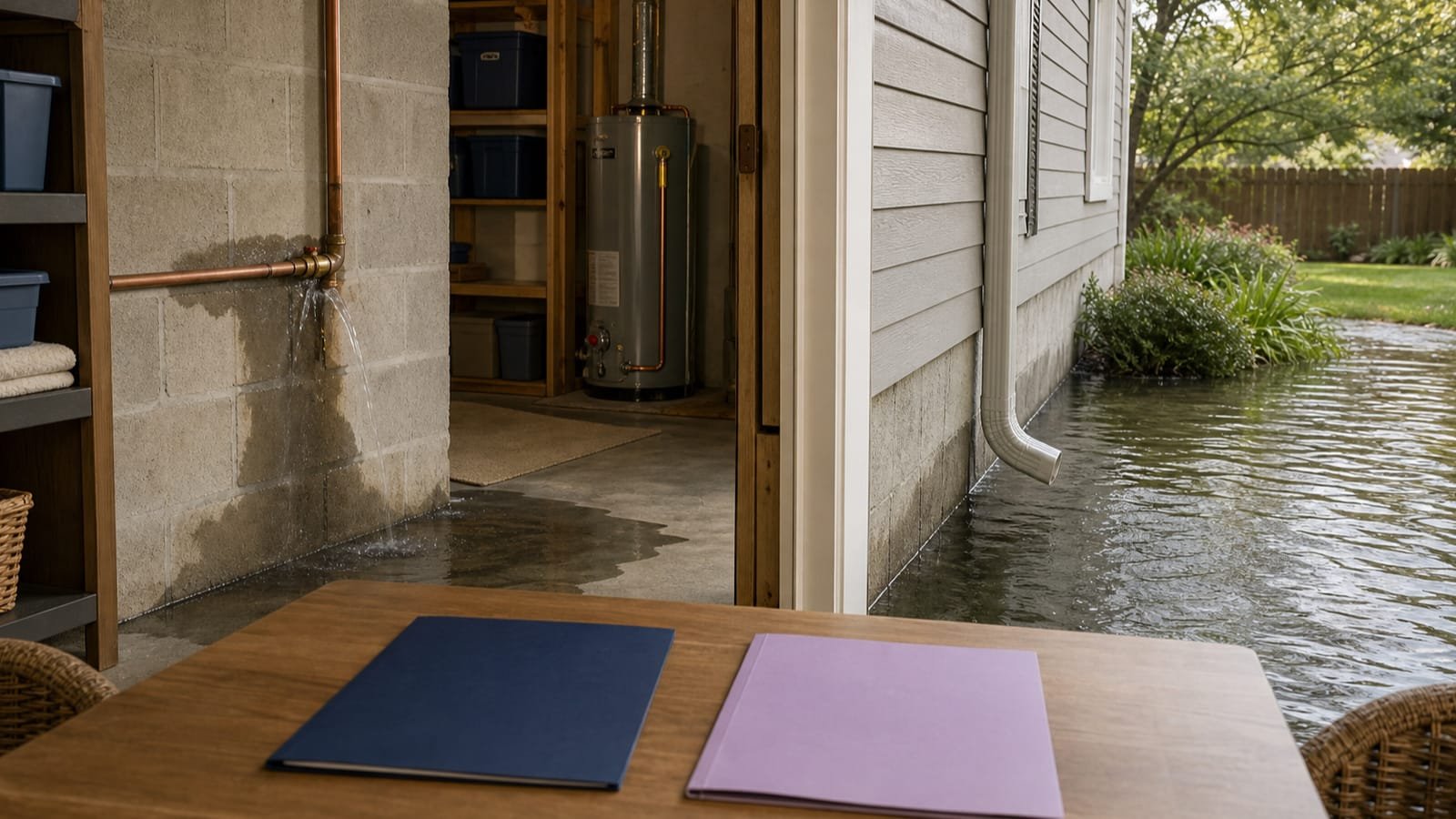
Key takeaways
- Standard homeowners insurance covers most sudden, internal water damage (a burst pipe, a failed appliance) but almost universally excludes flood damage from external sources.
- Flood is legally and contractually defined narrowly — water from rising rivers, storm surge, or heavy rainfall accumulating on the ground — and requires a separate flood policy.
- The National Flood Insurance Program (NFIP) is the primary source of flood coverage for most homeowners, but its authorization must periodically be renewed by Congress and has an active reauthorization deadline in 2026.
- Private flood insurance is a growing alternative to NFIP, sometimes cheaper for newer or elevated homes and able to write higher coverage limits than the NFIP cap.
"My homeowners policy covers water damage" is one of the most consequential misunderstandings in home insurance. It's true — for a narrow category of water damage. For the kind of water damage most people picture when they hear "flood," a standard homeowners policy almost never applies, and finding that out after the water has already receded is a genuinely bad way to learn it.
The line your insurer draws: sudden and internal vs. external and gradual

Standard homeowners policies generally cover water damage that is sudden, accidental, and originates inside the home — a burst pipe, an overflowing washing machine, a failed water heater. What they exclude, almost without exception, is flood damage: water that enters from outside the home due to rising rivers, storm surge, heavy rainfall accumulating on the ground, or overflowing bodies of water. The insurance industry treats these as fundamentally different risks with fundamentally different pricing — which is exactly why they're sold as separate products.
The coverage line: source of the water, not just the fact of water damage
| Scenario | Typically covered by homeowners insurance? | Typically covered by flood insurance? |
|---|---|---|
| Pipe bursts inside a wall, water damages flooring | Yes | No — not a flood-source event |
| Heavy rain causes a river to overflow into your home | No | Yes |
| Storm surge pushes seawater into a coastal home | No | Yes |
| Water backs up through a sewer or drain during a storm | Usually excluded unless a specific endorsement is added | Sometimes, depending on the specific flood policy |
| Roof leak during a storm damages the ceiling | Yes, if wind/storm damage caused the leak | No — not a flood-source event |
Where flood coverage actually comes from

For most homeowners, flood coverage means a policy through the National Flood Insurance Program (NFIP), a federal program administered through FEMA that most private insurers sell on the government's behalf. NFIP is the primary source of flood protection for millions of homes, particularly in and near mapped flood zones, but it comes with real limitations: building coverage is capped, and separate limits apply to contents.
- NFIP coverage limits are capped well below what many homes are actually worth, which can leave a real gap for higher-value properties.
- NFIP offers guaranteed renewal, meaning it generally can't non-renew you the way a private insurer might — a meaningful advantage in high-risk areas.
- A private flood insurance market has grown as an alternative, and can offer higher coverage limits, replacement-cost contents coverage, and loss-of-use coverage that NFIP doesn't — often at a competitive price for newer or elevated homes.
- Private flood carriers can non-renew, unlike NFIP, which is the trade-off for their broader coverage and often lower price on lower-risk properties.
Why NFIP's authorization status matters right now
NFIP doesn't operate on a permanent, indefinite authorization — Congress has to periodically reauthorize the program, and lapses have happened before. As of 2026, NFIP's authority to write new and renewal flood policies is tied to a reauthorization deadline; if the program lapses without renewal, NFIP cannot issue new or renewal policies until Congress acts again, though existing policies remain in force through their current term (including a standard grace period). This is a real, live risk factor for anyone relying on NFIP coverage — worth checking current status before assuming your renewal will process automatically.
Steps to actually close the flood coverage gap
- Check whether your home is in a FEMA-mapped flood zone — but don't stop there, since a large share of flood claims occur outside mapped high-risk zones.
- Ask your homeowners insurer directly and explicitly whether your policy covers flood — don't assume based on general 'water damage' language.
- Compare an NFIP quote against at least one private flood insurance quote, especially if your home is newer, elevated, or above NFIP's coverage cap.
- If you're in a high-risk area, ask about NFIP's reauthorization status at the time you're purchasing or renewing, since a lapse can affect new-policy issuance.
- Review your contents coverage limit separately from building coverage — they're capped independently under NFIP.
A large share of flood damage occurs outside FEMA's officially mapped high-risk flood zones. Being outside a mapped zone lowers your statistical risk — it doesn't eliminate it, and it doesn't mean your homeowners policy will cover flood damage if it happens.
Frequently asked questions
If my homeowners policy says it covers 'water damage,' doesn't that include floods?
Almost never. That language covers sudden, internal water events like burst pipes — not water entering from outside due to rising water. Read your policy's specific flood exclusion language, or better, ask your agent directly.
Is flood insurance required?
It's federally required if you have a federally backed mortgage on a home in a FEMA-designated high-risk flood zone. Outside that requirement, it's optional but worth strongly considering given how much flood damage occurs outside mapped zones.
How is private flood insurance different from NFIP?
Private flood insurance can offer higher coverage limits above NFIP's cap, replacement-cost contents coverage, and loss-of-use coverage NFIP doesn't include — often at a competitive premium for newer or elevated homes. The trade-off is that, unlike NFIP, private insurers can choose not to renew your policy.
What happens to my existing flood policy if NFIP's authorization lapses?
Existing NFIP policies generally remain in effect through their current term, including a standard grace period, even during a lapse. The bigger risk during a lapse is that NFIP can't issue new or renewal policies until Congress reauthorizes the program.

Sources
Facts and figures in this guide that come from an outside authority are backed by the sources below. Pricing, program rules, and eligibility details change — always confirm current specifics with the source directly or a licensed professional before acting.
- FAQ: National Flood Insurance ProgramNational Association of REALTORS® · Updated 2026 · Accessed 2026-07-20
- Flood InsuranceFederal Emergency Management Agency (FEMA) · Updated 2026 · Accessed 2026-07-20
- Congressional Reauthorization for the National Flood Insurance ProgramFEMA.gov · Updated 2026 · Accessed 2026-07-20
- What Happens If the National Flood Insurance Program (NFIP) Lapses?Congressional Research Service / Congress.gov · Updated 2026 · Accessed 2026-07-20
- Homeowners InsuranceNational Association of Insurance Commissioners (NAIC) · Updated 2025 · Accessed 2026-07-20
Editorial information
- We prioritize primary, authoritative sources over provider marketing.
- Commercial relationships never influence what we publish or how it's written.
- Pages are dated and updated only when they've genuinely been reviewed or changed.
Related guides

Why Home Insurers Are Non-Renewing Policies, and What to Do If Yours Isn't Renewed
Non-renewal notices are rising as insurers reassess climate and catastrophe risk. Here's why it happens, what rights you actually have, and the concrete steps to take before coverage lapses.

Why Life Insurance Costs Less Than Most People Think
Most people significantly overestimate what term life insurance costs. Here's what actually drives your premium, real 2026 pricing by age, and why waiting to buy has a real cost of its own.

Life Insurance After a Major Life Event: A First-Time Buyer's Checklist
Marriage, a new baby, or a first home often trigger the need for life insurance for the first time. A practical, step-by-step checklist for sizing and buying your first policy with confidence.
Ready to explore Home Insurance?
Continue your research or check availability — there's no cost and no obligation.