
How to Take a Home Inventory for Renters Insurance
The best time to create a home inventory is before you need one — not while you're standing in the aftermath of a loss.

Key takeaways
- A home inventory is a documented list of your belongings — with photos, estimated values, and receipts where available — used both to set your coverage amount and to support a claim after a loss.
- Receipts aren't required for every item; photos and reasonable value estimates are acceptable for most belongings.
- A room-by-room or category-by-category approach are the two most practical ways to organize the process.
- Storing your inventory somewhere other than the apartment itself (cloud storage, a family member's home) protects it from being lost in the same event that damaged your belongings.
Filing a renters insurance claim after a burglary, fire, or water damage event is stressful enough without also trying to reconstruct, from memory, everything you owned and what it was worth. A home inventory — created before any loss happens — is what turns that reconstruction into a straightforward reference document.
What a home inventory actually includes

At its core, a home inventory is a list of your belongings, ideally paired with photos, purchase dates, estimated values, and receipts or appraisals for higher-value items. It doesn't need to be forensically precise — the goal is a reasonably complete, well-documented record that supports both an accurate coverage amount and a smooth claim if you ever need one.
Two practical ways to organize a home inventory
| Approach | How it works | Best for |
|---|---|---|
| Room-by-room | Walk through each room, documenting everything in it before moving to the next | Most renters — intuitive and hard to miss items |
| Category-by-category | Group by type (electronics, furniture, clothing, jewelry) across the whole home | People with large collections in specific categories (e.g. electronics, collectibles) |
| Video walkthrough | A single video narrating and panning across each room's contents | A fast, low-effort starting point — pair with photos for higher-value items |
What documentation you actually need
- Photos of items, ideally including any visible model numbers or identifying details, especially for electronics and appliances.
- Receipts for higher-value or recently purchased items, when you have them — these aren't required for everything, but they strengthen a claim for expensive purchases.
- Serial numbers for electronics and other serialized items, which can help with both claims and, in the case of theft, police reports.
- Purchase dates and approximate original prices, even as estimates, for items where you don't have a receipt.
- Appraisals for genuinely high-value items — jewelry, art, collectibles — which may also need a separate policy endorsement (a "rider") to be fully covered.
Where to actually store it
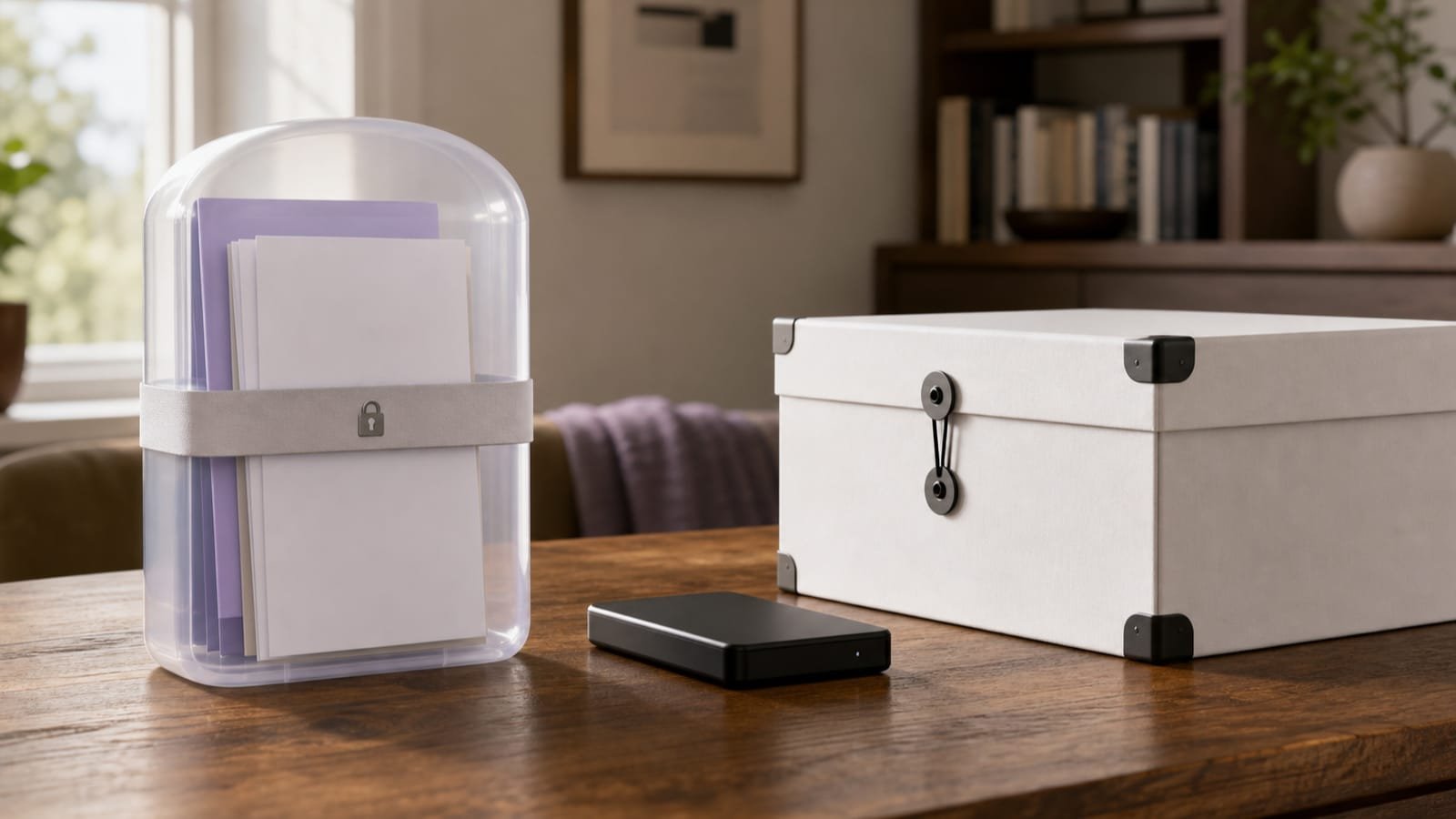
An inventory that only exists on your apartment's computer or in a physical binder in your closet does you little good if the loss event is a fire or flood that destroys the inventory along with everything it documents. Store a copy somewhere separate from your home — cloud storage, email it to yourself, or keep a copy at a family member's house — so it survives whatever event you might need it for.
Home inventory checklist
- Choose room-by-room or category-by-category, whichever feels more manageable, and commit to finishing the full home rather than starting and stopping.
- Photograph each item, capturing model numbers or identifying details where visible.
- Note purchase dates and estimated values, adding receipts where you have them.
- Get a formal appraisal for genuinely high-value items like jewelry or art, and ask your insurer whether a separate rider is needed for full coverage.
- Store a copy of the completed inventory somewhere outside your home — cloud storage or with a trusted family member.
- Update the inventory periodically, especially after major purchases, rather than treating it as a one-time project.
Pros
- A completed inventory significantly speeds up the claims process, since you're not reconstructing what you owned from memory under stress.
- The process itself often reveals whether your current coverage limit actually matches the real value of your belongings.
- Modern smartphone tools (photos, video, cloud storage) have made the process far faster than it used to be.
Considerations
- It takes real time to do thoroughly — a rushed, incomplete inventory is less useful than a proper one.
- High-value items (jewelry, art, collectibles) often need a separate rider or endorsement beyond standard coverage limits, which is easy to overlook without a proper inventory prompting the question.
- An inventory that isn't updated after major purchases becomes progressively less accurate and useful over time.
Never store your only copy of a home inventory inside the home it documents. A fire, flood, or theft that damages your belongings can just as easily destroy the one record that would have helped you get a claim paid quickly.
Frequently asked questions
Do I need a receipt for every single item?
No — receipts strengthen a claim, especially for expensive purchases, but photos and reasonable value estimates are acceptable for most belongings. Focus receipt-hunting on higher-value or recent purchases.
How often should I update my home inventory?
Update it after any major purchase, and do a general review at least once a year, so it stays reasonably accurate rather than reflecting a snapshot from years ago.
Does my renters policy automatically cover high-value items like jewelry?
Not necessarily at full value — many policies cap coverage for specific categories like jewelry, art, or collectibles, and a separate rider or endorsement may be needed to fully cover genuinely high-value items.
What's the fastest way to get started if I haven't done this yet?
A single video walkthrough narrating your belongings room by room is a reasonable, fast starting point — you can always follow up with more detailed photos and documentation for higher-value items afterward.

Sources
Facts and figures in this guide that come from an outside authority are backed by the sources below. Pricing, program rules, and eligibility details change — always confirm current specifics with the source directly or a licensed professional before acting.
- How to Create a Home Inventory Checklist for Renters Insurance ClaimsU.S. News (via Lemonade) · Updated 2026 · Accessed 2026-07-20
- How To Create a Renters Insurance Home InventoryPolicygenius · Updated 2026 · Accessed 2026-07-20
- How to Create a Home Inventory ChecklistAAA Home Insurance · Updated 2026 · Accessed 2026-07-20
- How Much Renters Insurance Do I Need?Travelers Insurance · Updated 2026 · Accessed 2026-07-20
- Everything You Need to Know About Renters Insurance in 2026Apartment List · Updated 2026 · Accessed 2026-07-20
Editorial information
- We prioritize primary, authoritative sources over provider marketing.
- Commercial relationships never influence what we publish or how it's written.
- Pages are dated and updated only when they've genuinely been reviewed or changed.
Related guides

Does Your Lease Require Renters Insurance?
Renters insurance isn't required by law in most places — but your lease can require it anyway. Here's how to tell, what proof your landlord may ask for, and what happens if you skip it.

Medicare Enrollment Penalties: How Late Enrollment Can Cost You for Life
Missing your Medicare enrollment window doesn't just delay coverage — for Part B and Part D, it can mean a permanent monthly penalty added to your premium for as long as you have coverage.

What Is Medicare IRMAA? Why Some People Pay More for Part B and Part D
Higher-income Medicare enrollees pay more than the standard Part B and Part D premium — a surcharge called IRMAA. Here's the actual 2026 income brackets and surcharge amounts, and how the two-year lookback works.
Ready to explore Renters Insurance?
Continue your research or check availability — there's no cost and no obligation.